UC HEALTH LINE: Certain Sleeping Positions Can Impact the Quality of Your Rest

CINCINNATISleeping is essential for good health, but there have been debates over the years about whether or not there is a "best way to snooze.
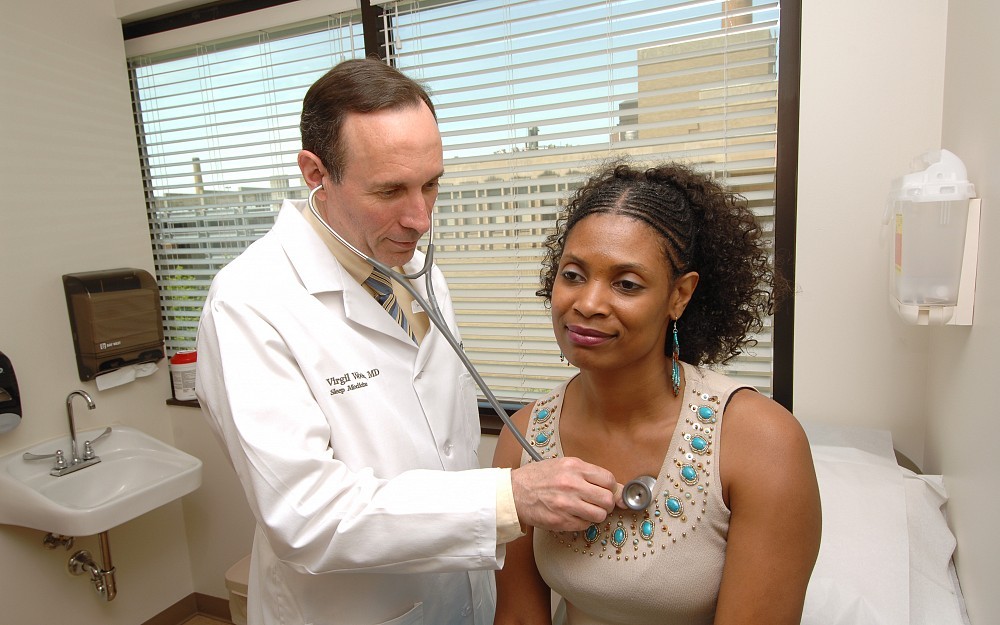
UC Health sleep expert Virgil Wooten, MD, says it varies from person to person.
"A persons best sleeping position highly depends on the individual, just like the mattress they prefer, he says. "I have patients who come into the sleep clinic and say that they have to sleep on their stomach or on their side, but people change body positions many times during the night, even though a person may stay in one position longer than another.
"There are, however, pros and cons of each position, depending on the sleeper.
Wooten says people with back problems should sleep flat on their back or on their side with a pillow between their knees to relieve pressure on the spine.
"Neck support is important as well to avoid neck and spine pain, so orthopedic pillows are often the best option to hold the contour of the neck, he says.
Wooten says people who experience chronic acid reflux or heartburn might want to sleep on their left side or sleep slightly elevated on their back to avoid the discomfort that accompanies these conditions.
"For pregnant women, sleeping on the side is advocated, he says. "Its thought not to be good to sleep on the back because it could cause back pain for the mother and could reduce blood supply to the fetus.
Overall, Wooten says sleeping on ones stomach is the worst position for back health.
"This puts more strain on the spine and the neck and is not a good sleeping position if someone is prone to back or neck pain, he says. "But really, any position is fine; it just depends on a persons preference. With certain medical conditionslike back pain or acid refluxchanging the body position during sleep can help in getting a better nights rest.
He adds that there are ways to train a person to sleep in a certain way, one of which is positioning pillows around the body, making it harder to toss and turn.
"Its important to sleep well in order to be a productive, healthy person, Wooten says. "If you are having trouble sleeping and staying asleep, it may just mean that you need to change your sleeping environmentalways try to sleep in a dark, quiet, cool roomor it could mean something more serious, like a sleep disorder.
"Its imperative that you address sleep issues immediately to sustain and improve your quality of life.

Virgil Wooten, MD, UC Health sleep medicine expert
Tags
Related Stories
Cancer Center plays key role in lab research, clinical trials for new pancreatic cancer drug
September 1, 2026

WLWT and WCPO highlighted the contributions of University of Cincinnati Cancer Center researchers that helped lead to the recent FDA approval of daraxonrasib, a new treatment for pancreatic cancer.
Cancer Center physician receives $150,000 New Investigator Research Grant to study treatment-resistant leukemia
September 1, 2026
The University of Cincinnati Cancer Center’s Sarah Skuli, MD, PhD, received a two‑year, $150,000 Leukemia Research Foundation New Investigator Grant to study TP53‑mutated leukemia, a treatment‑resistant subtype with very poor outcomes.
Heavy social media use linked to depression
August 31, 2026

U.S. News and World Report, Yahoo! News, MSN, USA Today and other national media highlight a new study by the University of Cincinnati and Northwestern University that found a correlation between heavy social media use and depression in adults.