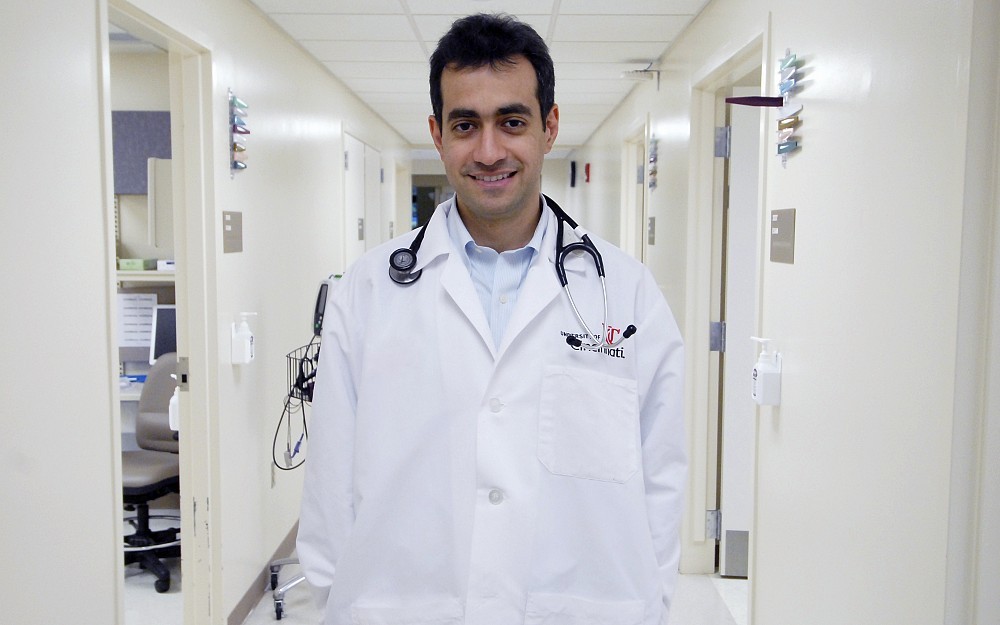
Hematology Oncology Fellow Selected for Elite Clinical Trials Workshop

Forcing doors open isnt easy. But with the right set of circumstances and novel ideas on your side, doors open for you.
A UC-grown research idea and the mentorship of respected senior faculty helped hematology oncology fellow Shaalan Beg, MD, land a spot in the 2011 Methods in Clinical Cancer Research Workshop, a highly selective training program sponsored by the American Society of Clinical Oncology (ASCO) and American Association for Cancer Research (AACR).
The conference takes place in Vail, Colo., July 30 through Aug. 5. Only 75 trainees are accepted into the program nationwide.
A sort of cancer clinical trials "boot camp, this intensive workshop provides clinical fellows and junior clinical cancer researchers with knowledge in the fundamentals of effective clinical trial design for therapeutic cancer treatments.
"Proper clinical trial design is critical for gathering clear results that will allow promising concepts to move forward into the next phase of testing, explains Olivier Rixe, MD, PhD, professor of hematology oncology at the UC College of Medicine and director of the experimental therapeutics program/phase 1 cancer clinical trials unit.
Rixe and UC cancer cell biologists George Thomas, PhD, and Sara Kozma, PhD, served as faculty mentors for Beg on his application to the ASCO/AACR workshop.
Beg will be working on a phase 1 clinical trial design supported by preclinical research findings from the lab of Thomas and Kozma. The proposed trial would test the effectiveness of a combination of two anti-tumor drugsas compared with use as single agentsto stop the growth of tumors. Preliminary research findings show using these drugs in combination is more effective in stopping the growth of cancerous tumors than each drug used alone. Patients with brain tumors, liver cancer, and neuroendocrine tumors will be enrolled in this study.
"This is a UC research concept that started at the bench and is now moving full circle to bedside testing in a phase 1 clinical trialthis is translational research as it should happen, says Rixe.
Through the workshop, Beg will receive step-by-step coaching on every aspect of protocol developmentfrom introduction to data collection methodswith the benefit of expert critiques and corrections along the way to ensure he leaves with a polished clinical trial protocol that is more likely to receive positive feedback from the Institutional Review Board.
"This is a tremendous opportunity for career development and to rub shoulders with leaders in cancer clinical trials, adds Beg. "Im sure the experience will greatly enhance my knowledge about clinical trial design and give me a great network of contacts for future collaboration.
Beg, who completed his hematology oncology fellowship at the UC College of Medicine in July 2011, is specializing in gastrointestinal cancers in his professional practice.
» Learn about cancer clinical trials at the UC Cancer Institute, click here or call (513) 584-7698.
» Learn about cancer fellowship opportunities at the UC College of Medicine, click here.

Cell signaling expert George Thomas, PhD
Related Stories
UC radiation oncologist speaks with Local 12 news about clinical trial for head and neck cancer treatment
August 10, 2026

Dr. Sara Medek, a UC radiation oncology professor, speaks with Local 12 news about a new clinical trial aimed at reducing radiation in certain areas while still treating cancer effectively but with fewer painful side effects.
Cancer Center director charts future based on collaboration, AI
August 10, 2026

David Gius, MD, PhD, was featured in a Cincinnati Business Courier article and The Cancer Letter’s “The Directors" podcast discussing his priorities and goals as he recently took the helm as director of the University of Cincinnati Cancer Center.
UC graduates cross finish line at commencement
August 7, 2026
The University of Cincinnati recognized 2,125 graduates in two ceremonies at summer commencement Friday on campus at Fifth Third Arena.