Mandatory Geriatric Rotation Uses Candy 'Medicine, Blogging to Deliver Insight on Care of Older Populations

Doctors always tell us how important it is to take all of our prescribed medications as directed.
But taking eight kinds of pillsthree of them twice a day, two of them three times a day and the other three of them once a dayin the midst of an active lifestyle could be a little troublesome for anyone. Throw older age into the mix, and it could be even more challenging.
So educators in the division of geriatrics are putting first- through third-year residents in the shoes of older adults who have numerous prescriptions to takebut instead of those blood pressure or heart pills, these physicians will be downing some Mike and Ike or a few dozen M&Ms.
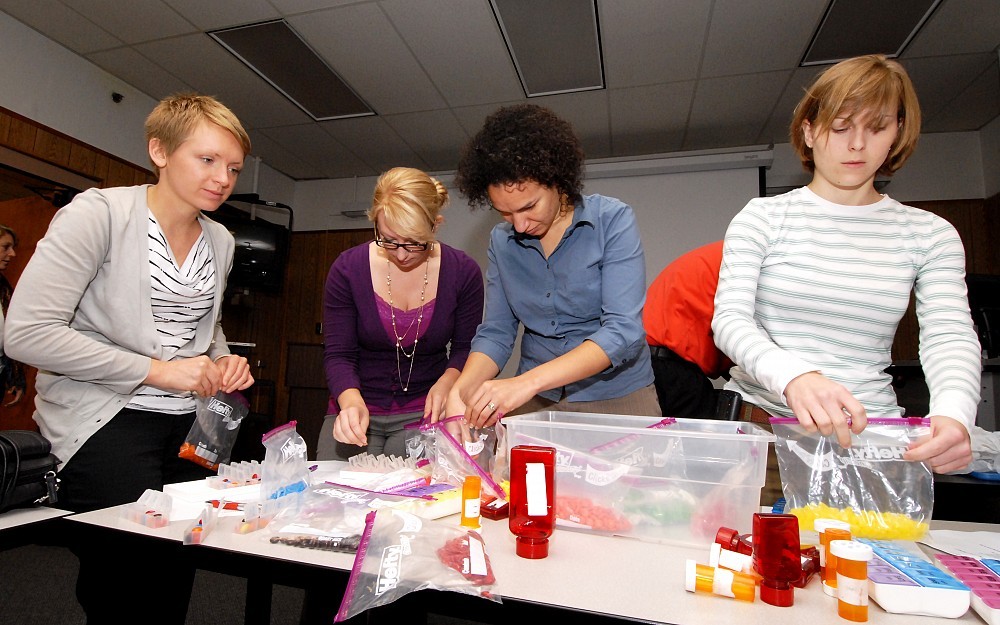
As part of the Geriatric Resident Interdisciplinary Elective (GeRIE), residents participate in a "medi-set project where they are required to fill a pill container, or medi-set, and take the candies the way they regularly would medicines for a week.
"This exercise is challenging, says Mandi Sehgal, MD, assistant professor in the division who is leading the elective for the division. "During the week, residents will often forget to take their medicine, which really helps them realize how difficult this could be for patients. Its a very humanizing experience.
"Then, residents blog about their experiences, which is bringing in a discussion component to the exercise.
The GeRIE rotation, which occurs three months out of the year and has begun for the second time in 2011 in September, is in its fifth year at UC and has gone from being an elective to a required rotation for some primary care residents. Sehgal says residents in other specialties are also welcome to participate.
"Weve had several pharmacy students involved as well, she adds. "The rotation is great because these residents from different specialties and their pharmacy colleagues all work together and learn from one anothers experiences collectively.
During the month-long rotation, residents take two half-day field trips to agencies in the community that serve older adult populations.
"We also conduct didactic sections on core geriatric topics and spend time in clinical settingsoutpatient, inpatient and in the home, Sehgal explains. "Residents get paired one-on-one with a geriatrics faculty mentor for the duration of the rotation. At the end of the rotation, they present on a geriatrics topic of interest to them.
And, as mentioned before, Sehgal says the blogosphere plays a huge role in this course.
"In addition to discussing the medi-set project, the residents are asked to blog once a week about a meaningful experience that has changed the way that they think about older adults, she says. "We wanted a way for the residents to reflect on what they were learning in this course and discovered that Blackboard provided the ability to blog.
"Residents can post their thoughts freely, and others can respond to the posts; it really serves as an open discussion for those in the GeRIE. Each week, the blogs are discussed with a faculty discussant.
This month, residents have been asked to think of one thing that can be implemented within their clinical practice that will affect the way they care for older adults.
"This is a rotation that really helps residents reflect on what they are learning about different aspects of caring for older adults in a meaningful way, says Sehgal. "These issues become more real to them because they get to see the agencies that are tailored to helping this population, and it helps them realize that regardless of specialty, as a physician, they all must learn to care effectively for older adults.

As part of the Geriatric Resident Interdisciplinary Elective (GeRIE), residents participate in a  medi-set project where they are required to fill a pill container, or medi-set, and take the candies the way they regularly would medicines for a week.

As part of the Geriatric Resident Interdisciplinary Elective (GeRIE), residents participate in a  medi-set project where they are required to fill a pill container, or medi-set, and take the candies the way they regularly would medicines for a week.
Tags
Related Stories
Selecting noninvasive tests for liver disease diagnosis, monitoring
September 3, 2026

Noninvasive tests have emerged as valuable alternatives for diagnosing, staging and monitoring MASLD and MASH, according to a recent MedCentral report.
Why can it get so hot at times?
September 3, 2026

Cincinnati is experiencing more days of extreme heat this summer than in previous decades, due in large part to warmer global temperatures. But explanations for these higher temperatures also relate to regional factors, including the city's location in a river valley and large proportion of built environment.
Cancer Center plays key role in lab research, clinical trials for new pancreatic cancer drug
September 1, 2026

WLWT and WCPO highlighted the contributions of University of Cincinnati Cancer Center researchers that helped lead to the recent FDA approval of daraxonrasib, a new treatment for pancreatic cancer.