Research Yields Insight Into Gene Mutations Linked to Brain Bleeds

CINCINNATIAn innovative approach to genome screening has yielded clues about rare mutations that may render people susceptible to brain bleeds, according to research led by a University of Cincinnati (UC) neurologist.
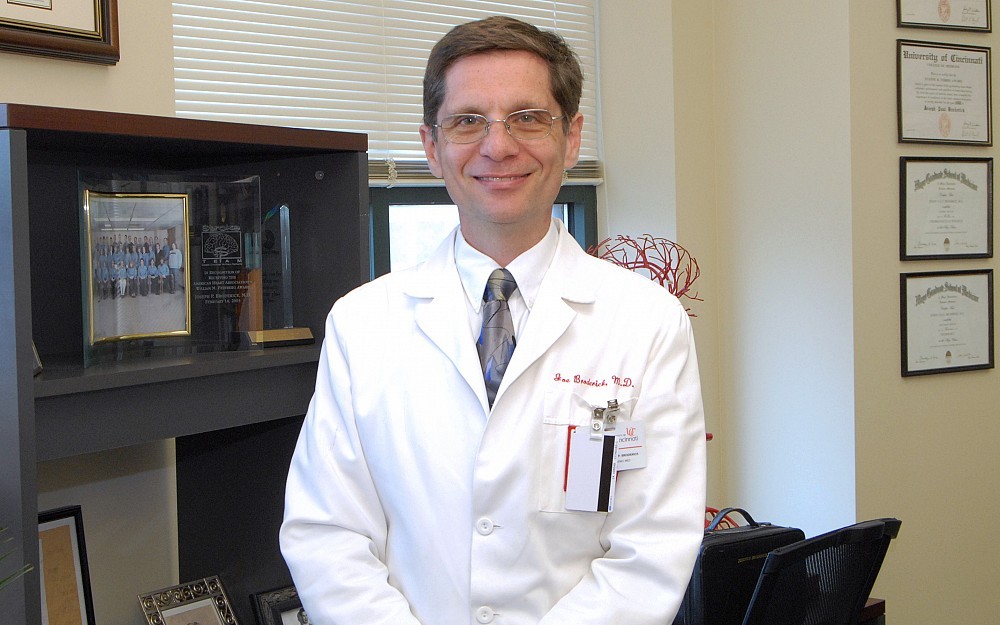
Joseph Broderick, MD, Albert Barnes Voorheis Chair of Neurology at the UC College of Medicine and research director of the UC Neuroscience Institute, is presenting the research Friday, Feb. 3, at the American Stroke Associations International Stroke Conference 2012 in New Orleans.
For the first time, scientists applied a process called whole exome sequencing to seek gene mutations in families in which multiple relatives have intracranial aneurysmsweakened, ballooned-out areas in arteries of the brain that can rupture and cause a stroke, resulting in bleeding within the brain.
Instead of sequencing the entire genome, whole exome sequencing focuses on the small portion of the genetic blueprint that provides instructions for making proteins. This approachless costly and more efficient than whole genome sequencingallows researchers to look for rare variations in the genetic code, Broderick said.
"For families with many people affected, it may be likely that a rare mutation leads to a problem in blood vessel structure or function that puts them at much higher risk, said Broderick, lead author of the study, funded by the National Institute of Neurological Disorders and Stroke (NINDS), an institute within the National Institutes of Health (NIH).
The researchers, studying 32 affected people from seven families, found more than 100,000 genetic variants, then proceeded to narrow them down to categories of genes relevant to blood vessel structure and function. By doing that, the researchers narrowed the initial findings to 27 variants in 19 genes.
Families were drawn from the Familial Intracranial Aneurysm study, a collaborative research effort of investigators examining multiple populations in the United States and elsewhere.
In a close analysis of one family, researchers found variations in genes involved in producing collagen, a connective tissue abundant in blood vessels and other tissues. One gene, collagen 5-A2, has been previously linked to Ehlers-Danlos syndromea group of inherited connective tissue disorders marked by extremely loose joints with musculoskeletal damage, hyperelastic skin and easily damaged blood vessels. However, collagen 5-A2 has not been previously associated with the type of Ehlers-Danlos associated with fragile blood vessels or aneurysms.
"Using this technique, in the future we may be able to find the relevant genes in a particular family and screen people for their aneurysm risk, Broderick said. "Its an example of personalized medicine, but its currently not easy or simple. A persons risk may involve several variations in several genes, plus environmental exposures such as smoking.
Future research will seek to expand whole exome sequencing to additional family members to provide contrast with key unaffected individuals. Secondary analyses will focus on smoking, rupture status and hypertension.
Related Stories
On-site training in Speech & Hearing Clinic sets UC’s programs apart
August 27, 2026
At the University of Cincinnati’s Speech & Hearing Clinic, Doctor of Audiology and Speech-Language Pathology graduate students gain real-world experience while providing free speech and hearing services to the community.
Designing with cancer patients' needs in focus
August 27, 2026
Kristina Shin is designing garments that prioritize the comfort, function and confidence of breast cancer patients, addressing a need often overlooked by traditional fashion.
UC, NKU renew longstanding partnership supporting Army ROTC cadets
August 26, 2026
The University of Cincinnati Army ROTC and Northern Kentucky University (NKU) have renewed a longstanding partnership that supports students preparing to become Army officers and leaders in their communities. The universities formalized the renewed agreement during a signing event Aug. 11 at NKU.