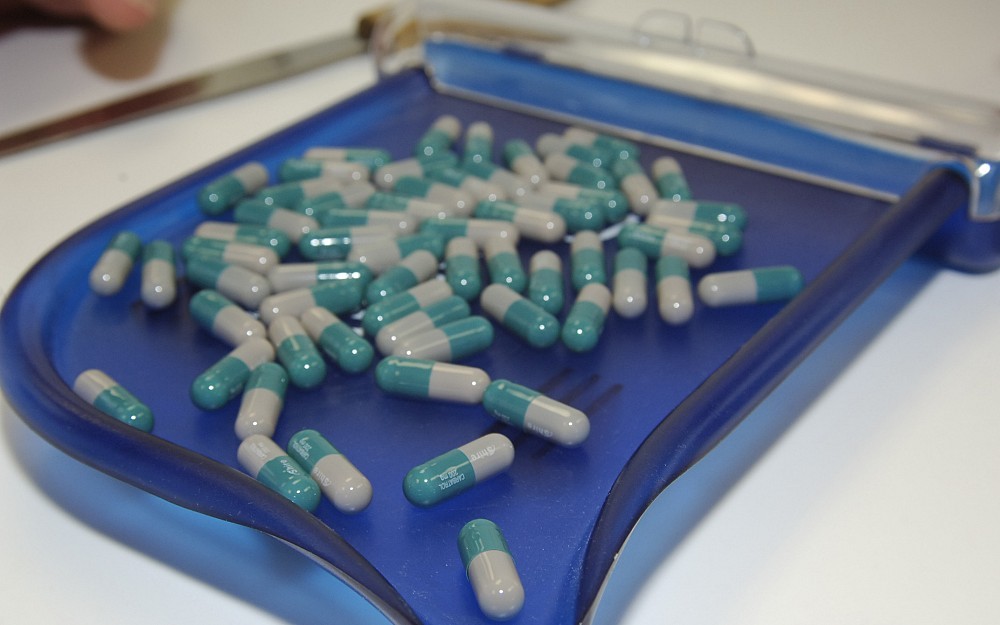
UC HEALTH LINE: How to Dispose of Old Medicines Properly

CINCINNATIPublic awareness surrounding the proper disposal of prescription and over-the-counter medications is increasing, with a fourth "National Prescription Drug Take-Back Day to take place 10 a.m. to 2 p.m. Saturday, April 28, 2012.
Persons interested in disposing of old medicines can find the most convenient Drug Enforcement Administration (DEA) designated site by visiting the events website and entering their zip code.
Take-back events such as this "protect the environment, prevent the use of drugs on the street and deter the accidental poisonings of children who might gain access to improperly disposed of mediations, says Marianne Ivey, PharmD, an associate professor in the University of Cincinnatis (UC) James L. Winkle College of Pharmacy.
What started as a volunteer effort led by health care professionals, Ivey says, has grown into a national program overseen by the DEA.
During last years event, in Ohio alone, over nine tons of medications were collected through the program, she says, and according to the DEA, 377,086 pounds (188.5 tons) of unwanted or expired medications were collected for safe and proper disposal at the 5,327 take-back sites that were available in all 50 states plus U.S. territories.
Says Ivey: "I think we all understand that people get prescriptions and often dont use the whole prescribed amount, and the medications then sit in medicine cabinets, kitchen drawers or even coat pockets.
The event, she says, gives people the opportunity to dispose of these items and know that they are being destroyed in a safe and controlled manner. She encourages everyone to avoid flushing any medications down the toilet, which has been an age-old remedy for getting rid of unwanted medicinal items.
Ivey has been actively involved with promoting the proper disposal of prescription medications through organizations such as the Environmental Protection Agency (EPA), the Ohio River Valley Water Sanitation Commission (ORSANCO), Leadership Cincinnati and others. She also works with pharmacy students to participate at the take back sites, where student volunteers assist the public. The students are all overseen by a law enforcement official and the items turned in are disposed of in an incinerator approved by the EPA.
Items that can be taken to the event are all prescription medications, including controlled substances, and over-the-counter medications.
Tags
Related Stories
Cancer Center plays key role in lab research, clinical trials for new pancreatic cancer drug
September 1, 2026

WLWT and WCPO highlighted the contributions of University of Cincinnati Cancer Center researchers that helped lead to the recent FDA approval of daraxonrasib, a new treatment for pancreatic cancer.
Cancer Center physician receives $150,000 New Investigator Research Grant to study treatment-resistant leukemia
September 1, 2026
The University of Cincinnati Cancer Center’s Sarah Skuli, MD, PhD, received a two‑year, $150,000 Leukemia Research Foundation New Investigator Grant to study TP53‑mutated leukemia, a treatment‑resistant subtype with very poor outcomes.
Heavy social media use linked to depression
August 31, 2026

U.S. News and World Report, Yahoo! News, MSN, USA Today and other national media highlight a new study by the University of Cincinnati and Northwestern University that found a correlation between heavy social media use and depression in adults.