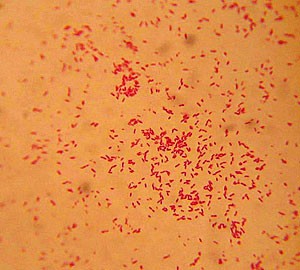
Research Identifies Specific Bacteria Linked to Indoor Water-Damage and Mold

CINCINNATIBacterial contamination in water-damaged buildings has been identified as a potential cause of health problems, including infection and respiratory conditions like asthma. Which specific bacteria contribute to these problems, however, has been unknownmaking it difficult for public health officials to develop tools to effectively address the underlying source of the problem.
In a new study, a University of Cincinnati (UC) environmental health research team found evidence linking two specific strains of bacteria Stenotrophomonas and Mycobacteriumto indoor mold from water damage. The research is part of the U.S. Department of Housing and Urban Developments investment in research to protect the health of children from hazards in the home.
"If we are going to understand the role of indoor bacteria in human health, we must be able to identify and quantify the relevant bacterial species contributing to the health problems, says Atin Adhikari, PhD, assistant professor of environmental health at the UC College of Medicine and principal investigator of the study.
"The association between bacterial contamination and respiratory health has lagged behind mold studies because it is difficult to determine which species of bacteria are growing in homes and most of the bacterial species are non-culturable and not identified yet, adds Adhikari. "These new data will help us more accurately target and combat the bacteria and to explore synergistic health effects of bacteria and molds growing in water damaged homes.
The UC-based team will report its findings June 18, 2012, at the American Society for Microbiology meeting in San Francisco.
For this study, Adhikari and UC postdoctoral fellow Eric Kettleson, PhD, analyzed samples collected from 42 homes from the Cincinnati Childhood Allergy and Air Pollution Study, a National Institute of Environmental Health Sciences-funded project examining the long-term effects of environmental exposures on respiratory health and allergy development in children.
Included homes fell into one of two categories"high mold or "low moldbased on previously reported environmental relative moldiness index (ERMI), a DNA-based mold level analysis tool developed by the U.S. Environmental Protection Agency (EPA) that combines results of the analysis of 36 different types of mold into one index to describe a homes cumulative mold burden.
The team then compared the ERMI values and types of bacteria found in both high- and low-mold homes in an effort to better understand the environmental sources and home characteristics that influence indoor bacterial contamination.
They found strong correlations between Mycobacterium and visible mold and also between Stenotrophomonas and environmental relative moldiness index.
"Stenotrophomonas maltophiliaan emerging multidrug-resistant global opportunistic pathogenwas isolated from numerous environmental sources. Surprisingly, it was never assessed quantitatively in indoor home environments especially in water damaged homes where this can be a real concern and may cause inhalation exposure risks to occupants. Stenotrophomonas maltophilia is the first bacterial species associated with higher ERMI values in homes, adds Kettleson.
Co-authors of this study include Stephen Vesper, PhD, of the U.S. Environmental Protection Agency (EPA); and Tiina Reponen, PhD, Sergey Grinshpun, PhD, and Sudhir Kumar, PhD of the Department of Environmental Health.
This study was partially funded by the U.S. Department of Housing and Urban Development, National Institute of Environmental Health Sciences and U.S. Environmental Protection Agencys Office of Research.
Related Stories
On-site training in Speech & Hearing Clinic sets UC’s programs apart
August 27, 2026
At the University of Cincinnati’s Speech & Hearing Clinic, Doctor of Audiology and Speech-Language Pathology graduate students gain real-world experience while providing free speech and hearing services to the community.
Designing with cancer patients' needs in focus
August 27, 2026
Kristina Shin is designing garments that prioritize the comfort, function and confidence of breast cancer patients, addressing a need often overlooked by traditional fashion.
UC, NKU renew longstanding partnership supporting Army ROTC cadets
August 26, 2026
The University of Cincinnati Army ROTC and Northern Kentucky University (NKU) have renewed a longstanding partnership that supports students preparing to become Army officers and leaders in their communities. The universities formalized the renewed agreement during a signing event Aug. 11 at NKU.