Researchers Discover Rare Leukemia-Causing Protein

CINCINNATIResearchers at the University of Cincinnati Hoxworth Blood Center and Cincinnati Children's Hospital Medical Center have discovered a new gene target for leukemia therapy.
These findings, slated for the July 26, 2012 print issue of Blood, the journal of the American Society of Hematology, could lead to cellular targets for a patient population that otherwise may not have desirable outcomes and could potentially stop the onset of leukemia before it begins.
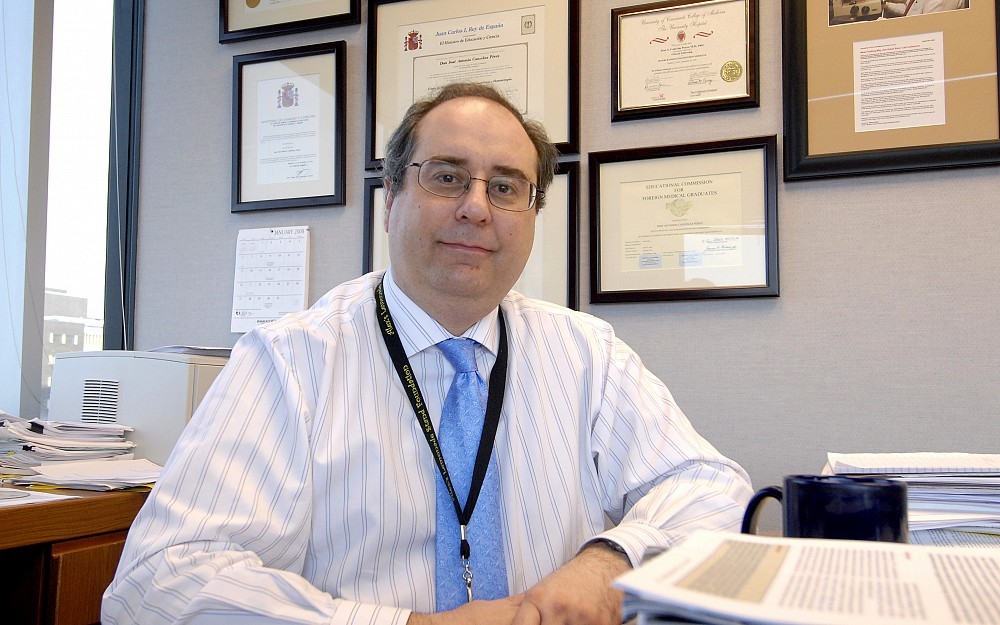
A team led by Jose Cancelas, MD, PhD, an associate professor of pediatrics at the UC College of Medicine and director of the research division at Hoxworth Blood Center, found that by inhibiting in animal models the protein Vav3, which controls cell signaling, the development of this leukemiaknown as BCR-ABL lymphoid leukemiais delayed.
"Despite advances in the treatment of this disease, the outcome of patients with this type of leukemia is very poor because it develops resistance to standard therapies, he says. "We found that the genetic deficiency of Vav3 delays the formation of leukemia by impairing the signals from BCR-ABL and the overproduction of leukemic cells. In doing this, it also allows the standardized therapies, or BCR-ABL inhibitors, to work.
Cancelas says this finding could lead to new multi-targeted therapies where Vav3 activity is related to the formation of leukemia.
"In collaboration with Dr. Nicolas Nassar, associate professor of pediatrics at UC and a physician in the division of experimental hematology at Cincinnati Childrens, we are now trying to find chemicals with Vav3 inhibitory activity, he says. "With this knowledge, we may be able to develop a therapy that can greatly improve the lives of patients facing leukemia.
Other authors of this multinational study are Kyung Hee Chang and Susan Dunn from Hoxworth Blood Center; and Yi Zheng, John Perentesis, Abel Sanchez-Aguilera, Amitava Sengupta, Malav Madhu, Ashley Ficker, Rebecca Santho and Ashley Kuenzi from Cincinnati Childrens. Collaborators also include David Williams (Boston Childrens Hospital, Harvard Medical School), Michael Deininger (University of Utah), Xose Bustelo (University of Salamanca, Spain) and Xabier Agirre (University of Navarra, Spain).
This study was funded by the National Heart, Lung and Blood Institute of the National Institutes of Health, the United States Department of Defense, Alexs Lemonade Stand Foundation and Cancer Free Kids Foundation.
Continuation of this study has been recently funded by the Leukemia and Lymphoma Society of North America.
Related Stories
On-site training in Speech & Hearing Clinic sets UC’s programs apart
August 27, 2026
At the University of Cincinnati’s Speech & Hearing Clinic, Doctor of Audiology and Speech-Language Pathology graduate students gain real-world experience while providing free speech and hearing services to the community.
Designing with cancer patients' needs in focus
August 27, 2026
Kristina Shin is designing garments that prioritize the comfort, function and confidence of breast cancer patients, addressing a need often overlooked by traditional fashion.
UC, NKU renew longstanding partnership supporting Army ROTC cadets
August 26, 2026
The University of Cincinnati Army ROTC and Northern Kentucky University (NKU) have renewed a longstanding partnership that supports students preparing to become Army officers and leaders in their communities. The universities formalized the renewed agreement during a signing event Aug. 11 at NKU.