FETCH-LAB Gets Visit from Canadian Military Dog

UCs Facility for Education and Testing of Canine Hearing and Lab Animal Bioacoustics (FETCH-LAB) recently performed a hearing test on "Diezel, a Dutch Shepherd in the Canadian military working dog training program.
The program contacted FETCH-LAB for the test after Diezel was accidentally exposed to prolonged high-volume sounds during an operational exercise.
The exam, performed Friday, Sept. 21, was a brainstem auditory evoked response (BAER) test, which detects electrical activity in the cochlea and the brains auditory pathways that detect sound. BAER tests are often used to screen infant hearing.
With baseline data from the BAER test, FETCH-LAB director Pete Scheifele, PhD, is keeping in touch with Diezels handler and trainers to monitor the dogs hearing in the coming weeks.
FETCH-LAB has studied the hearing and health of military working dogs since 2010, when Scheifele and veterinarian Debbie Kemper were part of a US Department of Defense Blue Ribbon Panel charged with developing a strategy to investigate Canine Post-Traumatic Stress Disorder, seen in some military working dogs.
FETCH-LAB researchers are also part of military projects investigating noise protection devices for military working dogs during deployment and transport.

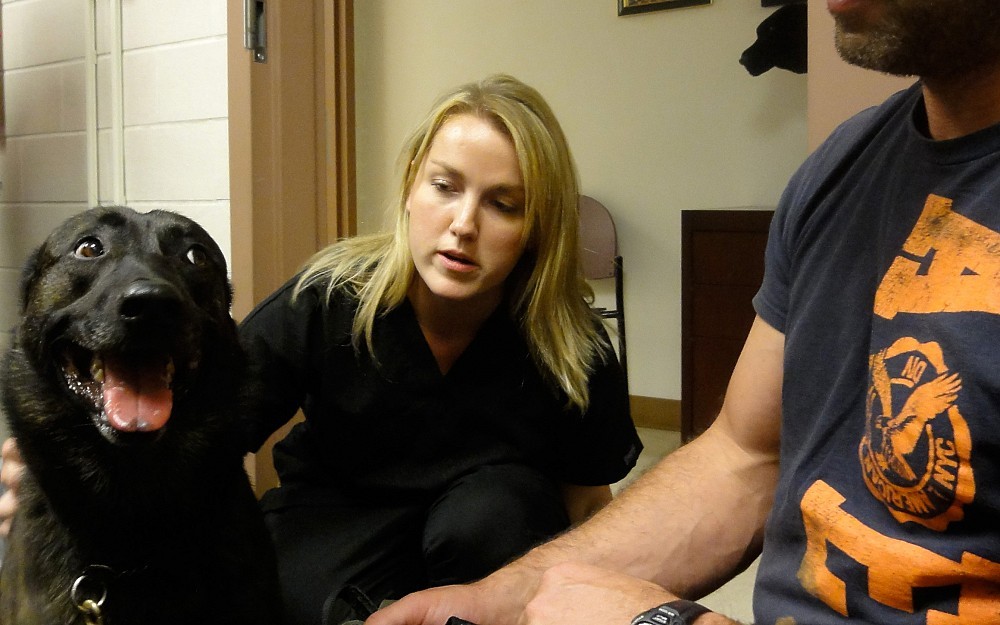
Pete Scheifele, PhD, and Laura Kretschmer, EdD, study Diezel's test results

The FETCHLAB team performs a hearing test on Diezel with his military handler standing by.
Tags
Related Stories
On-site training in Speech & Hearing Clinic sets UC’s programs apart
August 27, 2026
At the University of Cincinnati’s Speech & Hearing Clinic, Doctor of Audiology and Speech-Language Pathology graduate students gain real-world experience while providing free speech and hearing services to the community.
Funding expands UC research into weight gain side effects of bipolar medication
August 26, 2026
University of Cincinnati researchers have been approved for funding by the Patient-Centered Outcomes Research Institute (PCORI) to expand the implementation of healthy lifestyle interventions and metformin prescription to help manage weight gain in overweight or obese youth taking second-generation antipsychotic medications.
One in four NFL players had CTE at death
August 25, 2026

Forbes cites research on concussions and football helmets by the University of Cincinnati in a report that found one in four NFL players had brain damage at death.