UC HEALTH LINE: Tips on Knowing Your Family Health History, What to Tell Your Doctor

CINCINNATISome people are interested in digging into their family lineage to find out if they were related to royalty or a major celebrity.
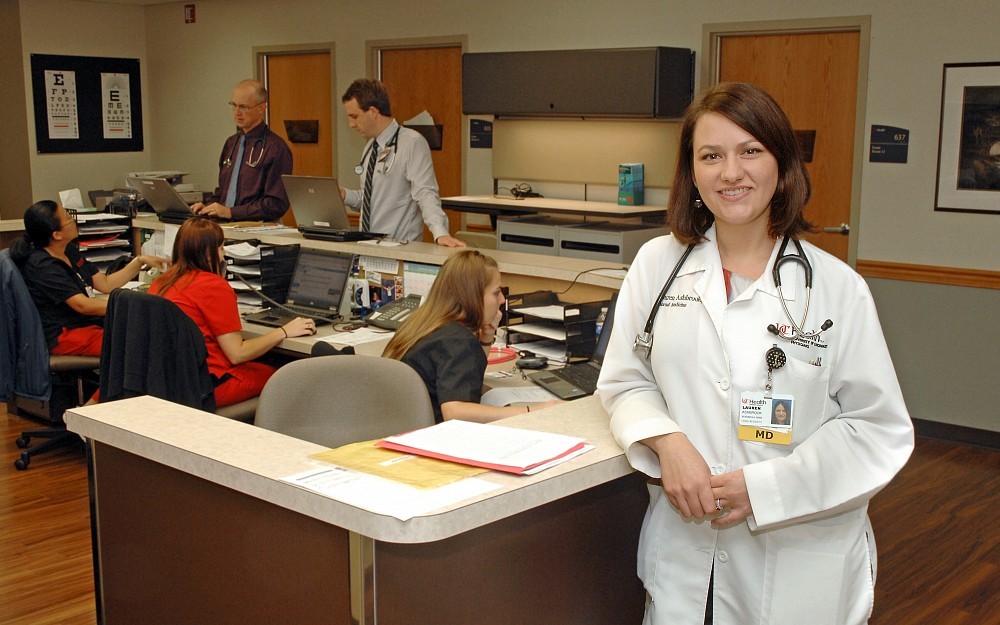
Lauren Ashbrook, MD, UC Health primary care physician, says that looking to your family tree may prove to be more valuable than interesting if it helps keep you healthy.
"It is extremely important that a person have some knowledge of his or her family medical history," she says, adding that many hereditary diseases are passed down through the gene pool and commonly occur among relatives.
Ashbrook says that the family medical history that is most relevant to a person is that of the first-degree relatives, which include siblings, parents, grandparents and children.
"Knowing about cousins, aunts and uncles can add some important information as well, if you are aware of it."
"Certain diseases like breast cancer and ovarian cancer or diabetes and heart disease may be related to each other and run in families," she says, adding that its important to note and alert your physicians to common disorders like stroke or colon cancer that occurred in your family at an early age. Sudden death in a family member who seemed healthy is also particularly important to note to your physician.
"Many diseases have risk factors that can be modified, like heart disease, diabetes, asthma and some types of cancer, and if you are aware of them early, you can reduce the risks or lessen the severity of the disease."
Ashbrook adds that another benefit to knowing family medical history is being aware of risks for passing on certain genetic disorders to offspring, like cystic fibrosis or sickle cell disease.
"With the information that you provide to your physician, he or she can tailor a plan to prevent these hereditary illnesses from occurring by starting lifestyle changes or using medication or surgical treatments," she says. "The earlier we can detect an illness or risk of an illness, the better chance we have to keep you well."

Lauren Ashbrook, MD, UC Health primary care physician
Tags
Related Stories
Cancer Center plays key role in lab research, clinical trials for new pancreatic cancer drug
September 1, 2026

WLWT and WCPO highlighted the contributions of University of Cincinnati Cancer Center researchers that helped lead to the recent FDA approval of daraxonrasib, a new treatment for pancreatic cancer.
Cancer Center physician receives $150,000 New Investigator Research Grant to study treatment-resistant leukemia
September 1, 2026
The University of Cincinnati Cancer Center’s Sarah Skuli, MD, PhD, received a two‑year, $150,000 Leukemia Research Foundation New Investigator Grant to study TP53‑mutated leukemia, a treatment‑resistant subtype with very poor outcomes.
Heavy social media use linked to depression
August 31, 2026

U.S. News and World Report, Yahoo! News, MSN, USA Today and other national media highlight a new study by the University of Cincinnati and Northwestern University that found a correlation between heavy social media use and depression in adults.