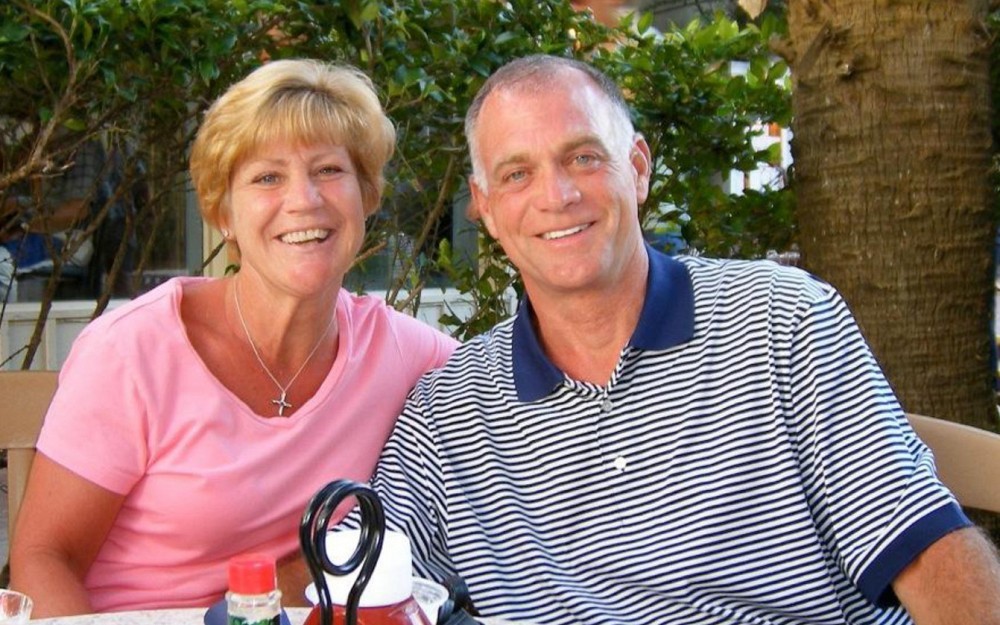
Pancreatic Cancer Patient Encourages Others to Maintain Hope

Acid reflux sent Ken Falhaber to his primary care doctor in October 2010. After several rounds of testing, he received an unexpected diagnosis: stage-4 pancreatic cancer.
"My first reaction was shock, then fear that it wouldnt be curable. But I refused to just give up. I chose hope, and I began researching treatment options that would give me the best chance to beat this disease, recalls Falhaber, then 55.
By November, he connected with a community-based oncologist and underwent a two-drug chemotherapy regimen followed by radiation therapy in conjunction with a second round of chemotherapy to shrink the tumor.
"At the time, my tumor was too large. Surgery wasnt an option, and cure wasnt possible without surgery, adds Falhaber.
By chance during his treatment, Falhaber met Susan Pavlechfounder of the GIVEHOPE Pancreatic Cancer Awareness and Research Fundwho introduced him to University of Cincinnati (UC) Cancer Institute surgical oncologist Syed Ahmad, MD. Pavlech established GIVEHOPE in 2010 to support pancreatic cancer research and awareness after her best friend was diagnosed with stage-4 pancreatic cancer. Together with BSI Engineering, the organization has raised $50,000 for pancreatic cancer research at UC.
In the spring of 2012, Falhabers tumor was deemed operable. Although he got a second opinion out of state, he chose to have surgery at UC Health University Hospital. On July 13, 2012, Ahmad performed a Whipple procedure to remove the pancreas, gallbladder, part of the duodenum (uppermost portion of the small intestine), a small portion of the stomach and the lymph nodes near the head of the pancreas. Follow-up pathology and imaging indicated he is now cancer-free.
"God took care of me and guided my doctors. I was fortune that my cancer responded to treatment to make surgery a possibility. That isnt typical for most people who deal with this disease, says Falhaber. "We need an early detection tool to help catch the disease earlier, and that will only be possible with more research and funding to support it.
Falhaber is now actively involved with the Pancreatic Cancer Action Network, a nationwide group of people dedicated to working together to advance research, support patients and create hope for those affected by pancreatic cancer.
"If I had one message for other people facing pancreatic cancer, it would be to not give up hope and be your own advocate. Get a second opinion, consider clinical research trials, put your boxing gloves on and keep fighting, adds Falhaber.
Learn More
For more information about the UC Cancer Institute multidisciplinary gastrointestinal team, visit uccancer.com. To learn more about clinical trials, including phase-1 experimental studies, call 513-584-7698 or click here.


Syed Ahmad, MD

Susan Pavlech of Give Hope presents the UC pancreatic cancer team with a check for $10,000.
Tags
Related Stories
Cancer Center plays key role in lab research, clinical trials for new pancreatic cancer drug
September 1, 2026

WLWT and WCPO highlighted the contributions of University of Cincinnati Cancer Center researchers that helped lead to the recent FDA approval of daraxonrasib, a new treatment for pancreatic cancer.
Cancer Center physician receives $150,000 New Investigator Research Grant to study treatment-resistant leukemia
September 1, 2026
The University of Cincinnati Cancer Center’s Sarah Skuli, MD, PhD, received a two‑year, $150,000 Leukemia Research Foundation New Investigator Grant to study TP53‑mutated leukemia, a treatment‑resistant subtype with very poor outcomes.
Heavy social media use linked to depression
August 31, 2026

U.S. News and World Report, Yahoo! News, MSN, USA Today and other national media highlight a new study by the University of Cincinnati and Northwestern University that found a correlation between heavy social media use and depression in adults.