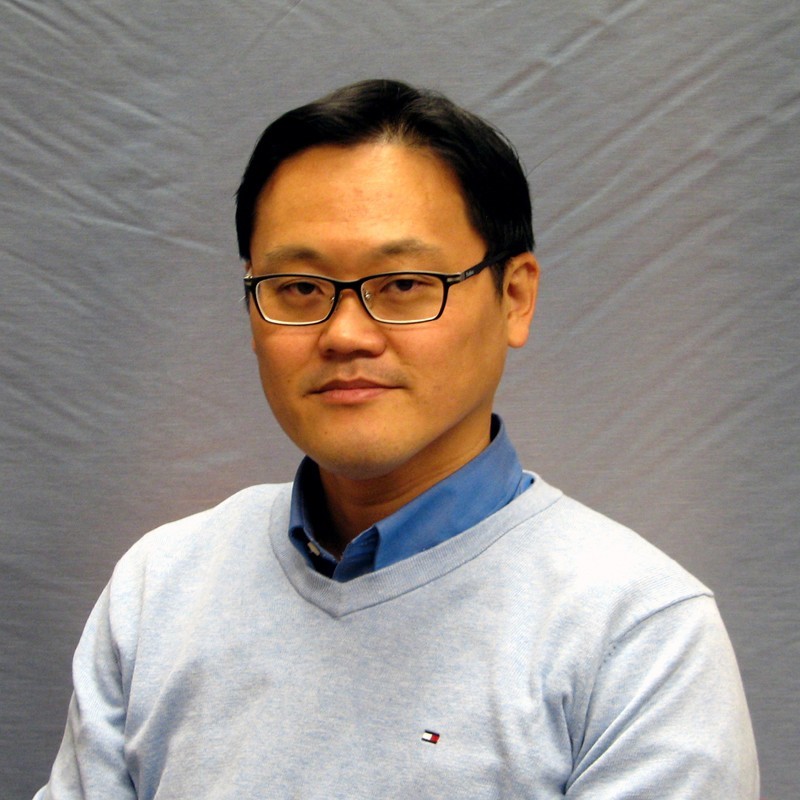
KyoungHyun Kim, PhD, has joined the UC College of Medicine Department of Environmental Health as an assistant professor in the division of environmental genetics and molecular toxicology.
Kim graduated from Rutgers University with a masters degree in cell and developmental biology where he worked closely with internationally renowned diet and cancer prevention researcher Chung S. Yang, PhD. He went on to receive a doctorate in toxicology from Texas A&M University. With expertise in molecular biology, nuclear receptor biology, toxicogenomics and cancer research, Kim has 28 manuscripts in leading scientific journals including Science, Oncogene, Journal of Biological Chemistry, Cancer Research, Molecular Endocrinology, Endocrinology, EMBO Molecular Medicine and Carcinogenesis. He also serves as an associate faculty member in Faculty of 1000, an in-depth directory to the top articles in biology and medicine recommended by over 5,000 expert scientists and clinical researchers.
Here he discusses his interest in cancer research and what brought him to the UC College of Medicine.
Tell us about the focus of your research.
"Our laboratory will focus on identification and characterization of novel molecular target genes using an integrative approach that combined bioinformatics, proteomics and molecular biology techniques. We will use a systematic approach to work toward development of improved treatment modalities against cancer.
My team is particularly in a role of non-coding RNAs, including microRNAs and long-non coding RNAs, which were previously considered as junk or not detected in biological system. Recent advances in genome wide analysis have revealed a significant role in human carcinogenesis. We will explore a role of these non-coding RNAs in environmental toxicant-related diseases in which their biological relevance has not been well characterized.
Why did you originally become interested in cancer research?
"Although there have been many new findings contributing to our understanding of cancer development over the last few decades, cancer is still a multi-factor and multi-stage disease that needs further exploration. Investigating cancers complexity was really fascinating to me when I was undergraduate student.
What is your proudest accomplishment to date in your career? Why?
"By applying bioinformatics tools in publicly available from multiple cancer patient data sets, I and other researchers in MD Anderson Cancer Center identified a novel role for an orphan nuclear receptorNR2E3as a significant prognostic indicator. We showed that NR2E3 regulates estrogen receptor, a major guideline for treatment of breast cancer patients. In addition, ZBTB4a novel tumor suppressor gene targeted by pro-oncogenic microRNAswas identified as a significant prognostic marker associated with increased relapse-free survival for cancer patients with multiple cancers, including breast, prostate and lung cancer. These are potential therapeutic targets with strong clinical relevance and we will further investigate a role of these novel genes at molecular level.
What was appealing to you about the UC College of Medicine?
"Without a doubt, the UC College of Medicine has a great environment for conducting research that bridges basic science to translational research. The Cincinnati Cancer Center collaboration among UC, Cincinnati Childrens Hospital Medical Center and UC Health is important for clinical research and access to research core facilities for basic research. The Environmental Protection Agency is close by as well. Taken together, this provides ample opportunities for a researcher like me to challenge many obstacles in cancer research and environmental-related diseases.
When you arent in the lab, how do spend your free time?
"I try to spend my time with my family, especially my 8-year-old son, Ryan, and 4-year-old daughter, Elizabeth, since they are young and new here. We also try to give them opportunities to make new friends and to have multicultural experiences in various ways.
About the Cincinnati Cancer Center
The Cincinnati Cancer Center is a collaborative initiative of the University of Cincinnati, Cincinnati Childrens Hospital Medical Center and UC Health. The centers ultimate aspiration is to create a world-class comprehensive center leading in innovation to eliminate cancer. Learn more at cincinnaticancercenter.org.