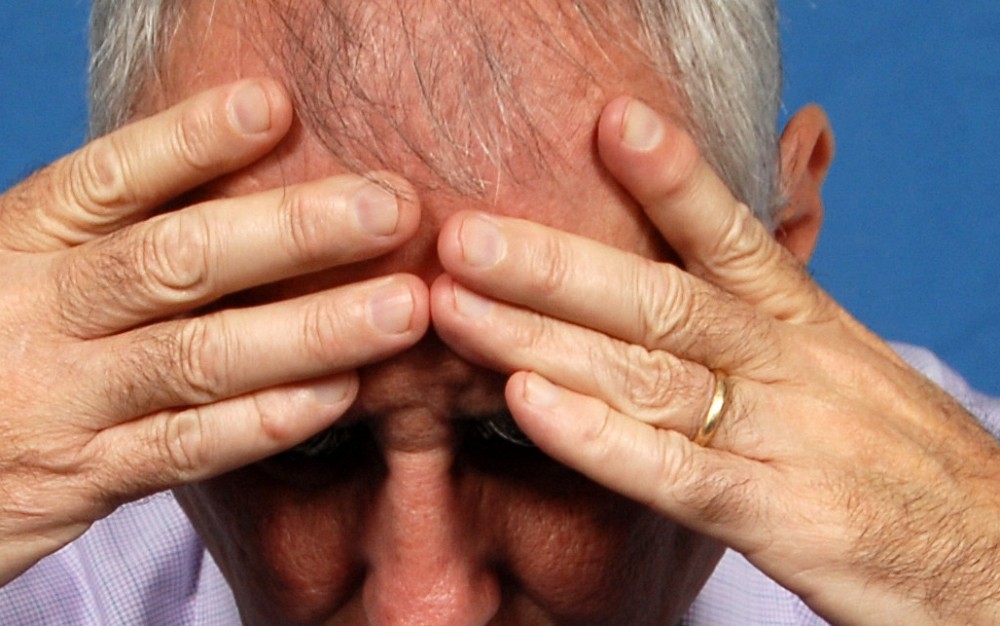
UC HEALTH LINE: Chronic Migraine Headache Relief Possible With Outpatient Surgery

CINCINNATIWhen medications fail to eradicate debilitating migraine headaches, surgery could provide relief for certain patients.
David Megee, MD, a UC Health plastic and reconstructive surgeon, now offers nerve decompression surgery for long-term relief from chronic migraine headaches. The procedurewhich involves using techniques to relieve pressure on a pinched nerveis done in an outpatient under general anesthesia at the University of Cincinnati Medical Center (formerly University Hospital).
According to the National Institute of Neurologic Disorders and Stroke, 10 percent of people worldwide suffer from migraine headaches. The condition is believed to stem from irritation to a large peripheral nerve branch (trigeminal nerve) in the face and neck. The exact cause of this irritation is unknown.
Although scientific literature on the cause of migraine headaches is inconclusive, potential causes of migraine headaches include hormonal fluctuation, genetic predisposition, stress and anxiety, bright/flashing lights and lack of food or sleep.
Determining Procedure Eligibility
"Surgery isn't the right option for all migraine sufferers, but it can be a very effective method of long-term relief for people who fail preventative medications and require the use of rescue medications on a routine basis, explains Megee who is also an instructor of clinical surgery at the UC College of Medicine Department of Surgery. "Rescue medications are costly and have side effects. If we can decrease or end the use of preventative medications, patients dont have to worry about having them handy all the time, which is important for quality of life.
Chronic migraine headaches can cause severe pain, nausea and/or vomiting and a sensitivity to light and sound that affects a persons ability to function normally. Depending on the severity of a persons migraine attacks, some people choose to take medicine to prevent attacksothers treat the symptoms as they occur.
Eligibility for nerve decompression surgery is based on the patients medical history, a headache journal and response to Botox injections to paralyze the muscles that irritate the nerve linked to migraines.
"Botox helps us determine if the patient has an identifiable pinched nerve. If this is the case, we can use techniques to relieve pressure on that nerve and reduce symptoms for most patients, says Megee.
Published clinical data has shown that 85 percent of patients who undergo nerve decompression surgery for migraine headaches have a 50 percent reduction in migraine episodes, adds Megee.
Appointments and Information
For more information about nerve decompression surgery or appointments with UC Health Plastic Surgery, call 513-475-8881.

David Megee, MD, specializes in peripheral nerve surgery.
Related Stories
Cancer Center plays key role in lab research, clinical trials for new pancreatic cancer drug
September 1, 2026

WLWT and WCPO highlighted the contributions of University of Cincinnati Cancer Center researchers that helped lead to the recent FDA approval of daraxonrasib, a new treatment for pancreatic cancer.
Cancer Center physician receives $150,000 New Investigator Research Grant to study treatment-resistant leukemia
September 1, 2026
The University of Cincinnati Cancer Center’s Sarah Skuli, MD, PhD, received a two‑year, $150,000 Leukemia Research Foundation New Investigator Grant to study TP53‑mutated leukemia, a treatment‑resistant subtype with very poor outcomes.
Heavy social media use linked to depression
August 31, 2026

U.S. News and World Report, Yahoo! News, MSN, USA Today and other national media highlight a new study by the University of Cincinnati and Northwestern University that found a correlation between heavy social media use and depression in adults.