HEALTH LINE: Simple Surgery Can Avoid Many Complications of Reflux

CINCINNATIMany patients with chronic heartburn or gastroesophageal reflux disease (GERD) spend years taking medication, sleeping upright and enduring chest discomfort and pain because of their condition. But a UC Health surgeon says a minimally invasive procedure has offered relief for many patients with long-standing symptoms.
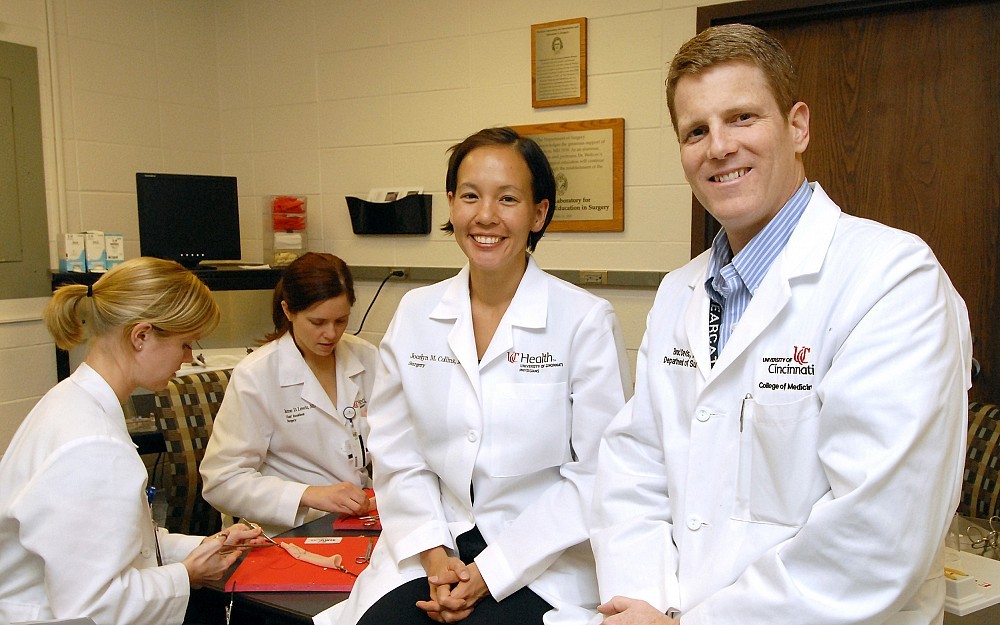
Jocelyn Collins, MD, a surgeon with UC Health general surgery and assistant professor at the University Of Cincinnati College of Medicine, specializes in treating GERD and has successfully treated many patients with laparoscopic antireflux surgery, also known as Nissen fundoplications.
"In GERD, there is a dysfunction of the lower sphincter in the esophagus that allows the stomach to reflux food or liquid, including digestive acids, backward into the esophagus, says Collins. In addition to causing chest discomfort, long-term exposure of the esophagus to stomach acids can result in damage to the esophagus, resulting in ulcerations, strictures or Barretts disease.
"In a fundoplication, the upper part of the stomach is wrapped around the base of the esophagus and stitched into place. This supports and strengthens the closing function of the esophageal sphincterpreventing stomach acid from leaking back into the esophagus and causing heartburn symptoms.
After a Nissen fundoplication, the stomach empties properly, closing off the esophagus during a contraction, instead of squeezing food or acids back into it.
Collins says this surgery is particularly helpful for patients with severe heartburn and chest pain who do not adequately respond to medications or who do not wish to take medications long-term. The laparoscopic Nissen procedure can also reverse complications of GERD, such as esophageal ulcerations, Barretts esophagus and other GERD-related asthma or laryngitis.
"Some patients don't get adequate relief from medication, or dont want to take medications long-term, she says. "While proton-pump inhibitors, the most commonly prescribed medication for GERD, reduces the amount of acid produced by the stomach, long-term use of them can increase their risk of bone fractures."
But by simple strengthening the closing mechanism between the esophagus and stomach, she says anti-reflux surgery reverses GERD with no changes in stomach function or digestion.
Collins says most Nissen fundoplications are performed laparoscopically, with just several small incisions in the abdomen. Patients typically require a one-night hospital stay, but are able to return to regular activities within two weeks.
Related Stories
UC radiation oncologist speaks with Local 12 news about clinical trial for head and neck cancer treatment
August 10, 2026

Dr. Sara Medek, a UC radiation oncology professor, speaks with Local 12 news about a new clinical trial aimed at reducing radiation in certain areas while still treating cancer effectively but with fewer painful side effects.
Cancer Center director charts future based on collaboration, AI
August 10, 2026

David Gius, MD, PhD, was featured in a Cincinnati Business Courier article and The Cancer Letter’s “The Directors" podcast discussing his priorities and goals as he recently took the helm as director of the University of Cincinnati Cancer Center.
UC graduates cross finish line at commencement
August 7, 2026
The University of Cincinnati recognized 2,125 graduates in two ceremonies at summer commencement Friday on campus at Fifth Third Arena.