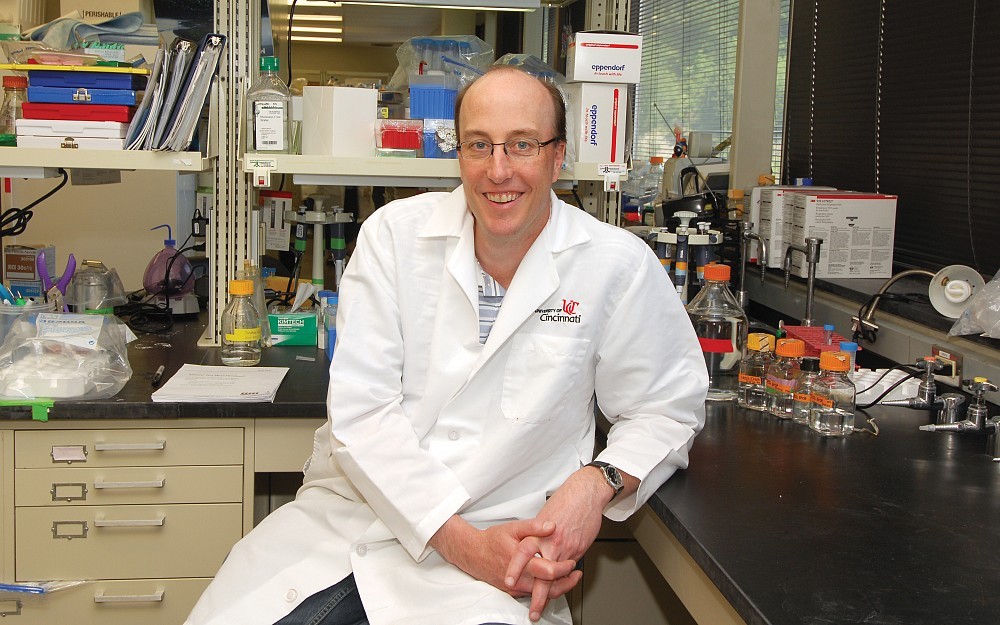
Misled by Macronutrients? UC Researchers Suggest Alternative Diet Design

CINCINNATIThe search for the perfect dietone that promotes weight loss and optimal healthhas left many people empty handed.
A Perspectives article written by University of Cincinnati (UC) researchers and appearing in the Feb. 22, 2013, edition of
Science
suggests that a broad focus on the negative effects of high-fat or processed carbohydrate-rich diets could be misplaced.
Authors Randy Seeley, PhD, and Karen Ryan, PhD, say that rather than focusing on macronutrients that make up food (fats, proteins and sugars), it might be better to focus at an even deeper levelthe micronutrients derived from certain foods that act at the cellular level.
They suggest that food should be viewed and studied as if it is a cocktail of "hormones because of the way its derivatives act on cells within the body.
For example, the authors cite the amino acid leucinewhich isnt made in the body and must be ingested. Leucine has been found to trigger brain pathways that reduce food intake and body weight. Leucine is a micronutrient of many foods including soybeans, some cuts of beef, brown rice, chicken egg yolks and cows milk.
"What we eat is not just made up of various amounts of fat, protein and sugar, says Seeley, professor of medicine at UC and director of the Cincinnati Diabetes and Obesity Center.
"As food is broken down, its micronutrient components circulate in the blood and act on cell-surface receptors on multiple organs to change the activities of those cells in the same way that hormones made in our body do. In this way our bodies can listen and respond to what foods we are eating.
Seeley says that just as different levels of various hormones can influence our health, so can the "hormones that come from our food. By viewing food as hormones, Seeley adds, diets could be designed in a "bottom-up fashion to reduce disease and promote wellness.
"Designing a diet based on how its various micronutrients turn on or off certain receptors in different tissues is a bottom-up way to design diets, says Seeley. "Just as different levels of various hormones can influence our health, so can the hormones that come in from our food.
Tags
Related Stories
Cancer Center plays key role in lab research, clinical trials for new pancreatic cancer drug
September 1, 2026

WLWT and WCPO highlighted the contributions of University of Cincinnati Cancer Center researchers that helped lead to the recent FDA approval of daraxonrasib, a new treatment for pancreatic cancer.
Cancer Center physician receives $150,000 New Investigator Research Grant to study treatment-resistant leukemia
September 1, 2026
The University of Cincinnati Cancer Center’s Sarah Skuli, MD, PhD, received a two‑year, $150,000 Leukemia Research Foundation New Investigator Grant to study TP53‑mutated leukemia, a treatment‑resistant subtype with very poor outcomes.
Heavy social media use linked to depression
August 31, 2026

U.S. News and World Report, Yahoo! News, MSN, USA Today and other national media highlight a new study by the University of Cincinnati and Northwestern University that found a correlation between heavy social media use and depression in adults.