Patient Benefits from Immune System-Stimulating Experimental Drug

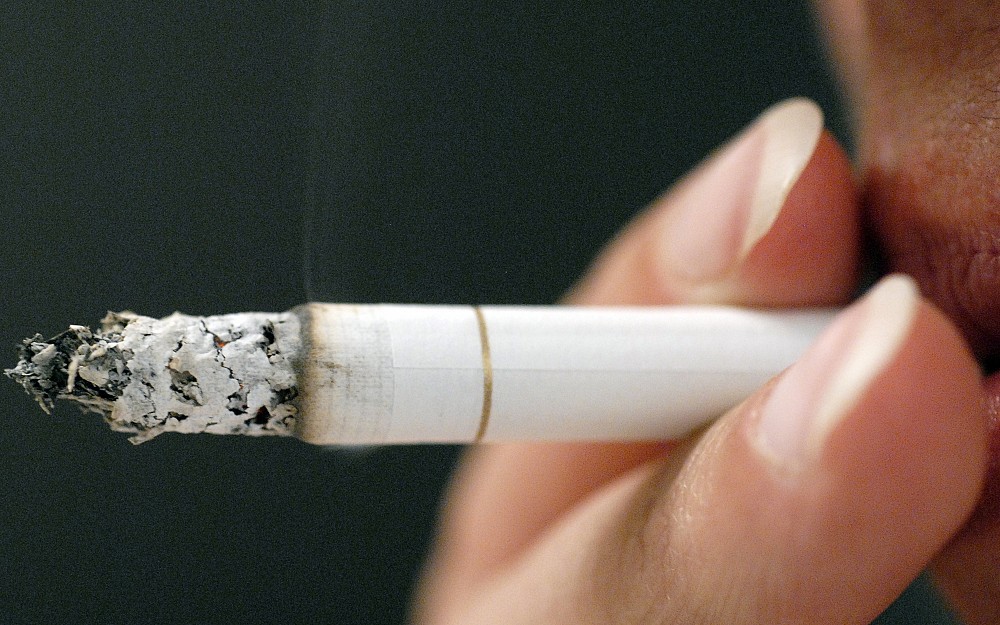
Pam Johnson smoked cigarettes for 45 years. She quit the day she had surgery for stage 3 lung cancer.
"I was anxious and worried, says Johnson about the day she received her diagnosis in 2010. Her primary care physician had ordered routine blood work that came back abnormal. He ordered a chest x-ray as follow-up to rule out obvious causes of the abnormality. The chest X-ray revealed a suspicious spot in her right lung and a follow-up biopsy confirmed that it was cancerous.
Johnson says there was no question in her mind where she would go to get care: "UC and the Barrett Centerits the best institution in town for cancer care.
She chose Sandra Starnes, MD, UC Health chest surgeon and chief of thoracic surgery at the UC College of Medicine, to perform her surgery at University of Cincinnati Medical Center (formerly University Hospital). Starnes and her team offer rib-sparing video-assisted thoracoscopic surgery (VATS). The technique requires only a few small incisions in the chest to insert the minimally invasive tools used to operate.
Johnson immediately began a three-month regimen of combined chemotherapy and radiation therapy to address residual cancer cells. Six months later, a follow-up PET/CT scan showed a mass in the liver, with blood work indicating abnormal liver function. A biopsy confirmed that the lung cancer had spread to her liver as well as to a pelvic bone and one rib.
After a standard second-line chemotherapy failed to reduce the liver tumor size, she consulted with John Morris, MD, director of the UC Cancer Institutes Experimental Therapeutics/Phase 1 Program and lung cancer expert to talk about experimental treatments.
"It was pretty clear that the standard therapies werent going to be enough for me. I wanted to take the steps that would give me the best change at kicking the cancers butt. I trust Dr. Morris and he said this phase I study was my best shot, recalls Johnson.
In March 2012, she began treatment on a phase 1 study, sponsored by Bristol Myers Squibb, to test an immune system-stimulating agent known as MDX-1105. About 200 patients will enroll in the trial nationwide.
"This experimental drug does not act directly on the tumor, but rather blocks an off-switch in the immune system allow the immune system to activate against cancer, explains Morris, who serves as UCs principal investigator of the trial.
By June 2012after two cycles of the experimental therapyJohnsons liver tumor had shrunk 80 percent, the pelvic bone regenerated and the rib remained stable. As of February 2013, Ms. Johnsons tumors continue to shrink and are almost unmeasurable on x-rays.
"Im living a good quality of life, despite the cancer. I trust my Dr. Morris. He gets me and what I want from this experience. Im very hopeful and focused on living my life, adds Johnson.
Cancer Experimental Therapeutics
Patients who have not responded to standard treatment options may qualify to participate in experimental treatment options only available through phase I "first-in-human clinical research studies. The UC Cancer Institute is the only organization within a 100-mile radius of Cincinnati to offer a comprehensive phase I clinical trial program.
Phase 1 studies are the first step in testing an investigational drug in humans. The purpose of a phase 1 study is to find the safest way to give a new drug (for example, by mouth, IV infusion or injection) and the most effective dosage.
Learn more about the UC Cancer Institute Experimental Therapeutics Program at uccancer.com/phase1 or by calling 866-724-CURE (2873).

John Morris, MD
Related Stories
On-site training in Speech & Hearing Clinic sets UC’s programs apart
August 27, 2026
At the University of Cincinnati’s Speech & Hearing Clinic, Doctor of Audiology and Speech-Language Pathology graduate students gain real-world experience while providing free speech and hearing services to the community.
Designing with cancer patients' needs in focus
August 27, 2026
Kristina Shin is designing garments that prioritize the comfort, function and confidence of breast cancer patients, addressing a need often overlooked by traditional fashion.
UC, NKU renew longstanding partnership supporting Army ROTC cadets
August 26, 2026
The University of Cincinnati Army ROTC and Northern Kentucky University (NKU) have renewed a longstanding partnership that supports students preparing to become Army officers and leaders in their communities. The universities formalized the renewed agreement during a signing event Aug. 11 at NKU.