College of Medicine Holds Annual Match Day March 15

UC medical students are getting ready for their big day--when they'll find out where they will spend the next three to five years in training to further their careers as physicians.
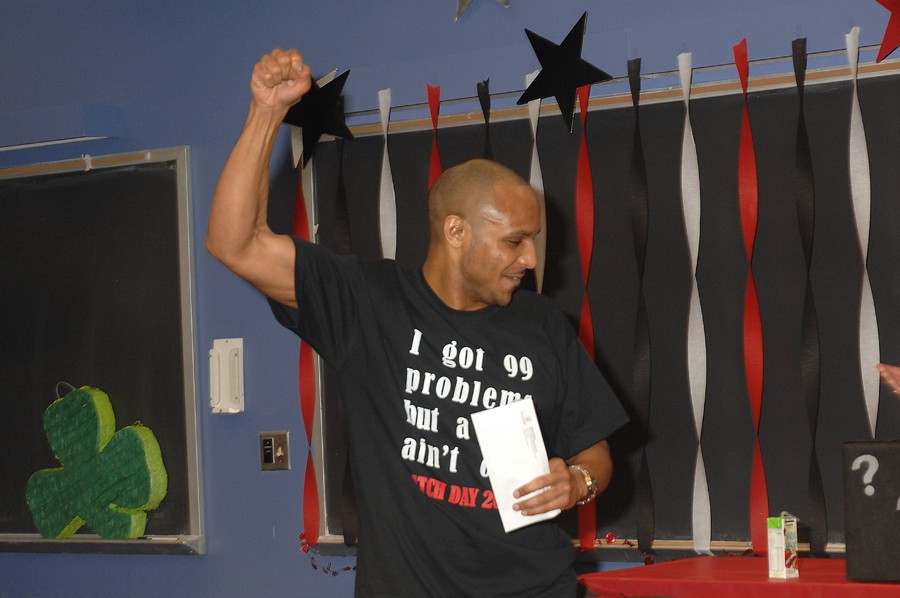
An annual right of passage at medical schools across the nation, Match Day is when fourth-year students learn where they are "matched for their residency training. Student names are called, lottery-style, during the event, and they open their envelope hoping to see their top choice of hospital and specialty.
The 2013 medical student Match Day will be held at 11:30 a.m. Friday, March 15. More than 150 students will learn their matches in MSB E-351, with overflow seating in Kresge Auditorium. The matching will be screened live in Kresge and be streamed live online on Friday.
Fourth-year student David Moon is hoping to match into a pediatric neurology, either at Cincinnati Children's Hospital Medical Center or at one of the large academic centers he applied to across the country. His residency program would total five years: two in pediatric training and three studying neurology.

Match Day 2012
Tags
Related Stories
Cancer Center plays key role in lab research, clinical trials for new pancreatic cancer drug
September 1, 2026

WLWT and WCPO highlighted the contributions of University of Cincinnati Cancer Center researchers that helped lead to the recent FDA approval of daraxonrasib, a new treatment for pancreatic cancer.
Cancer Center physician receives $150,000 New Investigator Research Grant to study treatment-resistant leukemia
September 1, 2026
The University of Cincinnati Cancer Center’s Sarah Skuli, MD, PhD, received a two‑year, $150,000 Leukemia Research Foundation New Investigator Grant to study TP53‑mutated leukemia, a treatment‑resistant subtype with very poor outcomes.
Heavy social media use linked to depression
August 31, 2026

U.S. News and World Report, Yahoo! News, MSN, USA Today and other national media highlight a new study by the University of Cincinnati and Northwestern University that found a correlation between heavy social media use and depression in adults.