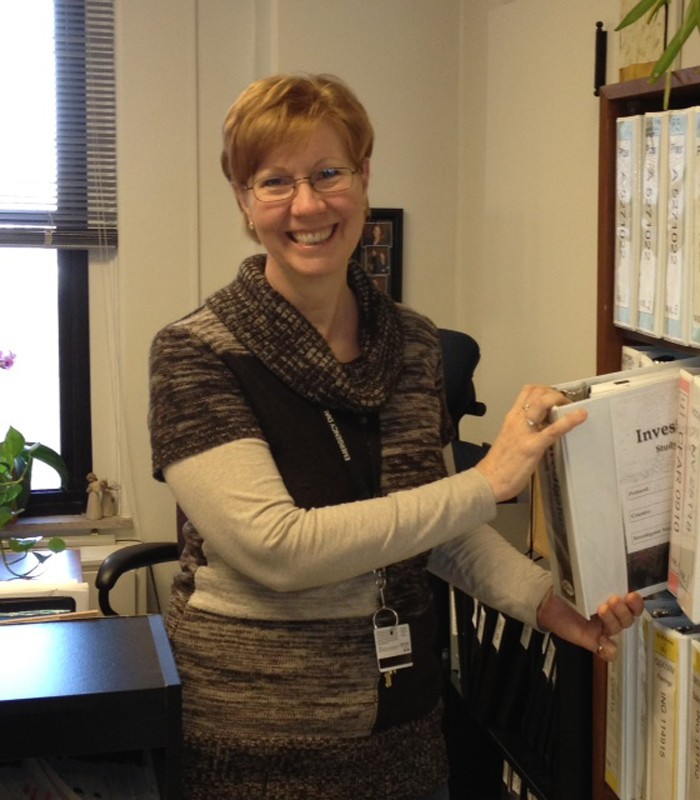
Focus on Staff With Susan Groh

Susan Groh, research coordinator for the division of infectious diseases, originally set out to be an emergency medical technician. After high school, she trained for certification while working at Kenner Products. "I didnt get to pursue emergency medicine interests, as I heard that UC was the place to work, she says, and she has been with the university since 1979.
When did you become an employee at UC?
"I started my UC employment experience in 1979 in diagnostic immunology in laboratory medicine for Dr. Paul Hurtubise and began my college education in night school. With marriage in 1981 to my husband of now 31 years, and the blessings of our two children beginning in 1986, I put my college education on the back burner, and its been simmering there ever since. During my years at UC, Ive also worked in purchasing and materiel management, internal medicines immunology, allergy and rheumatology division, UCs Cancer Center, the IRB and now the infectious diseases division. Its been a journey I would not change because the people whom Ive met and worked with over the past 33 years have been an integral part of my life story.
What are your duties?
"My official title in my current position is research coordinator, but my focus is in regulatory management. I handle the regulatory issues in the division for all the clinical research studies done by our staff, which is made up of wonderfully caring and dedicated individuals.
"The regulatory aspects of clinical trials are involved in the clinical research study process from the beginning to the end. There are specific documents which need to be prepared for the FDA dependent upon what is being researched, i.e. investigational drugs or devices, as well as verification of any conflict of interest issues for all personnel involved in the study execution. One aspect of my job is to prepare an informed consent form in the format acceptable to our UC IRB department and package it with the study protocol and all affiliated study documents for review and approval by our IRB. Our division does clinical studies that are connected with pharmaceutical companies, grant-based studies through nationwide organizations like the AIDS Clinical Trials Unit and investigator-initiated studies. Each one is handled just a little differently.
"Once a research study is IRB approved, there is regulatory maintenance which involves amendments that involve changes to the protocol and sometimes the consent, and yearly continuing review reports that need to be prepared and submitted to the IRB. All of these documents must be maintained in an organized manner for review by study-monitoring personnel from the sponsoring agency.
What is the most challenging part about working with clinical trials?
"The most challenging part of my job is being able to stay on top of the time-sensitive documents that have to be approved by the IRB and made available to the study nurses so that the studies flow without any disruption in enrollment or participant care. Our entire staff counts on each other to do their best, and we really do work like a well-oiled machine. The study participants are the ones who benefit from our efforts, and I know that we all try to do everything possible to ensure their study success.
"If the field of medicine did not have access to regulated clinical trials for the study of new medications and devices, we would not have been able to safely develop and test the drugs and medical implements that we count on in our everyday lives to feel well. One specific benefit of clinical research has been the number of lives saved, which would have been lost to us as in the AIDS epidemic of the 1980s. Through clinical trials, HIV-positive individuals are able to live long enough to have the opportunity to die of old age. That is a wonderful thing.
What is your favorite part of your job?
"The most rewarding and favorite part of my job is when I get to hear about the benefits our clinical studies have given our study participants and getting to share a smile with our study participants when Im in the research clinic area. Deep inside, I like to think my work had a little something to do with that smile.
What do you like to do when you arent at work?
"My family and I are exploring healthy living alternatives in our diet, finding ways to incorporate exercise into our daily routines and cutting down on our use of natural resources. Much of our time is dedicated to vegetable gardening and cooking simple, healthy meals. Our springs and summers are spent stocking wood to use for heat during the winter and our wood stove has comfortably warmed our house so that we havent purchased fuel oil for four winters now. I enjoy pencil sketching, and Ive taken to quilting which has been an interest of mine for years, but Ive just recently indulged in it, and enjoy the companionship of a good book which is always within my reach.
Tags
Related Stories
On-site training in Speech & Hearing Clinic sets UC’s programs apart
August 27, 2026
At the University of Cincinnati’s Speech & Hearing Clinic, Doctor of Audiology and Speech-Language Pathology graduate students gain real-world experience while providing free speech and hearing services to the community.
Funding expands UC research into weight gain side effects of bipolar medication
August 26, 2026
University of Cincinnati researchers have been approved for funding by the Patient-Centered Outcomes Research Institute (PCORI) to expand the implementation of healthy lifestyle interventions and metformin prescription to help manage weight gain in overweight or obese youth taking second-generation antipsychotic medications.
One in four NFL players had CTE at death
August 25, 2026

Forbes cites research on concussions and football helmets by the University of Cincinnati in a report that found one in four NFL players had brain damage at death.