Peer-Referral Programs Can Increase HIV-Testing in Emergency Departments

CINCINNATIResearchers at the University of Cincinnati (UC) have found that incorporating a peer-referral program for HIV testing into emergency departments can reach new groups of high-risk patients and brings more patients into the hospital for testing.
Co-author and assistant professor of emergency medicine Michael Lyons, MD, says public health officials study multiple approaches to increasing early diagnosis of HIV. These approaches include a recent emphasis on expanding testing in health care centers, particularly emergency departments (EDs) that treat disadvantaged, at-risk populations.
"Theres another high-yield way to identify people, which is to take those who are at risk of infection or who are HIV-positive and have them refer their social contacts or partners for testing, he says. "This social network testing is typically used in public health departments to efficiently identify high-risk populations by targeting the social network of those high-risk or HIV-positive individuals.
But he says researchers do not know which program is more important, or, if used together, whether they inefficiently target the same population within a community.
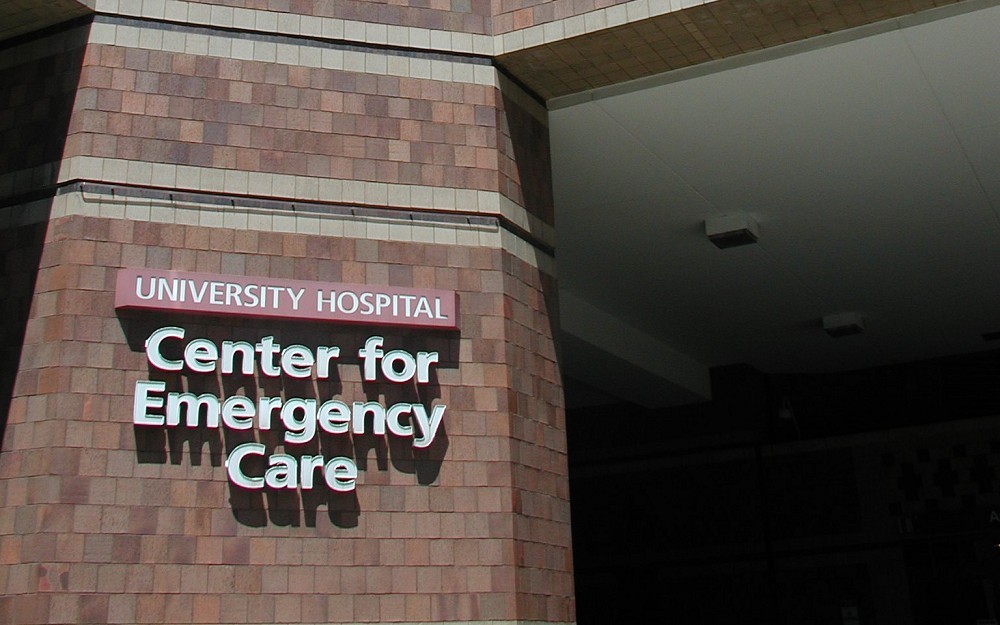
In their prospective observational study, Lyons and fellow researchers implemented a social network and partner testing program from May to September 2011 in an urban academic health center ED.
Through an ED-based targeted HIV testing program, they recruited high-risk or HIV-positive individuals to participate in a paid coupon program, in which individuals receive coupons for HIV testing to give to their friends or partners. If an individual recruited a friend to come to the ED for HIV testing, that friend could also participate in the coupon program.
During the process, researchers reviewed hospital records to determine whether people tested by the peer-referral program also had study-site ED visits or HIV tests within the previous five years.
At the end of the study, the program had diagnosed four new cases of HIV. Of the participating individuals, 34 percent had no prior visits to the ED and 69 percent had never been tested by the ED HIV testing program.
Lyons said the results show that social network programs can be implemented in health care settings, providing valuable access into high-risk, uninsured populations with minimal difficulty.
"We were able to use an existing ED-based program to reach out into the community beyond what the ED would otherwise able to do. This suggests the two HIV-testing approaches may be complementary rather than fully redundant, illustrating the ways in which health centers can feed social network and partner testing programs.
The team is presenting their abstract, "Can a Social Network HIV Testing Program Expand HIV Testing Beyond the Usual Emergency Department Population?" at the Society for Academic Emergency Medicine annual meeting, held May 14-17 in Atlanta. Co-authors include Robbie Paulsen, Andrew Ruffner, Christopher Lindsell, Kimberly Hart, Christopher Barczak, Alexander T. Trott and , Carl J. Fichtenbaum and Michael Lyons.
The project was supported by the National Institute of Allergy and Infectious Diseases at the National Institutes of Health.
Tags
Related Stories
On-site training in Speech & Hearing Clinic sets UC’s programs apart
August 27, 2026
At the University of Cincinnati’s Speech & Hearing Clinic, Doctor of Audiology and Speech-Language Pathology graduate students gain real-world experience while providing free speech and hearing services to the community.
Funding expands UC research into weight gain side effects of bipolar medication
August 26, 2026
University of Cincinnati researchers have been approved for funding by the Patient-Centered Outcomes Research Institute (PCORI) to expand the implementation of healthy lifestyle interventions and metformin prescription to help manage weight gain in overweight or obese youth taking second-generation antipsychotic medications.
One in four NFL players had CTE at death
August 25, 2026

Forbes cites research on concussions and football helmets by the University of Cincinnati in a report that found one in four NFL players had brain damage at death.