Self-Reported CPR Training Doesn t Mean Better CPR Performance

CINCINNATIIn a study of visitors to the University of Cincinnati (UC) Medical Center emergency department, researchers found that adults who said they had been trained to do cardiopulmonary resuscitation (CPR) performed no better in several important CPR measures than those who said theyd never had training.
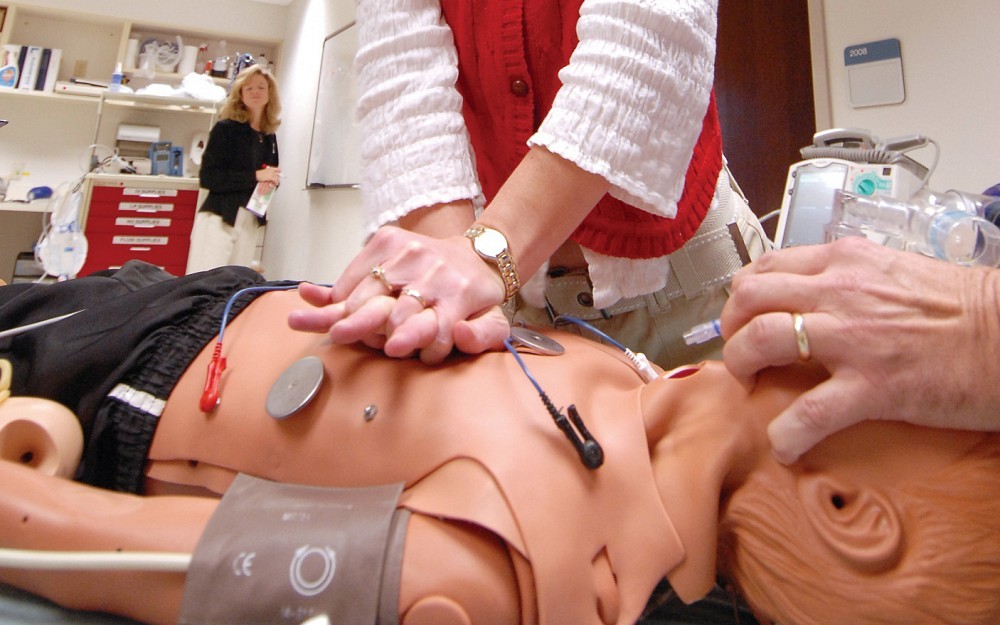
In the study, researchers with UCs Department of Emergency Medicine approached 50 non-patient emergency department visitors to train them in doing compression-only cardiopulmonary resuscitation (CCPR). Compression-only CPR is recommended by the American Heart Association as the best way to keep someone alive after their heart stops until paramedics arrive because it is easier to remember and does not require "mouth to mouth breathing.
Before training, participants filled out a questionnaire about their previous CPR training and confidence of performing CPR. Then they spent 60 seconds performing CPR on a training mannequin and were judged on six components of CPR performance before getting CCPR training.
Participants were measured on the following components: checking the patient for responsiveness, calling for help/911, beginning chest compressions immediately and correct hand placement, compression depth and compression rate.
Among the group, 60 percent of participants reported previous CPR training. While those participants performed more components correctly, no one performed all CPR measures correctly and there was no significant difference in performance between participants with and without prior training.
Researchers also found that correct compression rate and depth were very poor.
"The most effective chest compressions are done at around 100 per minute and are 2 inches deep. Although traditional CPR classes emphasize pushing hard and fast, our subjects almost universally pushed too slow and too soft. Adequate compressions are the most important components of CPR to keep oxygenated blood going to the brain, says Jason McMullan, MD, assistant professor of emergency medicine at UC and one of the studys investigators.
Finally, the study found that prior training did not lead to participants reporting a higher confidence or likeliness to perform CPR if needed.
"Bystander CPR can triple the chances of survival after out-of-hospital cardiac arrest. We found that there is a desperate need to train or retrain people better because the current way of training doesnt obviously increase their skills or confidence. Without getting better training out there, people will continue to die needlessly from cardiac arrest, says Jennifer Sayegh, the studys lead investigator.
The team presented their abstract, "Individuals Who Self-Report Previous CPR Training Do Not Demonstrate Higher Performance Confidence or Accuracy, at the Society for Academic Emergency Medicine annual meeting May 14-18 in Atlanta. Co-authors include McMullan, Sayegh, Kimberly Ward Hart and Christopher Lindsell, PhD.
The study was supported by UC's Center for Clinical and Translational Science and Training (CCTST) through its funding of an emergency medicine research internship. CCTST is the academic home of the universitys institutional Clinical and Translational Science Award from the National Institutes of Health.
Tags
Related Stories
On-site training in Speech & Hearing Clinic sets UC’s programs apart
August 27, 2026
At the University of Cincinnati’s Speech & Hearing Clinic, Doctor of Audiology and Speech-Language Pathology graduate students gain real-world experience while providing free speech and hearing services to the community.
Funding expands UC research into weight gain side effects of bipolar medication
August 26, 2026
University of Cincinnati researchers have been approved for funding by the Patient-Centered Outcomes Research Institute (PCORI) to expand the implementation of healthy lifestyle interventions and metformin prescription to help manage weight gain in overweight or obese youth taking second-generation antipsychotic medications.
One in four NFL players had CTE at death
August 25, 2026

Forbes cites research on concussions and football helmets by the University of Cincinnati in a report that found one in four NFL players had brain damage at death.