Public Health's Epidemiology Concentration Offers Students Hands-On Experience

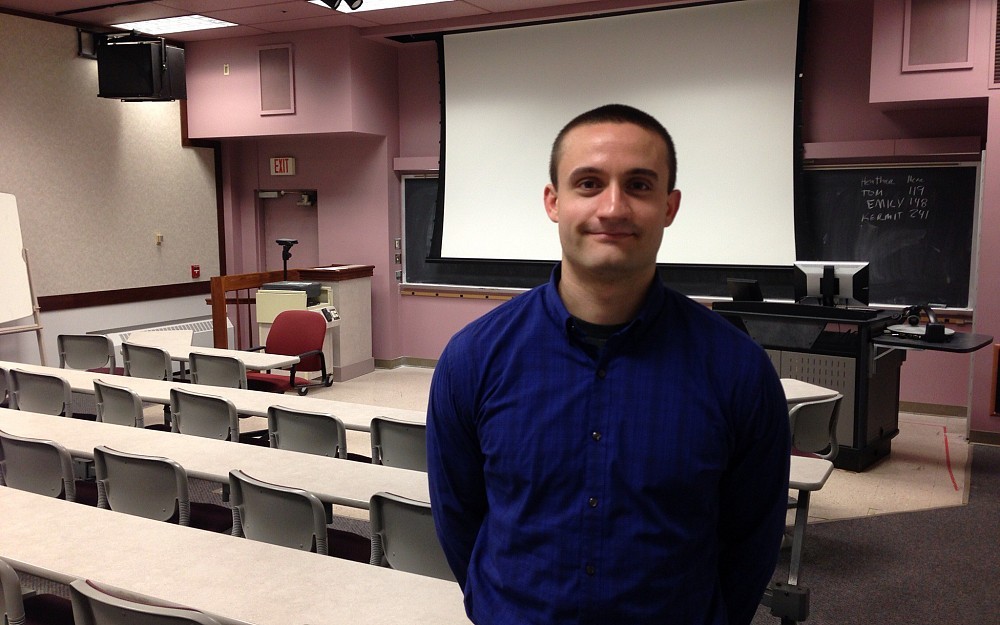
First-year student William Scott says he has been interested in the field of medicine for quite some timebut not particularly the patient care side of things.
Thats what led him to pursue a Masters of Public Health degree with a concentration in epidemiology. The graduate program is housed in UCs department of environmental health.
"In epidemiology, youre researching the patterns, cause and effects of health and disease conditionsyoure trying to find ways to prevent them as opposed to treating patients who may already be affected, which was interesting to me, he says.
"When it comes to health care, everyone has their own opinion, but with public healthand epidemiologyyoure able to collect concrete data to determine what truly works, he adds. "A public health degree will help me make an impact on health care from the bottom upusing hands-on research and numbers.
Susan Pinney, PhD, professor in the department of environmental health and director of the MPH epidemiology concentration, says epidemiology helps inform policy decisions and evidence-based medicine by identifying risk factors for disease and targets for preventive medicine.
In addition, epidemiologists often help with study design, collection and statistical analysis of data and interpretation and dissemination of results.
"A public health degree with a focus on epidemiology really means training in community outreach with a translational componentits listening to what members of the community have to say, translating their concerns to science and then incorporating that into public health practices, she says, adding that students in the program get hands-on training that is invaluable.
"An academic program like ours is ripe for this, as many of our faculty members are involved in research supported by the National Institute of Environmental Health Sciences, with mandatory outreach and education opportunities.
"We have the strength of researchers who are studying real-life problems in human populations to gain information and eventually create best practicesand were exposing our students to this.
Students within the concentration must complete community-based practicums and are required to have 120 hours of practice-based experience; graduates often go on to work in such organizations as the National Institute for Occupational Safety and Health or the U.S. Centers for Disease Control and Prevention (CDC).
Scott says hed like to get a job working for UC Health or Cincinnati Childrens Hospital Medical Center.
"But I could go anywhere in the country, he says, adding that he is particularly interested in social aspects of mental health care and the obesity epidemic. "Thats what is so great about a public health degreeyou really have a lot of options.
"The UC MPH program provides trainees with the opportunity to go into our communities and meaningfully connect with people where they live, work and play, says Bill Mase, DrPH, MPH, director of the UC MPH program. "Epidemiology is truly the cornerstone of public health, and we are very pleased to offer this concentration for trainees who will go on to improve the health of our communities.
Tags
Related Stories
Heavy social media use linked to depression
August 31, 2026

U.S. News and World Report, Yahoo! News, MSN, USA Today and other national media highlight a new study by the University of Cincinnati and Northwestern University that found a correlation between heavy social media use and depression in adults.
On-site training in Speech & Hearing Clinic sets UC’s programs apart
August 27, 2026
At the University of Cincinnati’s Speech & Hearing Clinic, Doctor of Audiology and Speech-Language Pathology graduate students gain real-world experience while providing free speech and hearing services to the community.
Funding expands UC research into weight gain side effects of bipolar medication
August 26, 2026
University of Cincinnati researchers have been approved for funding by the Patient-Centered Outcomes Research Institute (PCORI) to expand the implementation of healthy lifestyle interventions and metformin prescription to help manage weight gain in overweight or obese youth taking second-generation antipsychotic medications.