Gastric Sleeve Surgery Removes Barriers to Kidney Transplant for Patient

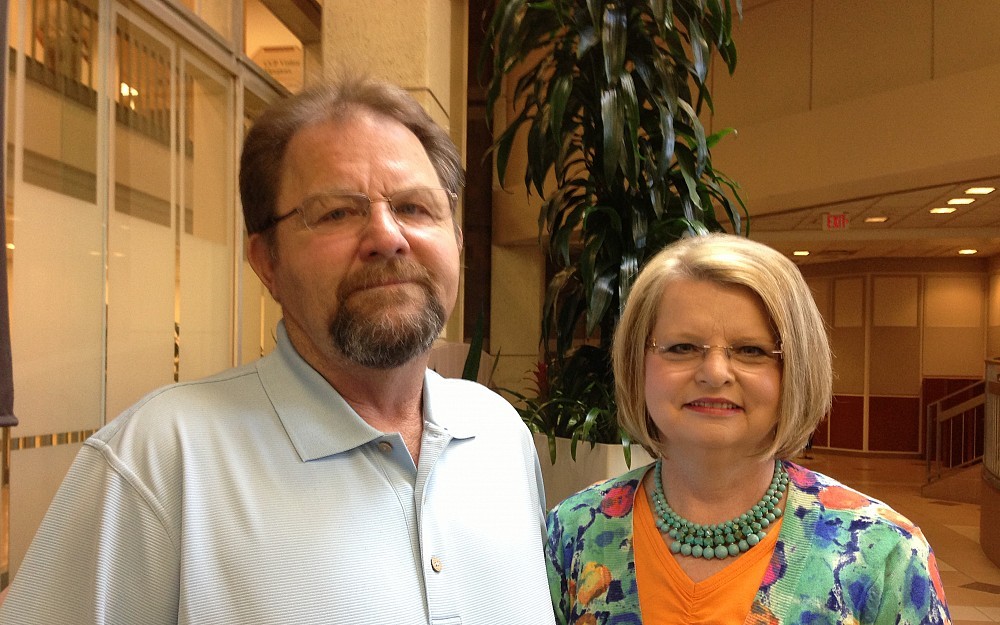
Larry Barton, 63, Lexington, Ky., resident, keeps busy. Church, golfing, camping, hunting and the Corvette clubhe does a lot.
That wasnt quite the case a year ago when Barton, who endured a number of medical issues, visited the University of Kentucky to ask about a kidney transplant.
"I had a quadruple bypass in 2005 and had a mini-stroke after that, he says, adding that a cyst was also found on his spine which was treated with high doses of antibiotics. "In addition, I had diabetes and was eventually put on dialysis.
"With all of these issues, I weighed about 313 pounds.
Traditionally, physicians do not conduct transplant surgery on patients with a Body Mass Index (BMI) of 35 or more. Barton, unfortunately, had a BMI of 40.
"They told me to lose 60 pounds and then come back to see them, he said. "Thats not as easy as it sounds.
Bartons nephrologist in Kentucky, Ashutosh Lohe, MD, referred him to Amit Govil, MD, UC Health nephrologist who started the UC Health Nephrology transplant outreach clinic initiative in Lexington more than three years agoand he had a solution.
"The mission of our outreach clinics (there is also one in Lima, Ohio) is to help all patients overcome the barriers to a successful kidney transplant, and we have been able to make that impact in the region, Govil says.
"Dr. (Tayyab) Diwan, a surgeon at University of Cincinnati Medical Center (UCMC), had just begun performing a new procedure in which obese patients undergo a sleeve gastrectomy first, lose the weight needed and then undergo the transplant procedure. Larry was the perfect candidate.
Sleeve gastrectomy, or gastric sleeve, is a weight-loss procedure in which the stomach is reduced to about 25 percent of its original size by surgical removal of a large portion of the stomach following the major curve. The open edges are then attached to form a sleeve or tube with a banana shape. The procedure permanently reduces the size of the stomach.
"I talked to Dr. Diwan and Dr. (E. Steve) Woodle who really made me feel confident about the surgery, even though they hadnt done many cases yet, Barton says.
He had the gastric sleeve in February 2012; by July, he had lost 65 pounds and was eligible for the transplant surgery.
"I have a wonderful friend, Merry Church, who was willing to give me one of her kidneys, he says. "She was already tested, and we were a perfect match, so I was ready.
Successful Transplant, Successful Weight Maintenance
Barton received his new kidney on July 17, 2012, and from that day, his life has improved tremendously.
"Ive lost at total of 80 poundsIve got 25 more to go to make my goal of 210 poundsand I feel great; I feel like Im 40 again, he says, adding that his new kidney is great too, and that hes been taken off of some of his immunosuppression drugs.
"I have great praise to give to Dr. Govil, Dr. Diwan and Dr. Woodleas well as the rest of the team at UC. Ive never been treated better, and Ive been in and out of hospitals for the last seven years, says Barton. "Everyone went out of their way to helpfrom the doctors to the nurses. You just dont see that type of care anywhere. They werent just super health care providersthey were super people, and they gave me a new life.
*This article was originally published in the July 2013 issue of Connected.
Tags
Related Stories
Cancer Center plays key role in lab research, clinical trials for new pancreatic cancer drug
September 1, 2026

WLWT and WCPO highlighted the contributions of University of Cincinnati Cancer Center researchers that helped lead to the recent FDA approval of daraxonrasib, a new treatment for pancreatic cancer.
Cancer Center physician receives $150,000 New Investigator Research Grant to study treatment-resistant leukemia
September 1, 2026
The University of Cincinnati Cancer Center’s Sarah Skuli, MD, PhD, received a two‑year, $150,000 Leukemia Research Foundation New Investigator Grant to study TP53‑mutated leukemia, a treatment‑resistant subtype with very poor outcomes.
Heavy social media use linked to depression
August 31, 2026

U.S. News and World Report, Yahoo! News, MSN, USA Today and other national media highlight a new study by the University of Cincinnati and Northwestern University that found a correlation between heavy social media use and depression in adults.