In Preparation for the Hardest Year, Medical Students Pass On Advice

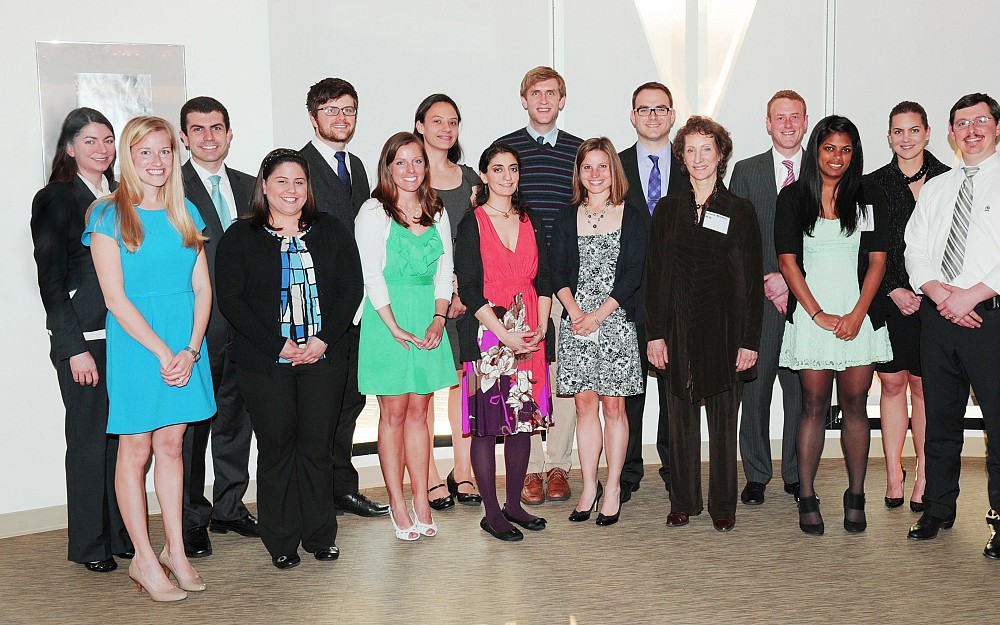
Before they graduated from the College of Medicine this spring, a group of UC students sat down to pass on their most important gift: their reflections and advice on the third year of medical school.
Their publication, "Letters to Third Year Students was distributed to the Class of 2015 at the student clinician ceremony Friday, June 28. It was also the service project for the Gold Humanism Honor Society (GHHS) Class of 2013.
GHHS advisor and assistant dean of academic support Laura Malosh, PhD, says the third year is generally considered the most challenging year of medical school, as students begin spending most of their time in clinical rotations.
"One of the main goals of the book was to help rising third-year students know what to expect and to provide some guidance for navigating this new territory, she says.
Joe Kohne, MD, GHHS member and now a pediatrics resident at Cincinnati Children's Hospital Medical Center, says he recalls getting valuable advice from other medical studentson how to prepare for shelf exams, which review books to buy and which attending physicians to seek out.
"We wanted to help pass on other lessons and advice we learned during medical school: how to make a difference for your patient as a student, how to deal with those really awful days on the wards, and give some insight into what other students around you may be thinking or feeling, he says.
To solicit letters, GHHS members emailed their classmates, posted fliers and asked their friends directly. In addition, each honor society member wrote their own letter of advice.
"I think that we felt this book would be helpful--and even necessary--to most rising third years, says GHHS member Leila Hojat, MD. "Medical students in general aren't prepared well for the emotional ups and downs of third year.
Hojat, now a medicine-pediatrics resident at Case Western/MetroHealth Medical Center, says students excitement at their third year can quickly be crushed by the day-to-day of clinical care.
"We wanted to encourage these students as much as possible while still preparing them for the reality of the wards, she says. "The goal then was to keep their spirits positive and prevent them from losing hope when they did meet difficult or disheartening situations.
"I personally think the students did a phenomenal job, says Malosh. "Their letters are balanced, authentic and honest. For many of the graduating students, the project also helped them reflect on and process their own experience and journey through medical school.
Related Stories
Cancer Center plays key role in lab research, clinical trials for new pancreatic cancer drug
September 1, 2026

WLWT and WCPO highlighted the contributions of University of Cincinnati Cancer Center researchers that helped lead to the recent FDA approval of daraxonrasib, a new treatment for pancreatic cancer.
Cancer Center physician receives $150,000 New Investigator Research Grant to study treatment-resistant leukemia
September 1, 2026
The University of Cincinnati Cancer Center’s Sarah Skuli, MD, PhD, received a two‑year, $150,000 Leukemia Research Foundation New Investigator Grant to study TP53‑mutated leukemia, a treatment‑resistant subtype with very poor outcomes.
Heavy social media use linked to depression
August 31, 2026

U.S. News and World Report, Yahoo! News, MSN, USA Today and other national media highlight a new study by the University of Cincinnati and Northwestern University that found a correlation between heavy social media use and depression in adults.