Funding for UC Research on Burn Injuries Renewed Through National Program

CINCINNATIA University of Cincinnati (UC) professors pre-clinical research focused on restoring pigmentation in skin grafts for severe burns has been renewed through the second funding cycle of the Armed Forces Institute of Regenerative Medicine (AFIRM) program.
UC will be one of 47 performance sites in the second cycle (called AFIRM-II), which is a five-year, $75 million, federally-funded program.
The mission of AFIRM-II is to accelerate regenerative solutions for the treatment of battlefield injuries by the use of regenerative medicine, or the science of the bodys natural processes to restore damaged tissue to its uninjured condition without scar. Successful projects will develop novel therapies for clinical trials on wounded warriors in the military, and for patients in the civilian population. AFIRM-II involves basic and clinical research across both academic institutions and industry partners.
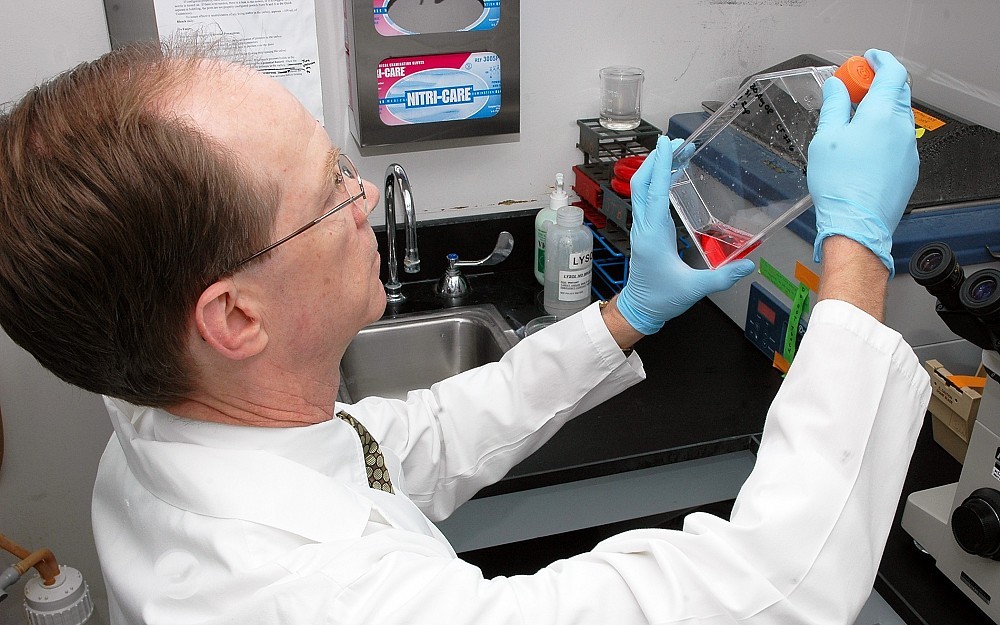
UC professor of surgery research, Steven Boyce, PhD, has studied the design and engineering of skin grafts for life-threatening burn injuries for more than two decades.
Through AFIRM-II, UC will receive $1.18 million over three years for Boyce to continue studies of how to restore and regulate pigmentation in engineered grafts. Boyces labs are based at Shriners Hospital for ChildrenCincinnati.
"The goal of the project at UC is to restore uniform, natural skin color to the engineered skin grafts, and to match as closely as possible the same color as the uninjured skin, he says.
Boyces team selectively propagates the melanocytes in parallel with other skin cells grown from the tissue sample, including the keratinocyte cells from the skins epidermal layer and the dermal fibroblasts from the inner skin, or dermis. Once propagated, the pigment cells are combined with the other skin cells on a degradable biopolymer fabric to form skin grafts that are transplanted to deep skin wounds.
Other AFIRM-II researchers will study clinical therapies for restoring function to severely traumatized limbs, reconstruction of facial and skull injuries, regeneration of genito-urinary organs, and treatments to prevent rejection of hand and face transplants.
The AFIRM-II consortium will be led by the Institute for Regenerative Medicine at Wake Forest University School of Medicine (Wake Forest Baptist Medical Center).
Consortium researchers will work with health professionals at the U.S. Army Institute of Surgical Research and Walter Reed National Military Medical Center to develop new treatments. Government sponsors of AFIRM are the U.S. Army Medical Research and Materiel Command, the Office of Naval Research, the Air Force Medical Service, the Office of Research and DevelopmentDepartment of Veterans Affairs, the National Institutes of Health and the Office of the Assistant Secretary of Defense for Health Affairs.
Tags
Related Stories
Heavy social media use linked to depression
August 31, 2026

U.S. News and World Report, Yahoo! News, MSN, USA Today and other national media highlight a new study by the University of Cincinnati and Northwestern University that found a correlation between heavy social media use and depression in adults.
On-site training in Speech & Hearing Clinic sets UC’s programs apart
August 27, 2026
At the University of Cincinnati’s Speech & Hearing Clinic, Doctor of Audiology and Speech-Language Pathology graduate students gain real-world experience while providing free speech and hearing services to the community.
Funding expands UC research into weight gain side effects of bipolar medication
August 26, 2026
University of Cincinnati researchers have been approved for funding by the Patient-Centered Outcomes Research Institute (PCORI) to expand the implementation of healthy lifestyle interventions and metformin prescription to help manage weight gain in overweight or obese youth taking second-generation antipsychotic medications.