HEALTH LINE: Lung Cancer Screening a Viable Option for Early Detection

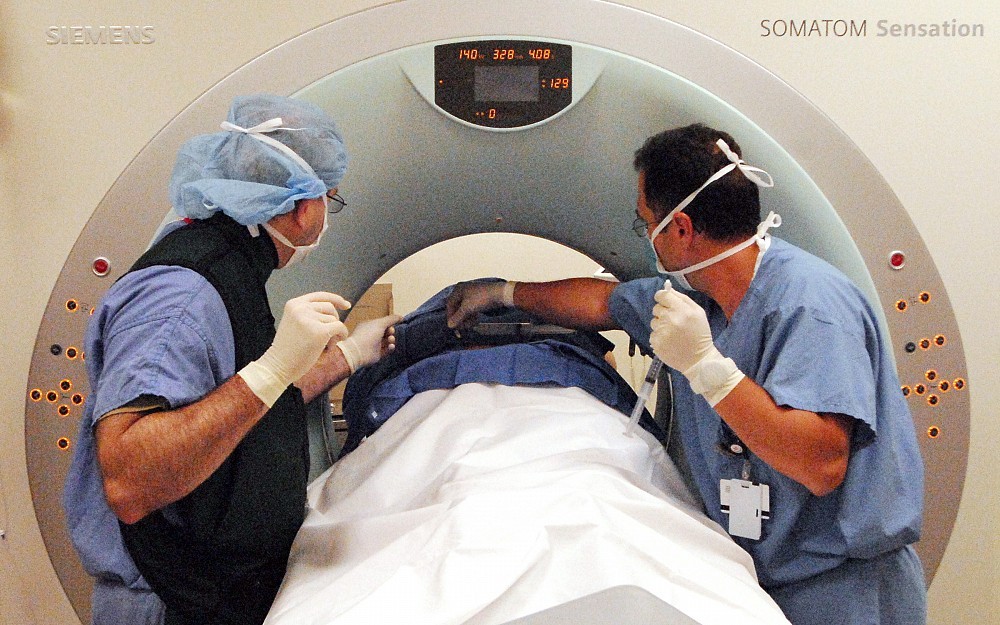
CINCINNATIIn 2011, the National Cancer Institute published data supporting chest CT scans as an effective lung cancer screening tool for a high-risk patient population. The study showed that when heavy smokers were screened with low-radiation dose CT scans versus traditional chest X-rays, there was a 20 percent reduction in lung cancer-related deaths.
A separate UC-based trial evaluating chest CT scans in a population of 132 heavy smokers, which was published in 2011, also supported the imaging technique as a viable screening tool in a high-risk population. For nearly a year now, UC Health and the UC Cancer Institute have been using CT scans to screen for lung cancer in its earliest stagesa time when its most treatable. The UC Cancer Institute Lung Cancer Screening Program screened its 100th patient in Augustreaching the milestone four months earlier than expectedand is on pace to screen its 150th patient by the end of November. Sandra Starnes, MD, John B. Flege, Jr. Chair in Cardiothoracic Surgery and associate professor at UC, UC Health thoracic surgeon and co-leader of the UC Cancer Institute Comprehensive Lung Cancer Center, along with John Morris, MD, says that individuals who have smoked a pack of cigarettes a day for more than 30 years and are over the age of 55 are considered at the highest risk.
Starnes estimates that 90 percent of lung cancer diagnoses are made in current or former smokers. The Greater Cincinnati area has a lung cancer rate that is consistently higher than the general population, primarily due to our regions high smoking rate.
"We use low-radiation dose chest computed tomography, CT scans, for screening, which is used to identify unrecognized disease in people who have no signs or symptoms in an attempt to intervene earlier when disease is generally more treatable, she says.
The UC Cancer Institute program was given a boost in July 2013 when the United States Preventive Services Task Force (USPSTF) issued a draft recommendation giving its second-highest approval rating for CT screening for lung cancer for those at high risk. The recommendation is similar to the recommendation for breast cancer screening for women over 40 years of age, and if approved by the USPSTF, lung cancer screening would be covered as a preventive screening under the Affordable Care Act.
"This allows lung cancer specialists to view the lungs one slice at a time. Nodules that are too small to show up on a chest X-ray are more likely to be detected and specialists can more accurately follow up on concerning lesions, Starnes adds.
Starnes adds that scans are performed under a strict clinical protocol that capitalizes on the expertise of the entire multidisciplinary UC Cancer Institute lung cancer team to produce the most accurate results for patients.
In January, UCs program was recognized by the Lung Cancer Alliance for following the National Framework for Screening Excellence and Continuum of Care. By August, the UC Cancer Institute was one of 100 national centers recognized for following best practices for residents who are at an increased risk for lung cancer. It is the only local program to be recognized.

Sandra Starnes, MD, is chief of the thoracic surgery division for the UC College of Medicine Department of Surgery.

John Morris, MD
Tags
Related Stories
Cancer Center plays key role in lab research, clinical trials for new pancreatic cancer drug
September 1, 2026

WLWT and WCPO highlighted the contributions of University of Cincinnati Cancer Center researchers that helped lead to the recent FDA approval of daraxonrasib, a new treatment for pancreatic cancer.
Cancer Center physician receives $150,000 New Investigator Research Grant to study treatment-resistant leukemia
September 1, 2026
The University of Cincinnati Cancer Center’s Sarah Skuli, MD, PhD, received a two‑year, $150,000 Leukemia Research Foundation New Investigator Grant to study TP53‑mutated leukemia, a treatment‑resistant subtype with very poor outcomes.
Heavy social media use linked to depression
August 31, 2026

U.S. News and World Report, Yahoo! News, MSN, USA Today and other national media highlight a new study by the University of Cincinnati and Northwestern University that found a correlation between heavy social media use and depression in adults.