Two Genes Linked to Inflammatory Bowel Disease

CINCINNATIInflammatory Bowel Disease (IBD), a group of chronic inflammatory disorders of the intestine that result in painful and debilitating complications, affects over 1.4 million people in the U.S., and while there are treatments to reduce inflammation for patients, there is no cure.
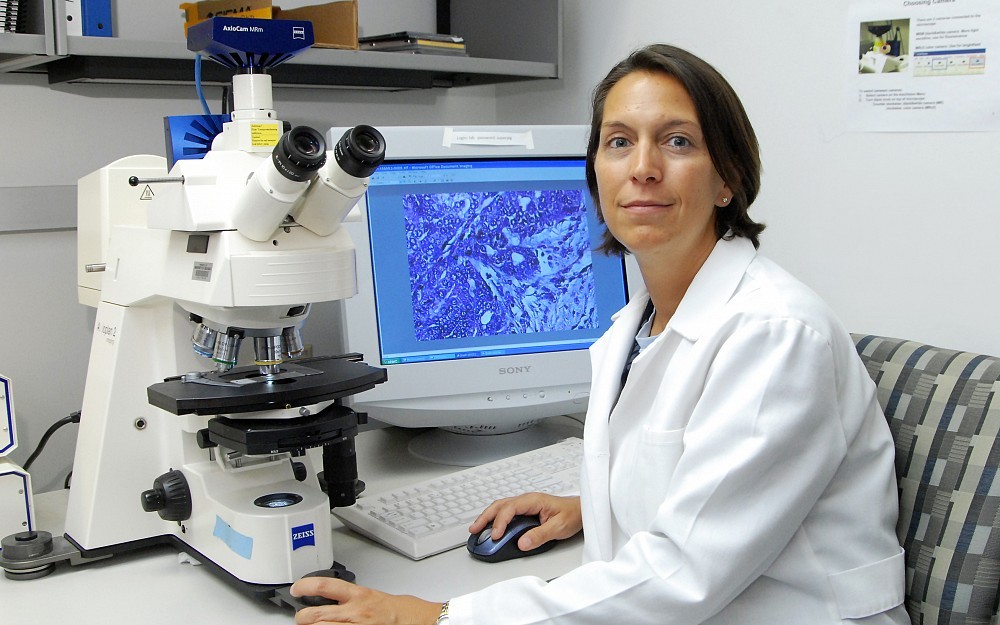
Now, Cincinnati Cancer Center and University of Cincinnati Cancer Institute researcher Susan Waltz, PhD, and scientists in her lab have done what is believed to be the first direct genetic study to document the important function for the Ron receptor, a cell surface protein often found in certain cancers, and its genetic growth factor, responsible for stimulating cell growth, in the development and progression of IBD.
These results are published in the advance online edition of the American Journal of Physiology-Gastrointestinal and Liver Physiology.
"Genome-wide linkage studies have identified the Ron receptor tyrosine kinase and its hepatocyte growth factor-like protein (HGFL) as genes highly associated with IBD, says Waltz, professor in the department of cancer biology at UC. "However, only scant information exists on the role of Ron or HGFL in IBD. Based on the linkage of Ron to IBD, we examined the biological role of Ron in colitis.
Colitis is swelling of the large intestine (colon) and is a potentially pre-cancerous condition.
Waltz says that due to her labs cancer-related expertise with studying Ron and HGFL, she and her colleagues had all of the tools to translate their knowledge of the study of these proteins in IBD.
In the study, Waltz and Rishikesh Kulkarni, PhD, a postdoctoral fellow in UCs department of cancer biology, used animal models with colitis. A genetic knockout group did not have Ron; the other did.
"We found that genetic loss of Ron led to aggressive inflammation and damage to the colon of models with IBD, she says.
Loss of Ron also led to significantly reduced body weight and a dramatic reduction in colon tissue cell growth as well as increased pro-inflammatory cytokine (proteins important in cell signaling) production, which was associated with changes in important signaling pathways known to regulate IBD.
"In addition, there are a number of small changes called single nucleotide polymorphisms (SNP) in humans which map to both the Ron and HGFL gene and have been identified to strongly associate IBD disease in humans, Waltz says. "Our studies suggest that these SNPs may reduce the function of Ron and HGFL leading to chronic intestinal inflammation and damage.
"With the knowledge that weve gained in studying these proteins in cancer biology, we hope this information may be translated to help patients with Crohns disease and ulcerative colitis. Further studies on the Ron signaling pathway are needed and could reveal an important new target for these conditions.
This study was funded in part by Public Health Services (CA125379), a National Institutes of Health P30 (DK078392) grant, the U.S. Veterans Administration (VA1001BX000803) and the American Heart Association Great Rivers Affiliates (12POST12040055). Researchers involved in the study include Waltz, Kulkarni, Devi Gurusamy, PhD, and William Stuart. Waltz cites no conflict of interest.
The University of Cincinnati, Cincinnati Childrens Hospital Medical Center and UC Health have created the Cincinnati Cancer Centera joint effort designed to leverage the strengths of all three organizations in order to provide the best possible cancer diagnostics, research, treatment, and care for individuals in the Tristate region and the nation. To learn more, visit cincinnaticancercenter.org.
Tags
Related Stories
On-site training in Speech & Hearing Clinic sets UC’s programs apart
August 27, 2026
At the University of Cincinnati’s Speech & Hearing Clinic, Doctor of Audiology and Speech-Language Pathology graduate students gain real-world experience while providing free speech and hearing services to the community.
Funding expands UC research into weight gain side effects of bipolar medication
August 26, 2026
University of Cincinnati researchers have been approved for funding by the Patient-Centered Outcomes Research Institute (PCORI) to expand the implementation of healthy lifestyle interventions and metformin prescription to help manage weight gain in overweight or obese youth taking second-generation antipsychotic medications.
One in four NFL players had CTE at death
August 25, 2026

Forbes cites research on concussions and football helmets by the University of Cincinnati in a report that found one in four NFL players had brain damage at death.