UC Led Research Finds Chips With Olestra Cause Body Toxins to Dip

According to a clinical trial led by University of Cincinnati researchers, a snack food ingredient called olestra has been found to speed up the removal of toxins in the body.
Results are reported in the April edition of the Journal of Nutritional Biochemistry.
The trial demonstrated that olestraa zero-calorie fat substitute found in low-calorie snack foods such as Pringlescould reduce the levels of serum polychlorinated biphenyls (PCBs) in people who had been exposed to PCBs.
High levels of PCBs in the body are associated with an increase in hypertension and diabetes.
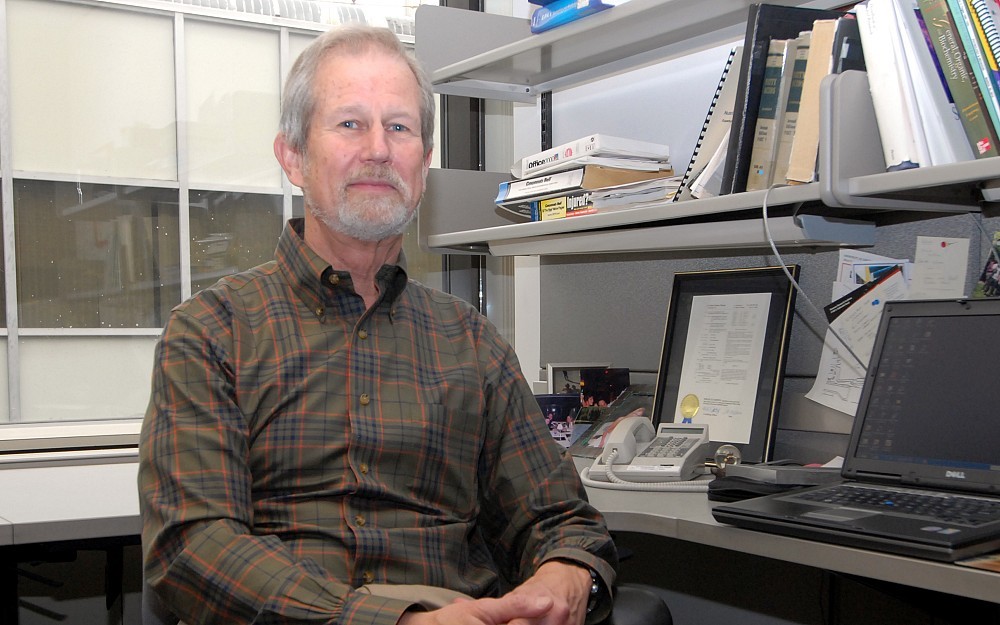
"The findings showed that the rate of PCB disappearance from the participants that ate olestra was markedly faster during the one-year trial than that before the trial, says principal investigator Ronald Jandacek, PhD, an adjunct professor in the department of pathology and laboratory medicine at UCs College of Medicine.
Olestra (brand name Olean) is a nonabsorbable fat product that Procter & Gamble developed in collaboration with UC and was introduced in snack foods (most notably Pringles) in 1996. Early reports of indigestion issues, however, prompted reformulation of the product prior to its market entry. The Kellogg Company purchased the Pringles brand in 2012.
"Olestra is a fat that passes through the body and remarkably it has revealed a potential health benefit of removing PCBs. Our early work with animal studies predicted that we would see this effect in people, Jandacek says of the clinical trial.
Twenty-eight residents Anniston, Ala., who had known high levels of PCBs participated in the yearlong study. Half of the participants consumed 12 Pringles a day made with vegetable oil, and the other half consumed 24 Pringles a day made with olestra. The serving sizes varied to control for calorie count.
According to the results, the half who ate the olestra chips had a PCB rate of decrease of 8 percent, an eight-fold increase in the rate of removal prior to the study compared with those who ate the chips with vegetable oil, who had a 1 percent increase in the rate of removal.
"Olestras effect on PCB removal is apparently the result of solubilizing fat-soluble compounds like PCBs in the intestine and the solubilization reduces absorption of these compounds into the body, says Jandacek, who was the principal investigator on a 2005 study that found that olestra removed toxins from animals.
Jandacek was first introduced to researchers and community advocates studying the health of residents in Anniston in 2008. The Alabama town was once the main production site for a factory that made PCBs. Since Jandacek had already facilitated the use of olestra in the removal of PCBs from animals and a patient in Australia, he joined with the clinical research group of James Heubi, MD, of Cincinnati Childrens Hospital Medical Center, UCs Department of Pediatrics and the UC Center for Clinical and Translational Science and Training; researchers at the Centers for Disease Control and Prevention; and nearby Jacksonville State University College of Nursing to pursue the human trial.
The trial was supported by the National Institute of Environmental Health Sciences and the National Center for Research Resources and the National Center for Advancing Translational Sciences, all of the National Institutes of Health.
Related Stories
Cancer Center plays key role in lab research, clinical trials for new pancreatic cancer drug
September 1, 2026

WLWT and WCPO highlighted the contributions of University of Cincinnati Cancer Center researchers that helped lead to the recent FDA approval of daraxonrasib, a new treatment for pancreatic cancer.
An expert pieced together this Roman document like a puzzle
September 1, 2026

National media highlighted a new project by UC Classics Assistant Professor Matthijs Wibier to piece together and translate an ancient Roman text from fragments buried in the desert for more than 1,600 years.
Cancer Center physician receives $150,000 New Investigator Research Grant to study treatment-resistant leukemia
September 1, 2026
The University of Cincinnati Cancer Center’s Sarah Skuli, MD, PhD, received a two‑year, $150,000 Leukemia Research Foundation New Investigator Grant to study TP53‑mutated leukemia, a treatment‑resistant subtype with very poor outcomes.