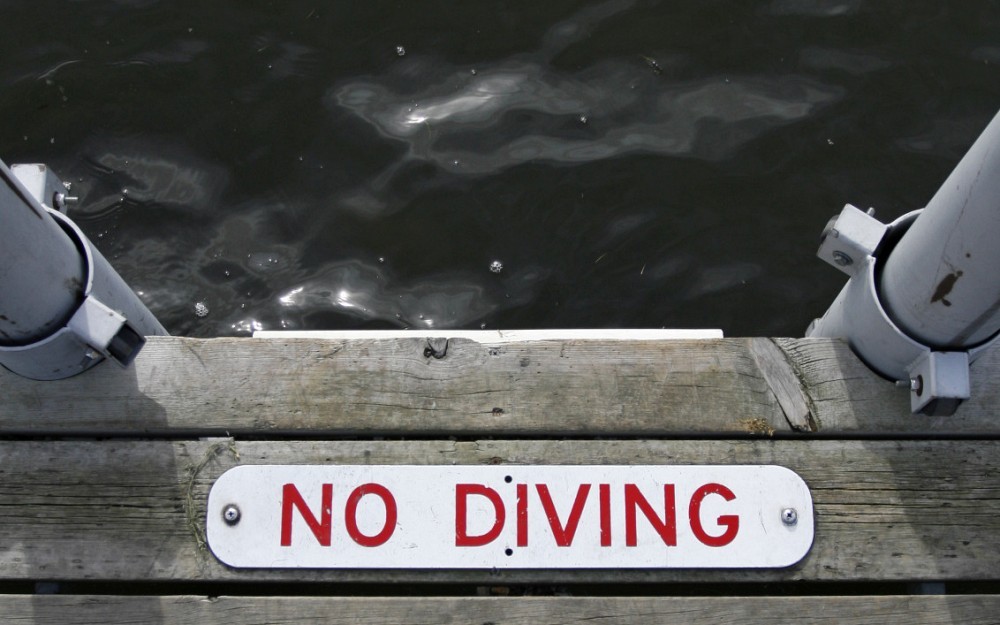
HEALTH LINE: No Diving Into Lakes, Rivers and Oceans

What lurks beneath the water?
It sounds like a horror story title, and it certainly can be when a spinal cord injury results from diving into natural bodies of water such as lakes, rivers and oceans, where visibility is low and rock and debris can be hidden from view.
Having fun at the lake and staying safe are not mutually exclusive, but experts say it is never advisable to dive into any body of water where you cant see under the surface, no matter how many times youve been diving there before.
"Always enter the water feet first, says spine surgeon Steven Agabegi, MD, an assistant professor of orthopaedic surgery at the University of Cincinnati (UC) College of Medicine and UC Health orthopaedic surgeon.
While the majority of diving injuries occur in June through September in residential pools, its not uncommon to see head and neck injuries which occurred from diving into natural bodies of water.
At University of Cincinnati Medical Center, a Level I trauma center, Agabegi says: We typically see a dozen or so trauma patients during the summer whose neck injuries resulted either from diving into the shallow end of a residential pool or hitting a felled tree or rock at the lake.
Many of these patients sustain devastating spinal cord injuries and become quadriplegic; depending on the severity of the injury, the neurologic deficits can be permanent.
"Diving is a very high risk activity and should be treated as such says Agabegi, adding that recreational diving should be solely restricted to large public pools where there is a designated diving area and a lifeguard on duty.
The highest demographic for diving accidents is young males, and alcohol is a common factor.
Should you find yourself in the company of someone who dove in head first and appears to be injured or unconscious, there are steps to take to help minimize damage.
- Call 911 immediately.
- Approach the victim carefully.
- Hold the victims head in alignment with his back and gently turn him onto his back so he can breathe. If possible, have someone assist.
- Keep the head and back stabilized and do not move the persons neck.
- Support the victim with something sturdypool equipment, oar, ring buoy, etc.
- Do not remove the victim from the water until trained emergency assistance arrives. Movement can cause further damage to the spinal cord.
Related Stories
UC study shows lack of awareness for lung cancer screenings across country
August 21, 2026
University of Cincinnati Cancer Center researchers have published a study in the American Journal of Surgery that found only 15% of eligible American adults have discussed lung cancer screening with their doctors.This research emphasizes the need to spread awareness and better educate the public about screening through low-dose computed tomography.
UC radiation oncologist speaks with Local 12 news about clinical trial for head and neck cancer treatment
August 10, 2026

Dr. Sara Medek, a UC radiation oncology professor, speaks with Local 12 news about a new clinical trial aimed at reducing radiation in certain areas while still treating cancer effectively but with fewer painful side effects.
Cancer Center director charts future based on collaboration, AI
August 10, 2026

David Gius, MD, PhD, was featured in a Cincinnati Business Courier article and The Cancer Letter’s “The Directors" podcast discussing his priorities and goals as he recently took the helm as director of the University of Cincinnati Cancer Center.