
MicroRNA That Could Be Used to Suppress Prostate Cancer Progression Found

CINCINNATIAbout one in seven men will develop prostate cancer over the course of a lifetime, and about one in 36 men will die from it.
This is why findings by Cincinnati Cancer Center researchers, showing that a tumor suppressive microRNA, when activated by an anti-estrogen drug, could contribute to development of future targeted therapies, are important.
These findings are published in the May 16, 2014 edition of the journal PLOS ONE (http://dx.plos.org/10.1371/journal.pone.0098037).
"MicroRNAs, or miRNAs, are short RNA molecules that play a prominent role in regulating gene expression. One miRNA can target multiple genes, but their expression is often hijacked by cancer cells and disrupts multiple cancer-causing or tumor-suppressing pathways, says Shuk-Mei Ho, PhD, director of the CCC and Jacob G. Schmidlapp Chair of Environmental Health and professor at the University of Cincinnati (UC) College of Medicine.
She along with Ricky Y.K. Leung, PhD, member of the CCC, assistant research professor in the department of environmental health and member of the UC Cancer Institute, and their team identified a new miRNA, known as hsa-miR-765, which is specifically activated by a Food and Drug Administration (FDA)-approved anti-estrogen drug (fulvestrant).
"This miRNA suppresses expression of HMGA1, a gene that was shown in previous studies to be associated with prostate cancer progression and recurrence, says Leung. "These findings do not only contribute to new insights on the effects of anti-estrogen but also the potential of using miRNA for monitoring drug efficacy and for future RNA-based therapy developments.
"This study also highlights the potential use of this anti-estrogen or miRNA in patients with recurrent prostate cancer, for whom there is no treatment, and raises the possibility of using anti-estrogen or miRNA treatments in preventing or slowing progression for primary prostate cancer.
Using cultured prostate cancer specimens from patients who were given a single 250 mg dose of fulvestrant, researchers found that hsa-miR-765 acted as a tumor suppressor when its expression was increased by the use of fulvestrant.
"Both the anti-estrogen and the hsa-miR-765 mimic suppressed HMGA1 protein expression, Ho says. "Levels of hsa-miR-765 were increased, and HMGA1 expression was almost completely lost in prostate cancer specimens from patients treated with a single dose of fulvestrant 28 days before removal of their prostate glands.
"These findings reveal a unique fulvestrant signaling process involving the increased regulation of hsa-miR-765 that suppresses the HMGA1 protein as part of the mechanism underlying the tumor suppressor action in prostate cancer. This could lead to newer treatment options with less toxicity for these patients.
This research, which was conducted with collaborators from the University of Pittsburgh, was funded by the Hong Kong University Grant Council-General Research Fund (M469107), Chinese University of Hong Kong Direct Research Grants (CU2041252 and CU2041563) a VA Merit Award (I01BX000675), National Institutes of Health grants (ES019480, ES020956, ES015584, ES006096, CA112570, CA015776) and a grant from the Investigator-sponsored Study Program of AstraZeneca. UC researchers cite no conflict of interest.
The content is solely the responsibility of the authors and does not necessarily represent the official views of the National Institutes of Health.
The University of Cincinnati, Cincinnati Childrens Hospital Medical Center and UC Health have created the Cincinnati Cancer Centera joint effort designed to leverage the strengths of all three organizations in order to provide the best possible cancer diagnostics, research, treatment, and care for individuals in the Tristate region and the nation. To learn more, visit cincinnaticancercenter.org.
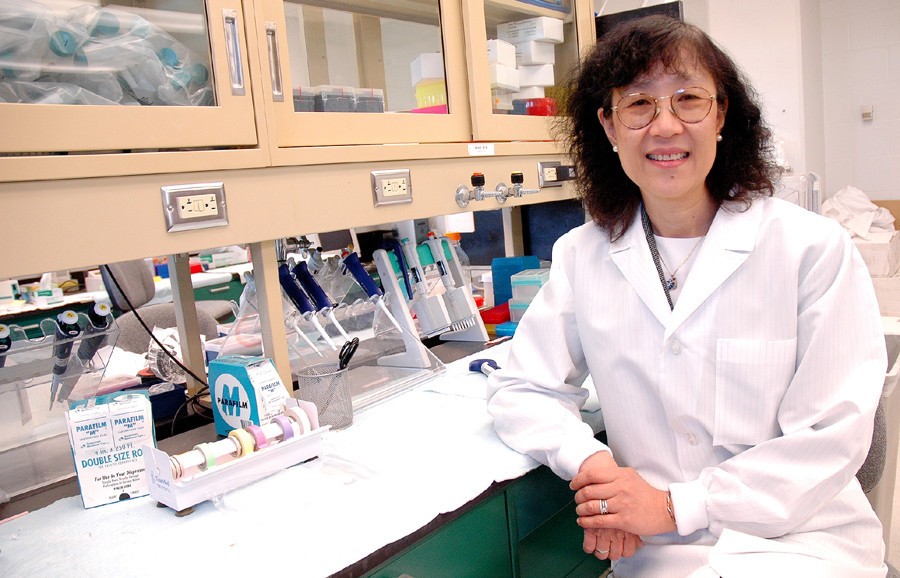
Shuk-Mei Ho, PhD, is the chair of UC's Department of Environmental Health.
Related Stories
Cancer Center plays key role in lab research, clinical trials for new pancreatic cancer drug
September 1, 2026

WLWT and WCPO highlighted the contributions of University of Cincinnati Cancer Center researchers that helped lead to the recent FDA approval of daraxonrasib, a new treatment for pancreatic cancer.
Cancer Center physician receives $150,000 New Investigator Research Grant to study treatment-resistant leukemia
September 1, 2026
The University of Cincinnati Cancer Center’s Sarah Skuli, MD, PhD, received a two‑year, $150,000 Leukemia Research Foundation New Investigator Grant to study TP53‑mutated leukemia, a treatment‑resistant subtype with very poor outcomes.
Heavy social media use linked to depression
August 31, 2026

U.S. News and World Report, Yahoo! News, MSN, USA Today and other national media highlight a new study by the University of Cincinnati and Northwestern University that found a correlation between heavy social media use and depression in adults.