UC, Partners Awarded Funding to Address Health Care Gaps

CINCINNATIThe University of Cincinnati (UC) College of Nursing, along with the UC College of Medicine and partners at Cincinnati Childrens Hospital Medical Center and UCs University Center for Excellence in Developmental Disabilities, has received almost $1 million to develop programs to grow in number and better prepare practitioners to meet the primary care and mental health care needs of the Ohio Medicaid population.
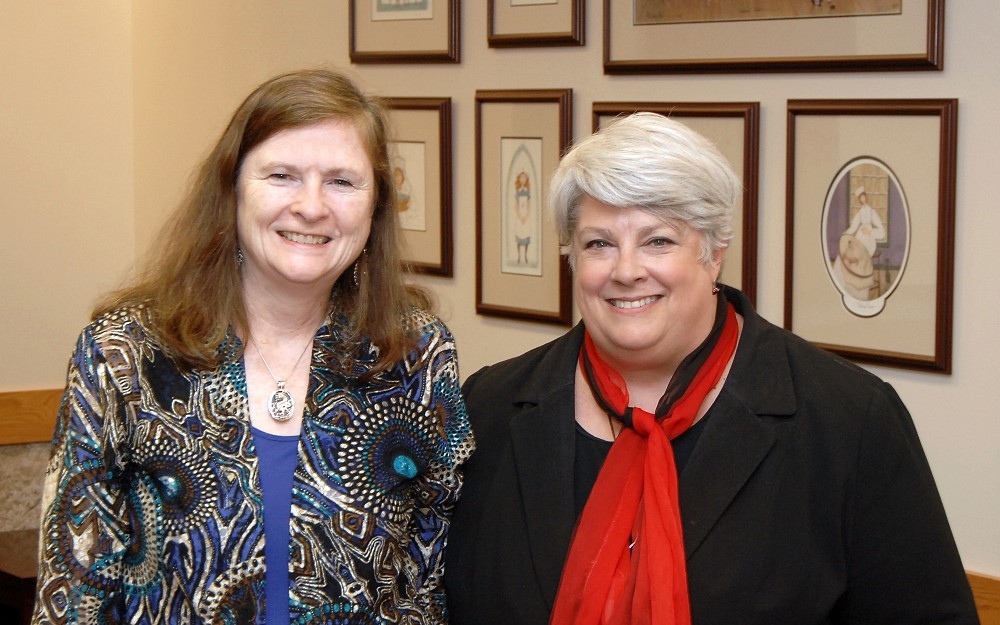
The 14-month award is on behalf of the Ohio Department of Medicaid and will utilize Medicaid Technical Assistance and Policy Program (MEDTAPP) federal financial participation (FFP) funds to support UCs participation in the MEDTAPP Healthcare Access Initiative. UCs MEDTAPP Healthcare Access Initiative project will be led by the College of Nursings Suzanne Perraud, PhD, principal investigator, and Diana McIntosh, PhD, co-principal investigator. While UC is receiving $965,000 in MEDTAPP FFP funds to support this work, the university will also be providing $1,063,000 in cost share.
"The funding from MEDTAPP will help us to recruit and retain practitioners who will serve the Ohio Medicaid population, says Perraud, senior associate dean for academic affairs at the College of Nursing. "And because the nature of health care is interprofessionaland chronic and mental illness are often seen together, and across the lifespanits extremely important that we work in a multidisciplinary way to achieve this goal.
The team plans to use the funding to train a number of future and current health care providers to provide quality, integrated behavioral health and primary care to underserved populations, with specific emphasis on child/adolescent and geriatric populations. This will include training of 50 fourth-year medical students, 26 family and community medicine residents, 25 advanced practice nurses enrolled in UCs psychiatric mental health post-masters certificate program and one child and adolescent psychiatric resident.
According to the National Alliance on Mental Illness, one out of every 17 people has a severe mental health disorderand underserved populations (often Medicaid consumers) are disproportionately affected. In addition, Ohio is listed by the U.S. Health Resources and Services Administration as having among the highest workforce shortages of primary and mental health care providers.
"The prevalence of chronic and mental illnesscombined with the shortage of health care providers in these areasonly serves to increase costs of care and health disparities among our Medicaid population, says McIntosh, coordinator of the College of Nursings new psychiatric mental health post-masters certificate program. "If we can grow and better prepare our workforce to address needs of this population, we estimate we can reduce costs and provide a higher level of care for so many who are underserved.
Principal investigators at partner institutions include Joseph Kiesler, MD, UC Department of Family and Community Medicine; Michael Sorter, MD, Cincinnati Childrens Division of Child and Adolescent Psychiatry; and Tanya Froelich, MD, Cincinnati Childrens Division of Developmental and Behavioral Pediatrics.
Related Stories
Cancer Center plays key role in lab research, clinical trials for new pancreatic cancer drug
September 1, 2026

WLWT and WCPO highlighted the contributions of University of Cincinnati Cancer Center researchers that helped lead to the recent FDA approval of daraxonrasib, a new treatment for pancreatic cancer.
Cancer Center physician receives $150,000 New Investigator Research Grant to study treatment-resistant leukemia
September 1, 2026
The University of Cincinnati Cancer Center’s Sarah Skuli, MD, PhD, received a two‑year, $150,000 Leukemia Research Foundation New Investigator Grant to study TP53‑mutated leukemia, a treatment‑resistant subtype with very poor outcomes.
Heavy social media use linked to depression
August 31, 2026

U.S. News and World Report, Yahoo! News, MSN, USA Today and other national media highlight a new study by the University of Cincinnati and Northwestern University that found a correlation between heavy social media use and depression in adults.