Survivorship Program Leaders Take Steps to Ensure Best Practices for Care

Cancer survivorship is an up-and-coming component of cancer care that many institutions are trying to programmatically develop and navigate as the number of survivors continues to increase.
According to the American Cancer Society, there are now more than 14.5 million cancer survivors in the United States and that number is expected to grow to nearly 18 million by 2022.
Additionally, by 2015, all Commission on Cancer-accredited institutions will need to have a process in place for the development and delivery of survivorship care plans.
With this in mind, leadership within the UC Cancer Institutes Survivorship Program has taken a number of steps to meet these criteria and to create the best experience for cancer survivors beginning at the time of diagnosis.
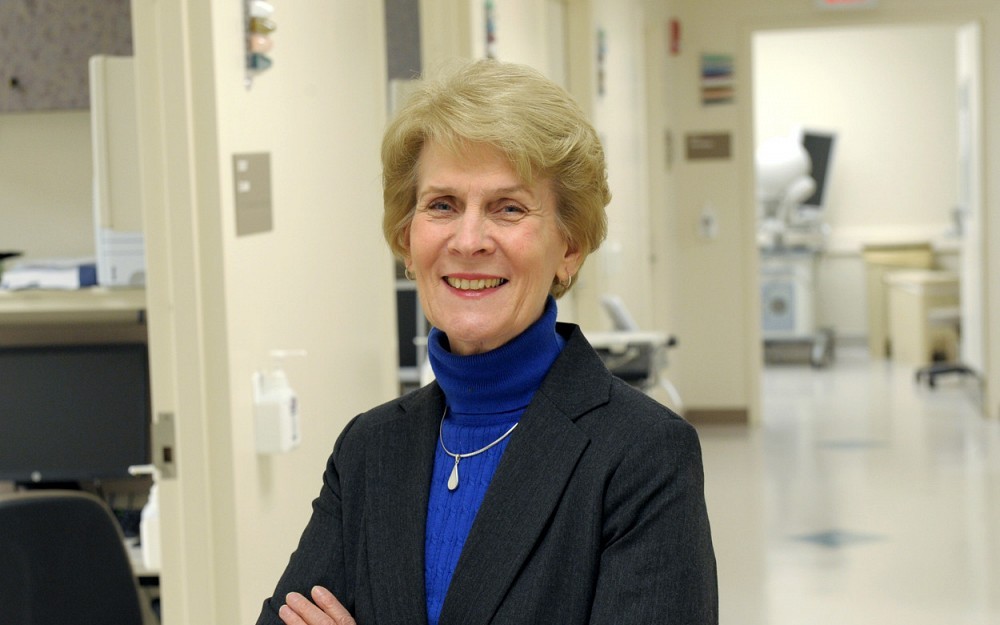
"Survivorship is a necessary component of care as rates of survival continue to climb. It begins after diagnosis and continues throughout a patients lifespan, says Beverly Reigle, PhD, director of the program and associate professor in UCs College of Nursing.
"The survivorship program focuses on educating the health care providers, patients and caregivers, and broader community about the short and long-term effects of treatment, evidence-based interventions to address these effects, surveillance and prevention strategies and cancer rehabilitation approaches with the overall goal of patients living a fulfilling life.
As an initial step, UC has formed a consortium with Indiana University and Ohio State University to improve survivorship education for health care professionals and promote survivorship research in this area of the Midwest.
The collaboration, named the Midwest Consortium for Cancer Survivorship Education and Research, or SEdR (see-der), will combine the strengths of the institutions to develop a survivorship education program for advance practice providers, nurses and eventually physicians. The partnership will also involve collaborations on research projects as well as development of best practices for cancer survivorship care delivery.
"This consortium will help us come together to design a curriculum, helping us educate on the meaning of cancer survivorship and strategies for program implementation, Reigle says. "Its not only about follow-up for surveillance of cancer, but includes surveillance beginning at diagnosis, prevention and management of treatment-related effects, health promotion and comfort measures.
SEdR will hold its first educational program for advanced practice providers Nov. 14-15 on UCs medical campus.
In addition, Reigle is beginning to introduce survivorship models within each of the cancer centers clinics and is recommending that leadership appoint an advanced practice provider to oversee cancer survivorship plans for patients. Shes also working to find out ways to have these plans documented within EPIC.
"Collaborating oncologists on the team will provide the guidance and oversight with the provider to decide how the follow-up visits will proceed, she says. "We are beginning to pilot the first survivorship program within the Hematological Malignancies group in patients diagnosed with lymphoma.
The survivorship team is also planning a conference, "Transforming Cancer Survivorship Through Research and Best Practice, being held March 27, 2015, to explore the Commission on Cancers national standards for survivorship care plans, discuss treatment-related effects and research-based strategies and stress multispecialty collaboration for best outcomes.
"Were very excited to be hosting this event which will feature many national experts in the field of survivorship, Reigle says, adding that Julia Rowland, PhD, director of the National Cancer Institutes Office of Cancer Survivorship, will be the keynote speaker. "This will be one of the ways to show our dedication to cancer survivorship and will help us form relationships and collaborate with other influential partners from across the country.
"All of these efforts will help grow this very necessary program, which is not just about treatment strategies or services. Its all-encompassing and assesses all aspects of a patients needs for the best experiences and outcomes.
>>For more information on the upcoming conference, visit http://uchealth.com/events/transforming-cancer-survivorship-through-research-and-best-practice/.
Tags
Related Stories
Certain weather patterns can trigger migraines
June 8, 2026

Certain weather patterns really do trigger migraine headaches — and the incidence is more common in the Midwest. As WGN 9 in Chicago recently reported, researchers at the University of Cincinnati College of Medicine have identified two specific weather patterns associated with an increased risk of headaches.
UC expert weighs in on current MASH treatment approaches
June 5, 2026

As MedCentral recently reported, pending broader pharmacologic approvals for metabolic dysfunction-associated steatohepatitis (MASH), lifestyle modifications remain the go-to intervention.
MSN or DNP: Choosing the right advanced nursing degree for you
June 5, 2026
Choosing between a Master of Science in Nursing (MSN) and a Doctor of Nursing Practice (DNP) is one of the most common points of confusion for nurses looking to advance their education. Both degrees can open the door to leadership opportunities, advanced clinical roles, and higher earning potential, but they differ in length, cost, and long-term career goals.