Partnership With Cincinnati VA Enhances Pharmacy Education

Fourth-year PharmD candidate Michele Wells-Walker has an affinity for working with veterans. So much so, that she requested that two of the clinical rotations required to earn her doctoral degree in pharmacy be conducted at the Cincinnati Department of Veterans Affairs (VA) Medical Center.
"My brother served in the Air Force and my brother-in-law served in the Marine Corps. A rotation at the VA was my opportunity to provide care for military men and women who deserve optimal health, says Wells-Walker, who is scheduled to graduate from the University of Cincinnatis James L. Winkle College of Pharmacy in 2015.
For over 20 years the VA Medical Center has partnered with the UC College of Pharmacy to provide multiple experiential learning opportunities to PharmD candidates. For example, this academic year Wells-Walker is one of 59 fourth-year PharmD students who will conduct 89 rotations at the Cincinnati VAs inpatient and ambulatory care clinics.
"We are extremely fortunate to have such a unique practice site for our students to train in right next to our college. The diverse learning opportunities and quality faculty at the VA offer perspective on an important patient population. This occurs on the many rotations the VA offers and in the classroom, says the colleges director of experiential learning, assistant professor Mike Doherty, PharmD.
Most of the faculty preceptors at the VA, Doherty says, also participate in lectures and laboratories at the college as well.
"We have a really special relationship with the college. A lot of our preceptors came from UC and they all have a very strong bond to the school and want the school to excel, says clinical pharmacy specialist and the Cincinnati VAs student rotation coordinator Jo-Ann Caudill, RPh.
Caudill, who also oversees a pharmacy residency program, joined the Cincinnati VA Medical Center in 1990 and shortly after established the centers practice partnership guidelines, which include a requirement that VA Medical Center clinical pharmacists act as preceptors to pharmacy students. While the vast majority of students who rotate here come from UC, the VA also accepts students from other pharmacy schools in the region such as Ohio State University, Butler University, the University of Toledo and Ohio Northern University.
In any given month during the academic year, Caudill says there will be between 10 and 20 advanced practice professional clerkship PharmD candidates working under the supervision of a preceptor to hone in on a particular area of pharmacy practice (e.g., primary and acute care, geriatrics, mental health, chronic pain management, research or administration).
Additionally, students here learn how the role of "pharmacist differs at the VA, where the clinical pharmacist specialists have expanded scopes of practice to include more direct patient contact, complete access to patient medical records and provide disease state management for patients referred to their clinics. Additionally, they work closely with the care teams in acute and ambulatory care settings to optimize patient specific treatment plans.
Students on rotation here are also exposed to the VAs robust telehealth program.
There are several modes of telehealth that have been incorporated in the pharmacy service here
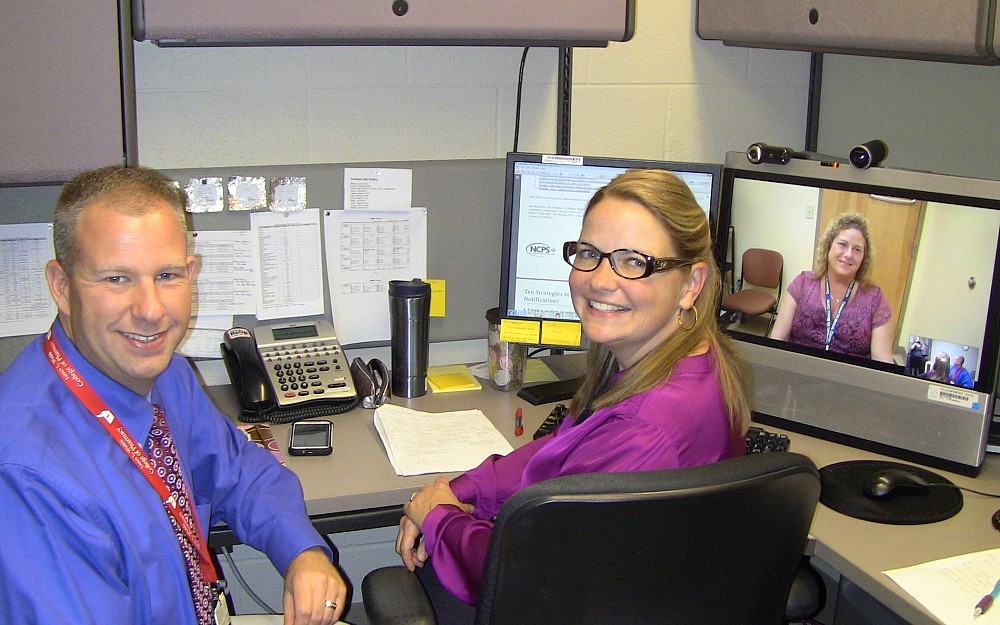
One example is the clinical video telehealth (CVT) program, where a clinical pharmacy specialist counsels patients remotely via a high-resolution video camera/monitor. Currently the CVT program is devoted to managing patients enrolled in the anticoagulation program at a clinic in Florence, Kentucky, which can accommodate up to 25 patient encounters a day. Another telehealth tool is secure messaging, where patients can send electronic messages to their primary care providers, nurses and/or pharmacists who help manage their medication therapies. This is part of an online tool for patients called MyHealtheVet, where patients can also access their medical records, manage appointments and request medication refills electronically.
There is also a "health buddy system, in which devices such as blood pressure cuffs can be used at home. Data from these devices are electronically uploaded to the VA computer system where pharmacists can review a patients progress and then work with the patient to further adjust their medications.
"There has been a significant push to expand our utilization of telehealth tools and services within the VA. We know these tools can empower patients and pharmacists alike by increasing our patients access to the care they need and allowing pharmacists to practice more effectively and efficiently, says clinical pharmacy specialist Dan Knight, PharmD, a UC alum (07) and preceptor.
Like all the preceptors on the VA pharmacy staff, Knight is also an adjunct assistant professor at the college and each spring semester he presents the benefits of choosing a rotation at the VA to third-year PharmD candidates.
"There is a connectedness that we feel here to help each other grow. Its a mutual benefit to the students, the faculty and our faculty/staff, says Knight.
Wells-Walker says that it was Knights impassioned description of the anticoagulation rotation (the management of blood thinning medications) that piqued her interest in signing up for her first rotation at the VA Medical Center.
"He said its a unique perspective on pharmacy practice to learn things above and beyond book work
and hes right, says Wells-Walker, pointing to the medication management counseling she conducts with patients on topics such as how changes in diet can influence anticoagulation outcomes: "I can see the excitement on a patients face when he is told to add another serving of the Brussels sprouts that he loves!
The Cincinnati VA Medical Center consists of two divisions located in Cincinnati, Ohio, and Fort Thomas, Kentucky, and six community-based outpatient clinics, and provides services to 17 counties in Ohio, Kentucky and Indiana.
Tags
Related Stories
On-site training in Speech & Hearing Clinic sets UC’s programs apart
August 27, 2026
At the University of Cincinnati’s Speech & Hearing Clinic, Doctor of Audiology and Speech-Language Pathology graduate students gain real-world experience while providing free speech and hearing services to the community.
Funding expands UC research into weight gain side effects of bipolar medication
August 26, 2026
University of Cincinnati researchers have been approved for funding by the Patient-Centered Outcomes Research Institute (PCORI) to expand the implementation of healthy lifestyle interventions and metformin prescription to help manage weight gain in overweight or obese youth taking second-generation antipsychotic medications.
One in four NFL players had CTE at death
August 25, 2026

Forbes cites research on concussions and football helmets by the University of Cincinnati in a report that found one in four NFL players had brain damage at death.