New Program Aims to Improve Processes, Relieve Patient Worry

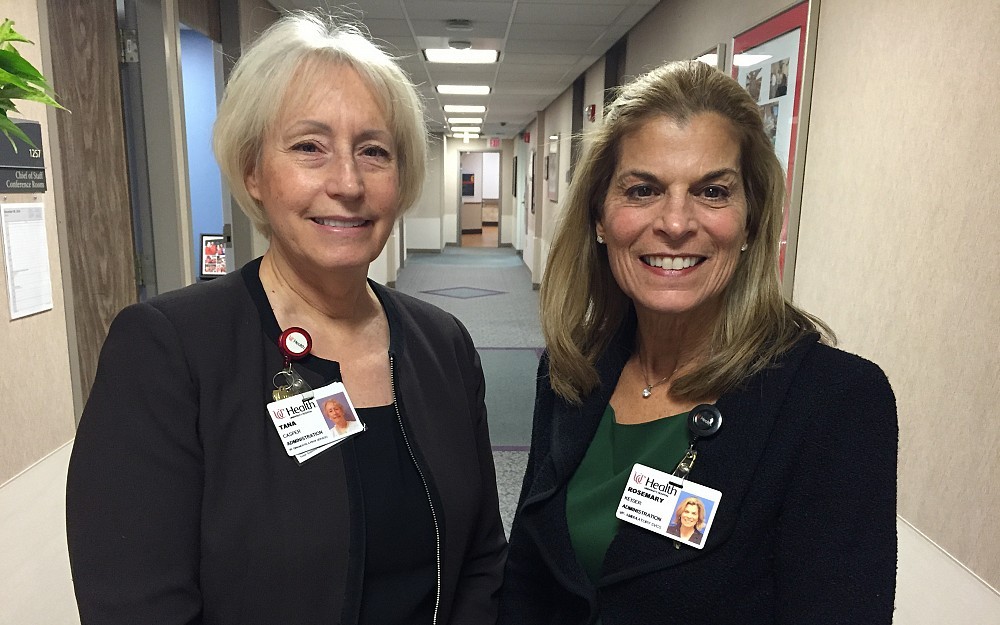
"Theres always room for improvement, is a mantra Rosemary Keiser, vice president of ambulatory services for UC Health, and Tana Casper, vice president of diagnostic and professional services at UC Medical Center, are taking to heart.
"While we were meeting standards for National Quality Measures for Breast Cancer, were not hitting that excellence mark, and thats where we want to be, says Keiser.
This is why both she and Casper, along with Tara Mink, RN Special Projects for the UC Cancer Institute, UC Health leadership and other key players have initiated the Sleepless Nights project, dedicated to increasing patient satisfaction and improving processes in every stage of breast cancer care within the UC Cancer Institute.
"We called it Sleepless Nights because it explains the worry that occurs as a woman enters the breast cancer diagnosis and treatment process, says Keiser, adding that sometimes there is a lag between a mammogram, diagnostic biopsy and then surgery when a cancer is located, leading to stress and worry for the patient. "We want to expedite steps and to truly partner with the patient and their families every step of the way to eliminate confusion and increase overall satisfaction.
Casper says the team has delved into the details of current processes to pinpoint what needs to be modified for better results. Roughly 12 subcommittees are working on individual components of the project looking at such issues as scheduling, communication, physician ordering and wait times.
- The team is eliminating phone trees and is creating a centralized scheduling system for breast cancer care, ensuring that patients who are calling to schedule a screening mammogram, MRI or biopsy will speak to someone immediately to schedule an appointmentno more leaving messages and waiting for a call-back.
- In the past, when a diagnostic mammogram or a biopsy was needed, an order would be sent to the primary physician where a sign-off was required; this could slow the process. After getting approval from primary care physician groups, the team has made it possible for radiologists to proceed with processing orders and scheduling mammograms and other necessary diagnostic procedures without waiting for that added step and signature.
- Radioactive seed localization (RSL) will be available for patients undergoing surgery. The procedure uses a thin needle to place a tiny radioactive seed directly on the lump to mark it so that a surgeon knows where to focus during surgery. RSL can be done up to five days before surgery; currently, women are required to come to the hospital on the day of the surgery, hours before it is performed, to be marked using a thin implantable wire, which could cause discomfort or potentially move. The RSL option may eliminate uneasiness and long wait times for those who are already under stress.
- A data analyst will soon be hired to study patient outcomes and satisfaction data and perform real-time performance analysis to ensure problems are caught and remedied as soon as possible.
- A team, led by Mike Monjot, clinical director of the UC Health Barrett Cancer Center, piloted a project that reduced patient wait time in the Barrett from 60 minutes to 15 minutes and decreased intake process steps (check-in, registration, lab draw, medical assistant triage) from 23 to 11. They are working on plans for renovations to the registration space that will allow the implementation of this process in all Barrett cancer clinics.
"These are only a few components of the overall project, says Casper, adding that they are continuing to make strides and see improvements. "This is all for our patients because they are the reason we are here.
*This story was originally featured in the January 2015 issue of Connected.
Tags
Related Stories
On-site training in Speech & Hearing Clinic sets UC’s programs apart
August 27, 2026
At the University of Cincinnati’s Speech & Hearing Clinic, Doctor of Audiology and Speech-Language Pathology graduate students gain real-world experience while providing free speech and hearing services to the community.
Funding expands UC research into weight gain side effects of bipolar medication
August 26, 2026
University of Cincinnati researchers have been approved for funding by the Patient-Centered Outcomes Research Institute (PCORI) to expand the implementation of healthy lifestyle interventions and metformin prescription to help manage weight gain in overweight or obese youth taking second-generation antipsychotic medications.
One in four NFL players had CTE at death
August 25, 2026

Forbes cites research on concussions and football helmets by the University of Cincinnati in a report that found one in four NFL players had brain damage at death.