Early Intervention Crucial for Voice and Swallowing Disorders

Eating and talking are important parts of American culture, and almost every gathering involves food, drink and conversation shared with loved ones. Thats why voice and swallowing disorders, even when treated effectively, can be so devastating.
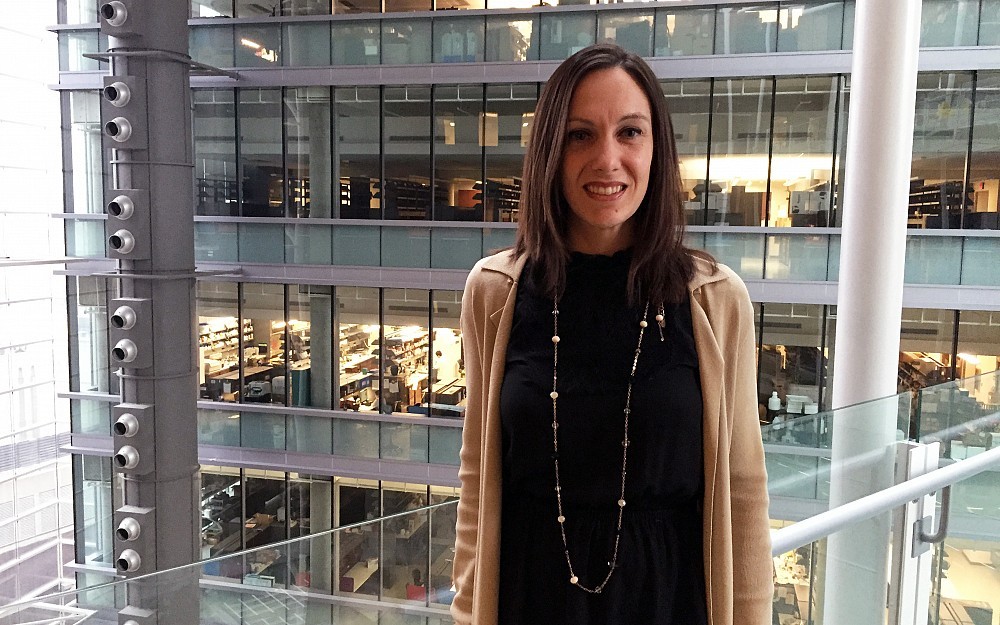
"Our voice is the way we engage with one another; its our identity, and so much pleasure is derived from eating. I feel like otolaryngologists and the field of medicine as a whole could do a better job of helping patients regain the ability to talk and swallow, particularly after surviving cancer treatment, says Rebecca Howell, MD, assistant professor in the Department of Otolaryngology at the UC College of Medicine, member of the UC Cancer Institute and a UC Health physician who specializes in treating voice and swallowing disorders.
With this in mind, Howell is working with the UC Cancer Institutes Comprehensive Head and Neck Cancer Center and the UC Health Voice and Swallowing Center to collect data on patient progression and early interventions for best outcomes.
"We are expanding our practice with the addition of two more speech and language pathologists, adding to our team of now two laryngologists (fellowship-trained specialists in voice, airway, and swallowing)me and Dr. (Sid) Khosla, says Howell, who just joined the practice and the UC faculty in the fall. "In addition, weve begun distributing a validated quality of life questionnaire to every patient who comes to the Voice and Swallowing Center so that we have a way to track their progress, regardless of their diagnosis.
Howell says that for those patients who do not initially have trouble swallowing, physicians are establishing points of care in which they can reassess the patients needs. In addition, by meeting with speech and language pathologists during an initial evaluation session, the team hopes to increase awareness and accessibility if patients begin to have problems with their voice or swallowing during or after cancer treatment.
"Our overall goal is to catch patients with problems early and to help them retain their ability to eat and maintain their ability to communicate with less effort and strain on the voice, Howell says. "We dont realize how much we speak or swallow on a daily basis until it becomes a problem. Weve done such a great job in medicine of improving survival, but we can really show we care by paying attention to not only how long patients live but how they live, cancer-free.
About Rebecca Howell:
Rebecca Howell, MD, whose research interest is in swallowing outcomes in head and neck cancer survivors and establishing protocols for their care, is the first otolaryngologist in the area with a specialized clinic focused on swallowing disorders. Clinically, she sees both benign and malignant swallowing, voice and airway disorders. She has additional training in outpatient transnasal esophagoscopy (a scope to see the larynx, esophagus and upper stomach) and is the first in the Cincinnati area to perform in-office (KTP) laser procedures to remove chronic, benign tumors from the vocal cords. Howell sees patients in both the Clifton and West Chester offices. To schedule an appointment, call 513-475-8400.
*This story was originally published in the March 2015 issue of Connected.
Related Stories
Cancer Center plays key role in lab research, clinical trials for new pancreatic cancer drug
September 1, 2026

WLWT and WCPO highlighted the contributions of University of Cincinnati Cancer Center researchers that helped lead to the recent FDA approval of daraxonrasib, a new treatment for pancreatic cancer.
Cancer Center physician receives $150,000 New Investigator Research Grant to study treatment-resistant leukemia
September 1, 2026
The University of Cincinnati Cancer Center’s Sarah Skuli, MD, PhD, received a two‑year, $150,000 Leukemia Research Foundation New Investigator Grant to study TP53‑mutated leukemia, a treatment‑resistant subtype with very poor outcomes.
Heavy social media use linked to depression
August 31, 2026

U.S. News and World Report, Yahoo! News, MSN, USA Today and other national media highlight a new study by the University of Cincinnati and Northwestern University that found a correlation between heavy social media use and depression in adults.