Memorial Gift Will Help ALS Clinic Serve Patients' Complex Needs

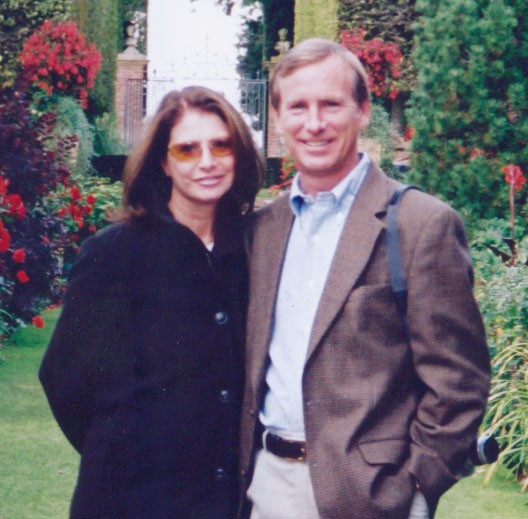
Harry "Tim Brown honored his wife and soul mate during her final years by stepping firmly into the role of primary caregiver. He installed chair lifts and wheelchair ramps, rearranged the house, administered medication and nutrition through a feeding tube, and treated his wife to one last memorable cruise.
After Linda Link Brown passed away from amyotrophic lateral sclerosis (ALS) last fall at the age of 64, Tim honored her again with a generous $100,000 gift to the ALS Fund at the Neuromuscular Center at the University of Cincinnati Neuroscience Institute. The funds will be used to support the UC Health ALS Clinic and the social and therapeutic services that are vital to families who are coping with ALS, a progressive motor neuron disease for which there is no cure. As the disease progresses, patients lose muscle mass and mobility; eventually, they are no longer able to walk, talk or eat.
Tim, who was Lindas primary caregiver during the last six months of her life, knows well how cruel ALS can be. The disease ran in Lindas family, with seven documented cases since 1936. Linda was relishing a life filled with family, friends, gardening and travel when she developed what was initially diagnosed as "trigger finger, a painful complication in which a finger (or thumb) catches or locks when bent. The finger became progressively worse, and Lindas condition was eventually correctly diagnosed as ALS.
"We originally went to the Cleveland Clinic for a second opinion because we wanted to make sure, Tim recalls. "But in the end the diagnosis was the same: You do have ALS.
For Linda, as for all patients with ALS, little could be done. The one FDA-approved medication for ALS, an antiglutamate drug called riluzole, was shown in clinical trials to prolong life expectancy for two to three months.
Tim attended a support group session that featured a presentation by Robert Neel, MD, director of the UC Health ALS Clinic and associate professor in the UC Department of Neurology and Rehabilitation Medicine, and he was struck by Neels "caring, pro-active manner. Linda became one of Neels patients the very next day.
Later, after Lindas death, Tim and Neel spoke about how a significant gift could be used.
"Going through the various phases of ALS takes time and effort, Tim says. "You need something locally for people in your community, a place where they can get occupational help and appliances. But they already had that. I talked to Dr. Neel about his need to bring in someone as a coordinator, someone who could make sure patients are getting the treatment they need.
A clinic manager is needed to help families with scheduling and to help them coordinate their needs in between doctor visits, Neel says. "Currently we do not have anyone to do that, especially when families are looking for help with social services, pulmonary (breathing) issues, feeding tubes or wheelchairs. Who do you call when you need to see the pulmonary doctor and you cant get in for three months? Who do you call when you need advocacy for a loved ones disability? Who do you call when you need to know how to coordinate home services and get these arranged?
Neel also would like to have a part-time nutritionist on the ALS team; he would like financial support for the physical therapy evaluations that his patients desperately need; and, for the benefit of patients who can no longer speak, he would like the clinic to acquire its own speech generation device equipment with an eye-gaze tracking system so that the clinics speech therapist can work with patients and ensure that they truly understand how the device works. "We dont want our patients to spend $5,000 on a device and not ever use it, Neel says.
The ALS Clinic also would benefit from having a psychologist, both Tim and Neel agree.
"ALS does not involve a pleasant ending, Tim says. "Not everybody ends up like Stephen Hawking. The pain that a family goes through watching this disease progress is horrible, and what the patient goes through is horrible I think families with ALS would benefit from having access to a psychologist or psychiatristsomeone who could help bring the anxiety level down for the patient and help the family cope as the disease progresses. Right now they dont have that. I was seeking that for my wife and couldnt find it.
Tags
Related Stories
On-site training in Speech & Hearing Clinic sets UC’s programs apart
August 27, 2026
At the University of Cincinnati’s Speech & Hearing Clinic, Doctor of Audiology and Speech-Language Pathology graduate students gain real-world experience while providing free speech and hearing services to the community.
Funding expands UC research into weight gain side effects of bipolar medication
August 26, 2026
University of Cincinnati researchers have been approved for funding by the Patient-Centered Outcomes Research Institute (PCORI) to expand the implementation of healthy lifestyle interventions and metformin prescription to help manage weight gain in overweight or obese youth taking second-generation antipsychotic medications.
One in four NFL players had CTE at death
August 25, 2026

Forbes cites research on concussions and football helmets by the University of Cincinnati in a report that found one in four NFL players had brain damage at death.