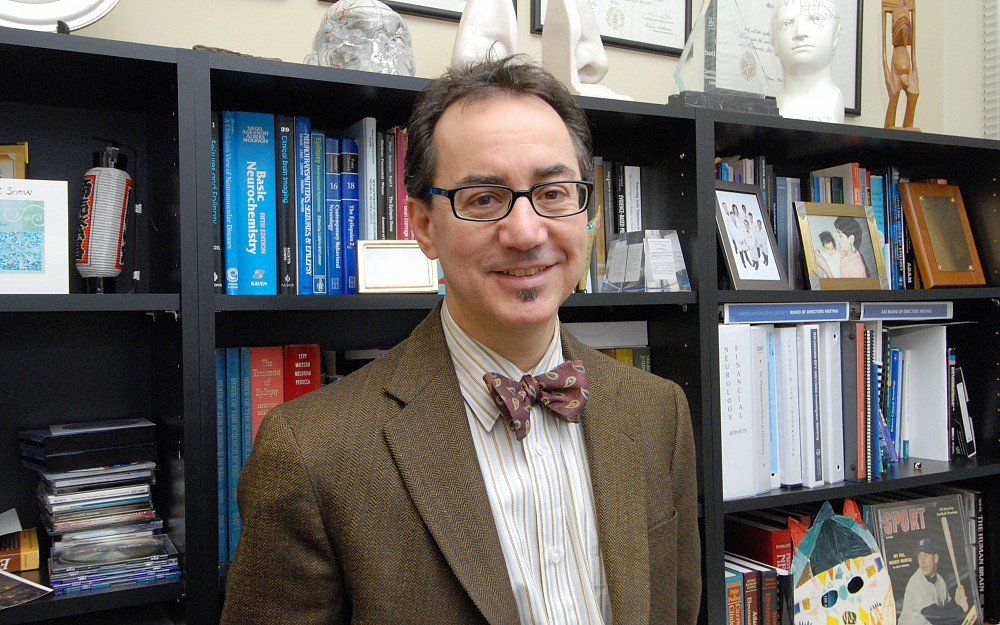
Cincinnati Epilepsy Center Again Designated Level 4

The Epilepsy Center at the UC Neuroscience Institute has again been designated a Level 4 Epilepsy Centerthe highest levelby the National Association of Epilepsy Centers (NAEC). The center, directed by Michael Privitera, MD, a professor in the UC College of Medicines Department of Neurology and Rehabilitation Medicine, has held this designation consistently since 2005.
The NAEC is a nonprofit trade association with a membership of more than 170 epilepsy centers. The organization defines Level 4 epilepsy centers as "having the professional expertise and facilities to provide the highest level medical and surgical evaluation and treatment of patients with complex epilepsy. The designation of Level 4 or the NAECs other level, Level 3, is made as a result of member centers responses to a self-designation survey.
The UC Neuroscience Institute is one of four institutes of the UC College of Medicine and UC Health. It includes 14 centers and programs.
Related Stories
On-site training in Speech & Hearing Clinic sets UC’s programs apart
August 27, 2026
At the University of Cincinnati’s Speech & Hearing Clinic, Doctor of Audiology and Speech-Language Pathology graduate students gain real-world experience while providing free speech and hearing services to the community.
Designing with cancer patients' needs in focus
August 27, 2026
Kristina Shin is designing garments that prioritize the comfort, function and confidence of breast cancer patients, addressing a need often overlooked by traditional fashion.
UC, NKU renew longstanding partnership supporting Army ROTC cadets
August 26, 2026
The University of Cincinnati Army ROTC and Northern Kentucky University (NKU) have renewed a longstanding partnership that supports students preparing to become Army officers and leaders in their communities. The universities formalized the renewed agreement during a signing event Aug. 11 at NKU.