Charting a Course: Preparing for Reconstruction Surgery, Clinical Trial Use

Riders new normal includes plenty of follow-up appointments, and treatment remains top of mind for her.
"I receive a monthly shot that keeps my ovaries from making estrogen and lowers the hormone levels in my body, she explains. Similar to natural menopause, she complains of having hot flashes.
Rider is also taking Tamoxifen, an oral drug that is a form of hormone therapy and works by blocking estrogen receptors in breast tissue, helping to prevent cancer from returning.
"There is an inherent anxiety in post-treatment checkups, but its comforting to know that I am being watched very closely, she says.
Rider will continue to have regular follow-up appointments with her oncologist, surgeon and radiologist. She is also enrolled in a clinical trial at UC called the e3 study, evaluating the drug Everolimus to prevent recurrence and/or the spread of cancer in early stage breast cancer.
All patients in the phase-3 trial are treated with long-term hormone therapy following chemotherapy, and are randomly assigned either a daily dose of Everolimus or a placebo for one year.
"I dont know if Im getting the placebo or the drug, but things seem to be working fine, she says. "Im happy to participate in the study and hope that something can be learned that will help treat others with this disease more effectively.
Rider knew that reconstruction was something that she wanted at the time of her mastectomy and discussed her options with John Kitzmiller, MD, professor in the Department of Surgery and chief of the Division of Plastic Surgery.
"He put expanders in underneath my pectoral muscle at the time of the mastectomy, slowly filling the expanders with two ounces of saline at a time to stretch the area and make room for the implant, she says. "The process is far from comfortable.
Kitzmiller recommends that patients, like Rider, give their skin at least six months to recover following radiation.
"I am eagerly waiting for what I hope will be my last surgery on Oct. 27; it will be another victory in my journey.
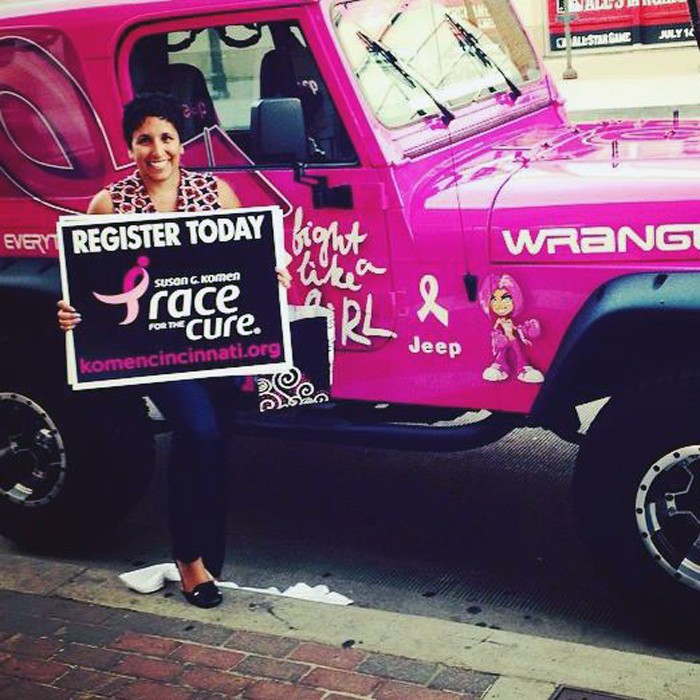
Rider now works as corporate recruiter for the E.W. Scripps Company, and will join the board for the Komen Race for the Cure this November.
Shes grateful to have this time to spend with her loved ones, and excited to start planning for her wedding.
"For a while, it was hard to think I would make it through treatment, she said, "Now, I am thrilled to be able to focus on my future.
Tags
Related Stories
On-site training in Speech & Hearing Clinic sets UC’s programs apart
August 27, 2026
At the University of Cincinnati’s Speech & Hearing Clinic, Doctor of Audiology and Speech-Language Pathology graduate students gain real-world experience while providing free speech and hearing services to the community.
Funding expands UC research into weight gain side effects of bipolar medication
August 26, 2026
University of Cincinnati researchers have been approved for funding by the Patient-Centered Outcomes Research Institute (PCORI) to expand the implementation of healthy lifestyle interventions and metformin prescription to help manage weight gain in overweight or obese youth taking second-generation antipsychotic medications.
One in four NFL players had CTE at death
August 25, 2026

Forbes cites research on concussions and football helmets by the University of Cincinnati in a report that found one in four NFL players had brain damage at death.