Department of Environmental Health Saluting History With Celebration

CINCINNATIThe Department of Environmental Health at the University of Cincinnati (UC) College of Medicine will be marking its rich history this weekend with two days of festivities, including a gala dinner and awards event and a scientific program.
The department is celebrating the 50th anniversary of assuming its present name in 1965, along with 85 years of research excellence at the Kettering Laboratory Complex on UCs medical campus. The first building of the Kettering Lab Complex, home to the departments students, faculty and staff, was completed in December 1930. (It was recently demolished after being deemed infeasible to renovate.)
The weekends events will begin with welcoming remarks and a program highlighting the history and achievements of the department from 2 to 5:30 p.m. Friday, Oct. 9, in Kehoe Auditorium of the Kettering Lab Complex. A cocktail reception and gala dinner/awards program will follow beginning at 6:30 at the Kingsgate Marriott Conference Center.
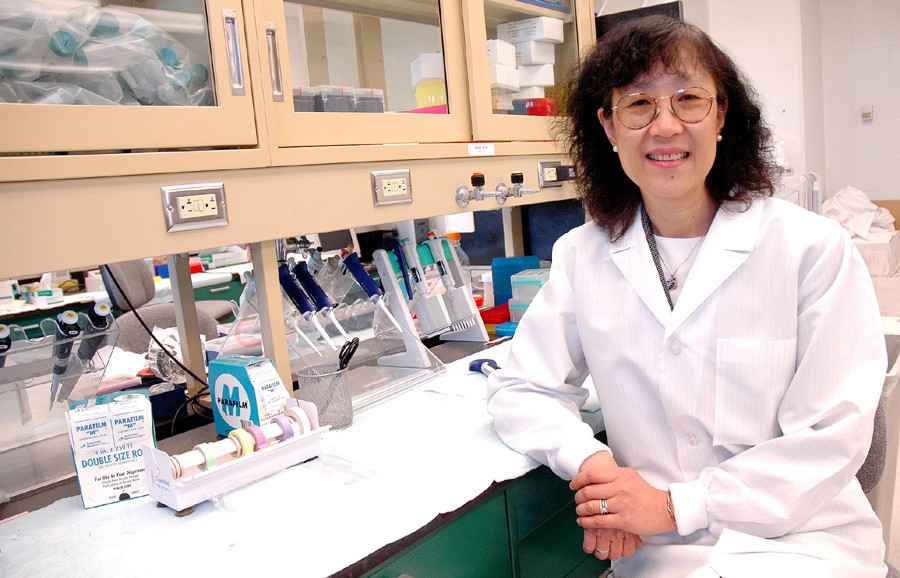
Shuk-Mei Ho, PhD, Jacob G. Schmidlapp Professor and Chair of Environmental Health at UC, will give the welcoming remarks. Ho has led the department since 2005 and was honored earlier this year with the George Rieveschl Jr. Award for Distinguished Scientific Research at UCs annual All-University Faculty Awards celebration. She also serves as director of the Cincinnati Cancer Center, a collaborative initiative of the University of Cincinnati, UC Health and Cincinnati Childrens Hospital Medical Center.
"This weekend gives us an opportunity to celebrate and explore our past, present and future, along with distinguished guests from the public and private sectors and other institutions of higher learning, Ho says.
Santa Ono, PhD, UC president, and William Ball, MD, senior vice president for health affairs and dean of the College of Medicine, will also speak at the Friday afternoon event, which will also include salutes to the National Institute of Environmental Health Sciences (NIEHS) and National Institute for Occupational Safety and Health (NIOSH), talks on the past and present of the Kettering Laboratory Complex and the Department of Environmental Health and a presentation by Bruce Lanphear, MD, of Simon Fraser University, titled, "Crime of the Century: Our Failure to Prevent the Lead Pandemic.
Ten emeriti faculty members will be honored for excellence at the dinner Friday night, and the Outstanding Alumnus Award will be presented to Richard Fulwiler, ScD, president of Technology Leadership Associates and a course director and instructor at the Harvard School of Public Health. Fulwiler received his doctor of science in environmental health from UC in 1967 and spent 28 years at Cincinnati-based Procter & Gamble Co., retiring as director of health and safety worldwide.
The scientific program, "Looking Forward, will be held from 9 a.m. to 3 p.m. Saturday, Oct. 10, in Kehoe Auditorium. Presenters will include Department of Environmental Health faculty and distinguished guests, with closing remarks by Ho.
The Kettering Laboratory Complex was originally named the Kettering Laboratory of Applied Physiology to honor the head of the General Motors Laboratory, Charles Kettering. It was an independent unit within UC until 1949, when a second building (now known as the Middle Wing) was completed and the Kettering Laboratory was combined with the Department of Preventive Medicine to form the Department of Preventive Medicine and Industrial Health in the College of Medicine under the chairmanship of Robert Kehoe, MD.
Kehoe, a pioneer in occupational and environmental medicine who was the first to assemble a multidisciplinary team of physicians, analytical chemists, toxicologists, industrial hygienists and engineers to study occupational and environmental health problems, retired in 1965. Kehoe Hall, completed in 1963, is named in his honor.
The most recent addition to the Kettering Laboratory Complex, known as the IEH (Institute of Environmental Health) Addition, was completed in 1992. The complex has been renovated over the past seven years with state and federal funding for new and enhanced laboratory space and additional space for new faculty and staff.
The Department of Environmental Health holds more than 70 grants and research contracts totaling more than $14,140,780 in direct funding annually. It is ranked seventh among National Institute of Environmental Health Sciences-funded programs among Tier 1 Research Universities. According to the Blue Ridge Institute for Medical Research, it ranked 12th in 2014 in terms of National Institutes of Health funding in the discipline of Public Health/Preventive Medicine.
Key Department of Environmental Health accomplishments include:
- The department houses the nations oldest Occupational Medicine Residency Program, dating back to 1947. Recent directors include James Lockey, MD, Sue Ross, MD, and the current director, Andrew Freeman, MD.
- The department houses one of the nations oldest Workers Safety and Health training programs, the Education and Research Center (T42 federal grant, since 1977), which trains industrial hygienists and workers safety and health professionals, occupation nurses and occupational engineers (in its 38th year of continuous funding).
- One of the nations oldest federally funded environmental centers known as the Center for Environmental Genetics (P30 grant), founded in 1992 by Daniel Nebert, MD, is housed in the department, with Ho as the current principal investigator. The National Institute of Environmental Health Sciences supports the center's research into how genes interact with the environment to impact health and disease outcome (23rd year of continuous funding).
- Carol Rice, PhD, just renewed the Worker Health and Safety Training Cooperative Agreement Center (U45 grant), which she has served as principal investigator since 1992 (24th year).
- The department has continued to train next-generation pediatric epidemiologists through the NIEHS-funded Molecular Epidemiology in Childrens Environmental Health Training Program (T32 grant) since 2001 (15th year).
- The department houses two university-wide core facilities: the Genomics, Epigenomics & Sequencing Core and the Center for Biostatistics.
- The department houses the Masters in Clinical Translational Research Training program and its attended certificate program.
- Department of Environmental Health researchers have been fundamental in providing data about the health effects of lead in paint. UC was the first university-based environmental research facility to become nationally known for its studies of the health effects of lead in children, and the Department of Environmental Health was one of the first to test a chelation drug that effectively removed high lead levels from the bloodstream.
- Eula Bingham, PhD, conducted pioneering research on chemical carcinogens and received countless awards and honors during her career. She served as director of the Occupational Safety and Health Administration (OSHA) from 1977 to 1981.
Related Stories
Cancer Center plays key role in lab research, clinical trials for new pancreatic cancer drug
September 1, 2026

WLWT and WCPO highlighted the contributions of University of Cincinnati Cancer Center researchers that helped lead to the recent FDA approval of daraxonrasib, a new treatment for pancreatic cancer.
Cancer Center physician receives $150,000 New Investigator Research Grant to study treatment-resistant leukemia
September 1, 2026
The University of Cincinnati Cancer Center’s Sarah Skuli, MD, PhD, received a two‑year, $150,000 Leukemia Research Foundation New Investigator Grant to study TP53‑mutated leukemia, a treatment‑resistant subtype with very poor outcomes.
Heavy social media use linked to depression
August 31, 2026

U.S. News and World Report, Yahoo! News, MSN, USA Today and other national media highlight a new study by the University of Cincinnati and Northwestern University that found a correlation between heavy social media use and depression in adults.