TERA Scientists Assist With Harmonization Effort in Pharmaceutical Industry

Like any other industry, the pharmaceutical industry has to manage chemical safety issuesboth for workers and consumers. What are acceptable occupational exposure limits for workers in pharmaceutical manufacturing, for example? As for consumers, how do they know the product they are taking isnt contaminated by residues of active ingredients that were present in other medicinal products produced in the same equipment or facility?
These are fairly simple questions, but the answers arent so simple. Thats where the TERA Center at the University of Cincinnati comes in.
The TERA (Toxicology Excellence for Risk Assessment) Center, which joined the UC College of Medicines Department of Environmental Health in August as a result of new departmental faculty and staff hires, has been working with other toxicologists and risk assessment scientists from pharmaceutical industries, consulting groups and academia to discuss current practices for exposure limits, evaluate inconsistencies across guidance documents, identify key areas for harmonization and document best practices for risk assessment of pharmaceuticals.
"Harmonization doesnt necessarily mean standardization, says Andrew Maier, PhD, an associate professor in the Department of Environmental Health and TERA Center co-director. "Its more a matter of understanding the basis for safety so that we enable savvy users of the risk assessment materials.
"That way, if Im a pharmaceutical manager in England, India or China, I may or may not use the exact same risk value as an American decision maker, but I have a clear understanding of how it was derived.
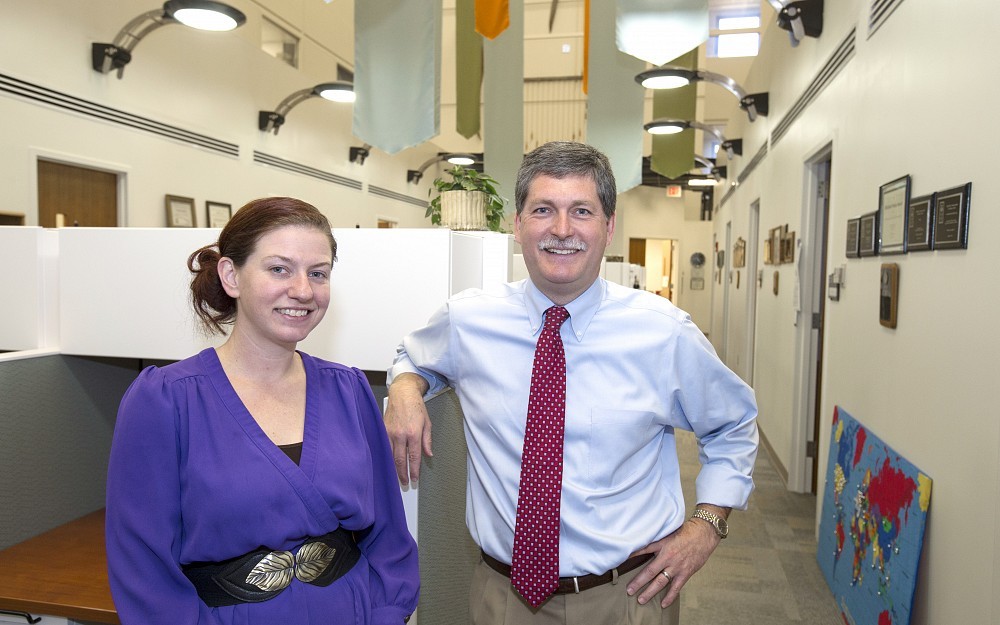
Maier and Alison Willis, a research associate at the TERA Center, were key organizers and facilitators for an October 2014 workshop that was convened in New Brunswick, New Jersey, to identify and address further opportunities for advancing harmonization and best practices in deriving and applying acceptable daily exposures (ADE) in pharmaceutical manufacturing operations. The workshop effort was spurred from a benchmarking assessment to compare current methods in risk assessment for pharmaceuticals.
"During our benchmarking work, we found that the international guidance documents and methods being used were clearly not harmonized in a number of areas, Willis says. "The workshop, which involved most of the top global pharmaceutical companies, was an effort to discuss some of the ways that we could harmonize efforts across agencies so that all of these health-based limits for pharmaceuticals are based on consistent methodologies.
Following the workshop, Willis drafted an article summarizing key workshop findings for Contract Pharma, a trade magazine. It was circulated to workshop participants for review and editing and appeared in the magazines September 2015 issue. The article concluded that a "harmonized set of recognized scientific principles is needed to inform individual efforts in calculating, interpreting, and implementing pharmaceutical risk assessments.
"We are currently working on a series of nine to 10 articles associated with each workshop topic that will appear in a publicly accessible, peer-reviewed journal, Willis says. "Our goal is for these reports to shed light on inconsistencies and data needs, lead to further research of the knowledge gaps and contribute to informing decision making among risk assessors in the pharmaceutical industry by providing a guide to best practices.
"Ultimately, we aim to have one publication that summarizes key issues in this area to help users harmonize and use best practices, all in one place.
Related Stories
UC radiation oncologist speaks with Local 12 news about clinical trial for head and neck cancer treatment
August 10, 2026

Dr. Sara Medek, a UC radiation oncology professor, speaks with Local 12 news about a new clinical trial aimed at reducing radiation in certain areas while still treating cancer effectively but with fewer painful side effects.
Cancer Center director charts future based on collaboration, AI
August 10, 2026

David Gius, MD, PhD, was featured in a Cincinnati Business Courier article and The Cancer Letter’s “The Directors" podcast discussing his priorities and goals as he recently took the helm as director of the University of Cincinnati Cancer Center.
UC graduates cross finish line at commencement
August 7, 2026
The University of Cincinnati recognized 2,125 graduates in two ceremonies at summer commencement Friday on campus at Fifth Third Arena.