CINCINNATIType 1 diabetes can be treated with insulin, but a University of Cincinnati (UC) researcher hopes his research involving mice in this area may one day unlock the key to reversing juvenile diabetes in humans and ending the need for periodic shots.
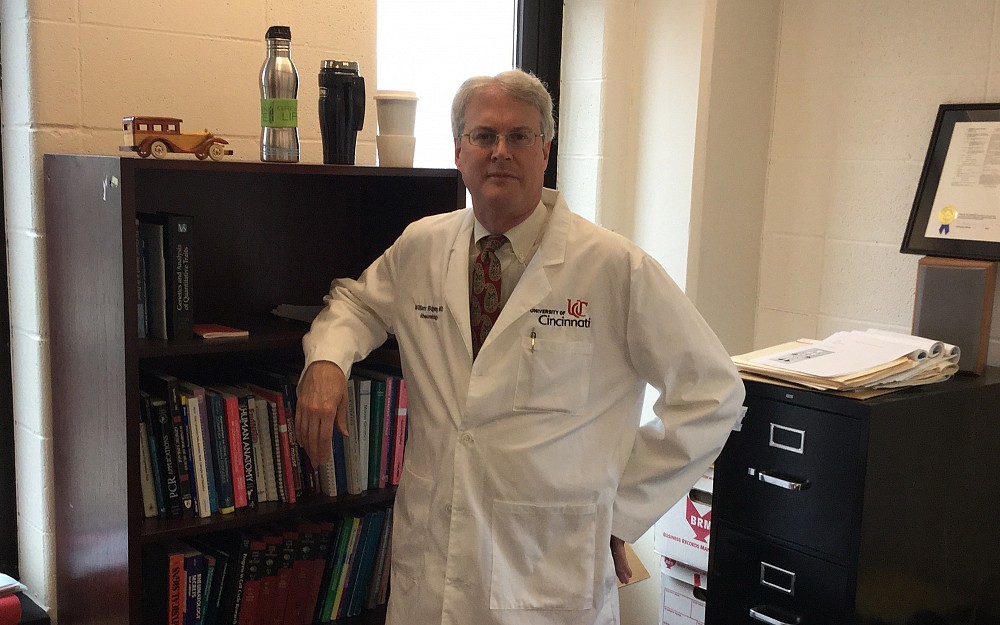
William Ridgway, MD, Alice W. and Mark A. Brown Professor and director of the Division of Immunology, Allergy and Rheumatology, says he and a team of researchers have found a therapy that reverses new onset Type 1 diabetes in mouse models.
Research from this study has been published in the October 2015 edition of Diabetes, a journal of the American Diabetes Association. It was initially presented June 14, 2014, at the American Diabetes Associations 74th Scientific Sessions in San Francisco.
"It is relatively easy to prevent diabetes in mice, but it is much harder to reverse the disease once it is in full force, says Ridgway. "This is true in general of autoimmunity. Acute autoimmune diseases are tough to reverse. They are very aggressive. What we have shown is we can reverse acute type 1 diabetes in mice.
The research team has also received a two-year NIH grant of $434,000 from the National Institute of Allergy and Infectious Diseases associated with the research.
Type 1 diabetes is usually diagnosed in children and young adults and affects about 5 percent of all people with diabetes, according to the American Diabetes Association. In Type 1 diabetes, the body does not produce sufficient insulin, which is central to glucose metabolism: Without insulin, blood glucose rises. There is no cure for Type 1 diabetes though it can be controlled with insulin therapy. Symptoms of the disease include frequent urination, excessive thirst and weight loss even though you are eating more.
Researchers say the incidence of Type 1 diabetes and autoimmunity in general has risen rapidly since the mid-20th century, possibly the result of under-stimulation of innate immune systems which trigger autoimmunity in children and young adults. In Type 1 diabetes, autoimmunity causes the bodys T-cells to attack its insulin-producing beta cells.
Previously, it has been reported that non-obese diabetic mice, a model for human T1D, have defects in innate immune cells. Ridgway says his team of researchers used an agonistic monoclonal antibody, UT18, to boost the activity of TLR4 and reverse new onset diabetes in a high percentage of newly diabetic non-obese mice. He says the cause of the reversal is a preservation of the endocrine pancreatic beta cells that produce insulin. The cells are preserved from the autoimmune attack, which is a hallmark of Type 1 diabetes.
"Diabetes is a very acute disease, says Ridgway. "It happens very fast and things move quickly. In 17 days you go from having no diabetes to being at the end stage in mouse models. In humans its longer, maybe a few months. The key is to catch the disease in its initial stages.
Ridgway says this approach differs from most in combating Type 1 diabetes because his teams therapies in mice do not directly interact with T-cells. He says treatment of autoimmunity has often been directed at suppressing an overzealous adaptive immune response by eliminating auto-reactive T-cells.
The research team is targeting a different part of the immune system, which consists of two arms, an adaptive immune system and an innate immune system in both humans and mice. T-cells and B-cells are part of the adaptive immune system and respond to many different antigens, explains Ridgway.
Researchers are targeting a receptor that is found mostly on innate immune cells such as monocytes and dendritic cells.
"This same molecular TLR4 pathway operates in humans in many similar ways; though there are some differences, it is possible this new pathway of targeting the immune system could be tested in humans, says Ridgway.
Additional study will be required, but the therapy may hold promise because one agonistic anti-TLR4 agent is already FDA approved and others are under development, says Ridgway.
"We still have a substantial amount of work to do before we have human clinical trials, says Ridgway. "We have to translate the structures from mice to humans and figure out how we would stimulate the human molecule. That will take us some time.
Other members of the research team include: Kyle Bednar, Hiroki Tsukamoto, Kritika Kachapati, Shoichiro Ohta, Yuehong Wu, Jonathan Katz and Dana Ascherman.