Protein Helps Protect Tissues From Damage After a Heart Attack

CINCINNATI—University of Cincinnati (UC) researchers have observed levels of HAX-1, an anti-cell death protein, drop significantly in mice after a heart attack and during heart failure resulting in cardiac cells dying at a higher than normal rate.


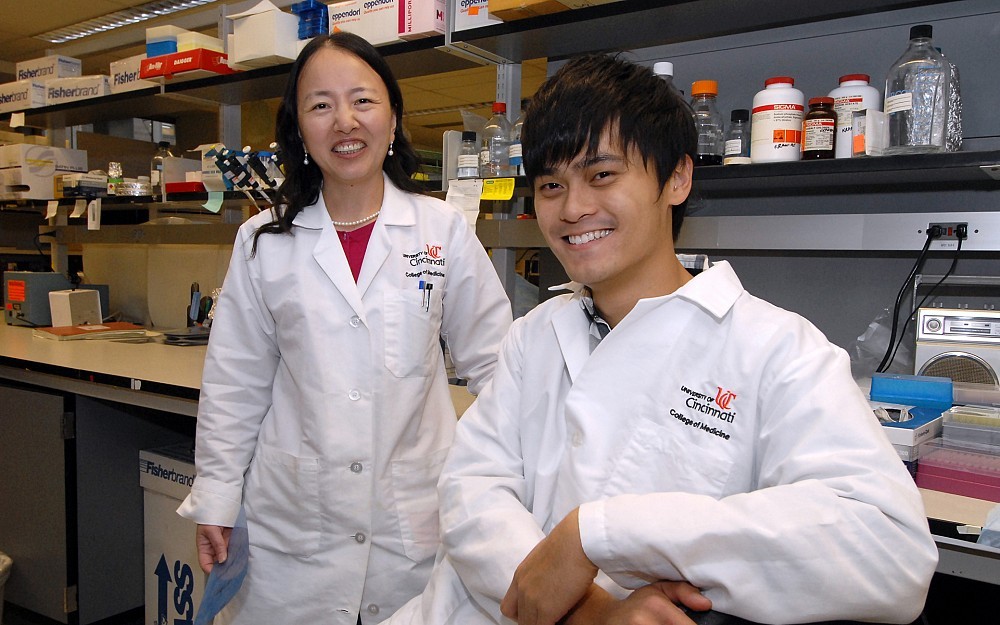
HAX-1 regulates mitochondrial membrane integrity in the heart and prevents the progression of cell death and damage to heart tissue, says Chi Keung Lam, PhD, a postdoctoral fellow working under the direction of Evangelia (Litsa) Kranias, PhD, Hanna Professor and director of cardiovascular biology in UC’s Department of Pharmacology and Cell Biophysics.

HAX-1 is protective of cardiac cells during ischemia-reperfusion injury or damage to tissue caused by blood restriction. HAX-1 is an inhibitor of the mitochondrial permeability transition pore, promotes cell survival and works through recruitment of a chaperone protein called Hsp90 from cyclophilin-D, a major component of the pore, says Lam. Displacement of Hsp90 from cyclophilin-D leads to cyclophilin-D degradation and disruption of the pore opening and cell death.

The findings were published online this week in Proceedings in the National Academy of Sciences of the United States.

"If we can stimulate the function of this protein during or right before a heart attack we might be able to reduce the bad results of an episode,” explains Lam, a lead author of the study. "Basically, what we have found is that this protein is inhibiting cell death through a pathway that is known to cause death.”

Other investigators working with Lam and under the direction of Kranias include: Wen Zhao, PhD, former postdoctoral fellow at UC and also a lead author; Guan-Sheng Liu, PhD; Wen-Feng Cai, PhD; George Gardner, a PhD student; and George Adly.

"The opening of the mitochondrial permeability transition pore plays a key role in various diseases,” says Lam. "This results in regulation of cell death in cancer, stroke and liver disease among many other conditions.”

This study was funded by the National Institutes of Health.

The research team is part of the UC Heart, Lung and Vascular Institute, a partnership between UC Health and the University of Cincinnati College of Medicine designed to connect expert physicians with cutting edge researchers to make breakthroughs in medicine.

Related Stories

1

UC students organize free health clinic happening July 11-12

July 10, 2026

The University of Cincinnati student chapter of Remote Area Medical is holding its annual free health clinic July 11-12. The clinic is open to adults and children, with no income requirements. Anyone in the area who needs medical, dental or vision care will have a chance to get it for free, with no insurance required.

2

Is speech-to-text AI really reliable?

July 10, 2026

UC researcher Nelly Elsayed’s study in the International Journal of Medical Informatics reveals key risks in clinical speech-to-text AI and shows why human review is essential.

3

Hoxworth Blood Center CEO advocates on Capitol Hill during National Blood Advocacy Week

July 9, 2026

Hoxworth Blood Center, University of Cincinnati, has announced that David Oh, MD, director and chief executive officer, joined blood center leaders, patient advocates and partner organizations in Washington, D.C., in June as part of Blood Advocacy Week, a national initiative led by America’s Blood Centers to strengthen the nation’s blood supply.
