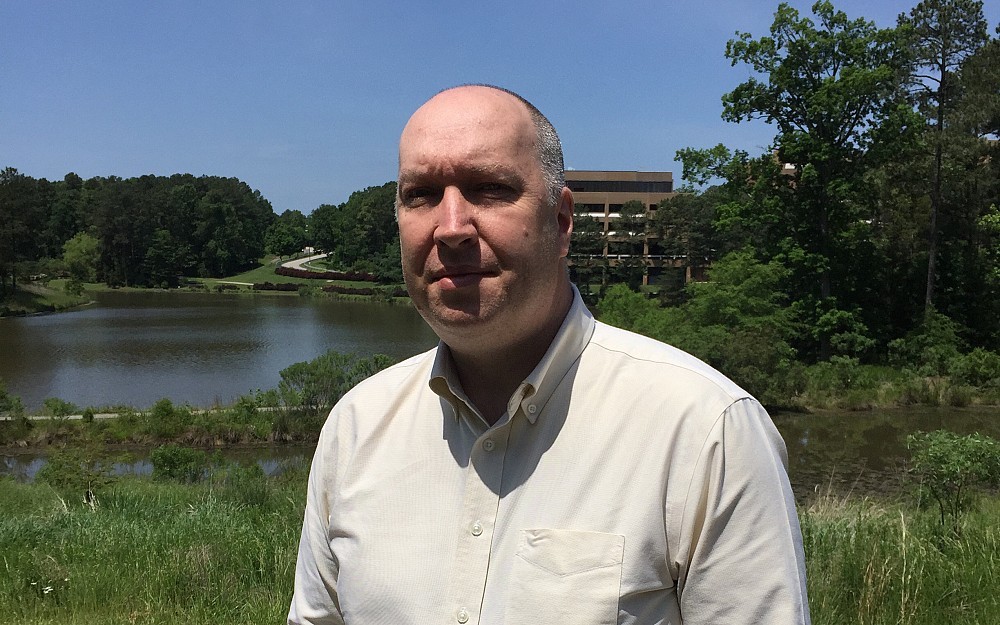
Focus on Research With John Hogenesch, PhD

John Hogenesch, PhD, joined the College of Medicine faculty in September as Ohio Eminent Scholar and professor in the Department of Molecular and Cellular Physiology. He was previously a professor of systems pharmacology and translational therapeutics at the University of Pennsylvania Perelman School of Medicine. As a genome and chronobiologist, he specializes in studying the mammalian clock network from genomic and computational perspectives to further the understanding of clock-regulated behavior and physiology. In addition to his own research, he has helped push the biology community to create Wikipedia pages about genes through a project called Gene Wiki. His group also developed the Gene Atlas, which allows researchers to investigate gene expression of all mammalian genes in humans, mice and rats. Finally, his group recently developed CircaDB, a database of gene expression taken over time for mouse tissues and human cells.
What is the focus of your research?
I work in two areas, genome biology and circadian and sleep research. In genome biology, I try to develop methods to generate and analyze data at the genome scale. These methods include genomic screening methods (small molecule, RNAi, cDNA screening), algorithm development for genetics or gene expression analysis, and many methods relevant to periodic systems. Many of these techniques have a wide range of applications, so I pursue many of these efforts outside of my biological comfort zone by collaboration. I learn a lot more from these collaborations than I do from work we're already doing, so it's a great way to keep up with science in other areas.
In my circadian and sleep research group, I work on trying to understand how the mammalian circadian clock works (i.e., its mechanism) as well as the connection between the molecular outputs of the clock and physiology and behavior. Our lab has discovered a number of new "clock components, genes and their protein products that make up the biological clock. With a truly amazing community of researchers, we've developed a basic model of how a biological clock works in animals. On the output side, my group and others have described thousands of clock-controlled genes that play a role in virtually all physiology, drug response, and behavior.
What are some of the practical applications of your research?
There are many, including:
- Normative measures of physiology and pathophysiology: Blood pressure is higher after you first wake up than later in the day or while sleeping. The same is true for heart rate, body temperature, etc. Time should be considered in interpreting these measures.
- Drug therapy: Certain drugs work better when taken in the morning (e.g., prednisone, certain stimulants and antidepressants) than before bed (e.g., short-acting statins, low-dose aspirin). There are about 800 papers on chemotherapy timing.
- Drug discovery: The clock itself is an active target by several big and small pharmas for its role in regulating sleep and metabolism.
- Sleep. Metabolism. Performance. All subject to daily variations. Timing matters.
What do you like to do in your spare time?
I have three children, which keeps me busy. I'm also a sports fan, college and pro, and I love to cook, particularly barbecuing. When you think about it, cooking is molecular biology you can eat.
Related Stories
On-site training in Speech & Hearing Clinic sets UC’s programs apart
August 27, 2026
At the University of Cincinnati’s Speech & Hearing Clinic, Doctor of Audiology and Speech-Language Pathology graduate students gain real-world experience while providing free speech and hearing services to the community.
Designing with cancer patients' needs in focus
August 27, 2026
Kristina Shin is designing garments that prioritize the comfort, function and confidence of breast cancer patients, addressing a need often overlooked by traditional fashion.
UC, NKU renew longstanding partnership supporting Army ROTC cadets
August 26, 2026
The University of Cincinnati Army ROTC and Northern Kentucky University (NKU) have renewed a longstanding partnership that supports students preparing to become Army officers and leaders in their communities. The universities formalized the renewed agreement during a signing event Aug. 11 at NKU.