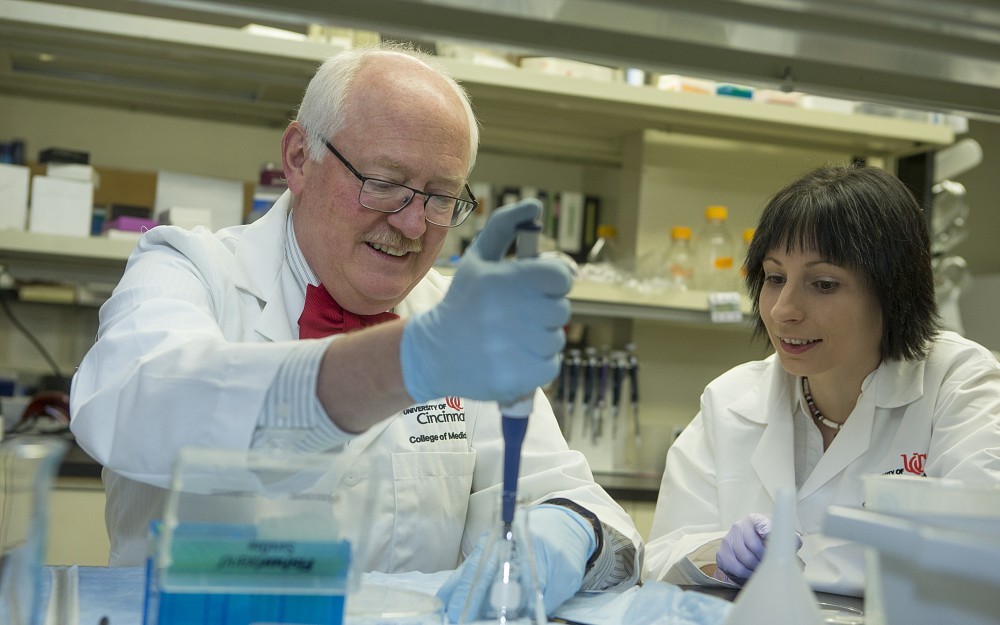
2016 Distinguished Research Professor (STEMM): James Herman, PhD

James Herman, PhD, recipient of this years STEMM research award, fits the descriptor all too well, since a primary focus of his research revolves around a stemthe brainstem. Herman studies how brains process stressful information and the physiological actions that may result.
Herman, the Donald C. Harrison professor and vice chair of basic research in the Department of Psychiatry and Behavioral Neuroscience in the College of Medicine, is the principal investigator of three R01/NIMH grants, all studying different aspects of how the brain controls stress activity and diseases that are associated with stress. His laboratory examines the relationship of central nervous system stress circuits to the symptomology of depression, post-traumatic stress disorder, aging and developmental disorders.
As director of the UC Neurobiology Research Center, Herman works to advance neuroscience research across the university. Among other activities, the center oversees a pilot program for neuroscience grants, with the goal to assemble research teams that can go on to be competitive for NIH research funding. Just since its inception in 2014, 13 of 15 awardees have received or submitted proposals for prestigious R01 grants.
"Herman is a leader in the College of Medicine, in the research arena, administratively, and as a mentor, says College of Medicine Dean William Ball, MD. "He is in the very top group of elite scholars in the world investigating the neurobiology of stress. His studies have made a major impact on the field of stress neurobiology and psychiatry Dr. Herman is a true citizen of the University, and his rare combination of attributes, leadership and expertise will drive the University to the top tier of research institutions.
Related Stories
On-site training in Speech & Hearing Clinic sets UC’s programs apart
August 27, 2026
At the University of Cincinnati’s Speech & Hearing Clinic, Doctor of Audiology and Speech-Language Pathology graduate students gain real-world experience while providing free speech and hearing services to the community.
Designing with cancer patients' needs in focus
August 27, 2026
Kristina Shin is designing garments that prioritize the comfort, function and confidence of breast cancer patients, addressing a need often overlooked by traditional fashion.
UC, NKU renew longstanding partnership supporting Army ROTC cadets
August 26, 2026
The University of Cincinnati Army ROTC and Northern Kentucky University (NKU) have renewed a longstanding partnership that supports students preparing to become Army officers and leaders in their communities. The universities formalized the renewed agreement during a signing event Aug. 11 at NKU.