Medication Regimen May Lead to Less Hospital Time for Liver Cancer Patients

CINCINNATIResearchers at the University of Cincinnati College of Medicine have found that putting liver cancer patients on a medication regimen prior to undergoing a certain treatment could lead to shorter hospital stays and less chance for readmission due to complications.
These findings are being presented via poster at the World Conference on Interventional Oncology in Boston, June 9-12.
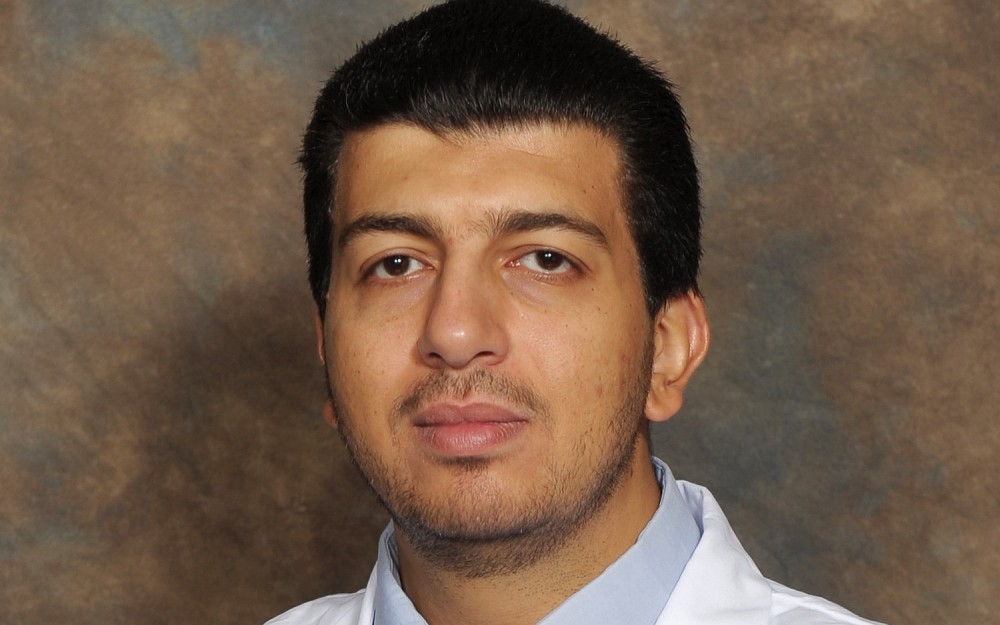
"Drug Eluting Bead Chemoembolization (DEB TACE) is a minimally invasive procedure performed in interventional radiology to restrict a tumor's blood supply with use of drug-coated beads that deliver chemotherapy locally to the tumor, says Abouelmagd Makramalla, MD, assistant professor of interventional radiology within the UC College of Medicine and a UC Health interventional radiologist who is also the principal investigator on the study. Makramalla is working in collaboration with Ross Ristagno, MD, assistant professor at the UC College of Medicine and interventional radiology section chief.
"A common side effect of this is postembolization syndrome (PES), which could cause fever, nausea and vomiting and pain, Makramalla says. "It usually occurs within the first 72 hours after the procedure and then starts to subside after 72 hours. Standard practice is to hospitalize these patients for one to two days for observation; however, we wanted to see if adding fosaprepitant to the medication regimen, which prevents nausea and vomiting, prior to DEB TACE treatment would allow for the procedure to be outpatient and prevent hospital readmission for PES.
Using a database of patients from UC, researchers reviewed all liver cancer patients who had the DEB TACE procedure over a 23 month period.
Makramalla says the small sample size consisted of 113 consecutive procedures in 71 patients. All patients received premedication with dexamethasone, a steroid, and fosaprepitant, which helps prevent nausea and vomiting caused by chemotherapy. Post-procedural anti-nausea medicines and painkillers were also prescribed as needed. Discharge medications included anti-nausea medications, analgesic medications (painkillers) and an antibiotic.
"Of the 113 DEB TACE procedures, only five patients (4.4 percent), were admitted for PES, he says, adding that 108 treatments (96.4 percent) were successfully performed without development of post-procedure PES that required admission.
"These findings suggest that outpatient DEB TACE could be possible with premedication and a low incidence of hospital readmission for PES; this could allow the patient to recover more comfortably in their home and save both the patient and the hospital time and money. We need larger studies to determine if this could become a standard pre-treatment regimen, he says.
Related Stories
Cancer Center plays key role in lab research, clinical trials for new pancreatic cancer drug
September 1, 2026

WLWT and WCPO highlighted the contributions of University of Cincinnati Cancer Center researchers that helped lead to the recent FDA approval of daraxonrasib, a new treatment for pancreatic cancer.
Cancer Center physician receives $150,000 New Investigator Research Grant to study treatment-resistant leukemia
September 1, 2026
The University of Cincinnati Cancer Center’s Sarah Skuli, MD, PhD, received a two‑year, $150,000 Leukemia Research Foundation New Investigator Grant to study TP53‑mutated leukemia, a treatment‑resistant subtype with very poor outcomes.
Heavy social media use linked to depression
August 31, 2026

U.S. News and World Report, Yahoo! News, MSN, USA Today and other national media highlight a new study by the University of Cincinnati and Northwestern University that found a correlation between heavy social media use and depression in adults.