UC's Kidney Transplant Researchers Prominent at National Conference

In 2015, the National Institutes of Health launched the Precision Medicine Initiative to gain better insights into the biological, environmental and behavioral influences on disease states to make a difference for the millions of Americans who suffer from disease.
Kidney transplant researchers at the University of Cincinnatis College of Medicine, however, have long been at the forefront of individualizing antirejection medications that allow patients and physicians to obtain better results following organ transplantation.
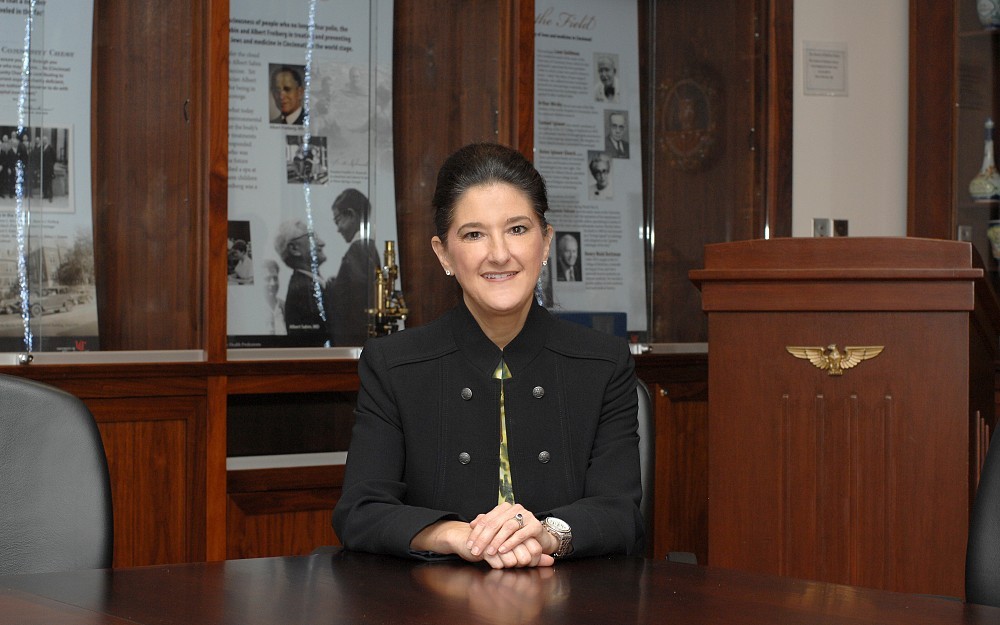
"The way the body handles medicine as well as the impact of genes on reaction to medicines are a crucial element to successful transplantation, says transplant researcher Rita Alloway, PharmD, a professor in the division of nephrology and hypertension , who has overseen research efforts aimed at bettering transplant outcomes with drug therapies for over 25 years.
As a result, "the transplant community and the FDA have come to expect clinically relevant, high-quality science pertaining to immunosuppressant pharmacokinetics studies from UC, says Alloway, citing several UC-led and collaborative studies presented at the 2016 American Transplant Congress (ATC) in Boston, Massachusetts.
Results from several UC studies were presented to the congress; among them was result of collaboration between Alloway, Alexander Vinks, PharmD, PhD, director of the Division of Clinical Pharmacology at Cincinnati Childrens Medical Center, and Uwe Christians, MD, PhD, with the University of Colorado. These studies focused on how a patients genetics can influence the way the body handles anti-rejection medicines. The symposium titled "Do High Risk Transplant Recipients Take Higher Risks When Treated With Generic Tacrolimus? presented preliminary results of a 3 year, $2.25 million FDA award to study tacrolimus, an anti-rejection medication, in high-risk transplant recipients. Alloway and her team took a new approach in defining a high-risk patient by looking at patients genes instead of looking at other clinical elements, such as traditional risk factors for rejection.
The UC transplant research team also presented results from studies in transplant candidates undergoing laparoscopic sleeve gastrectomy, a type of weight loss surgery that is being used in unique ways at UC. This procedure is becoming more common but there is a void of data regarding its impact on how it affects the way the body absorbs and gets rids of medicines. This procedure may lead to significant changes in how antirejection medicines work in transplant candidates and recipients.
Tyyab Diwan, MD, assistant professor of surgery and director of the Cincinnati Collaborative for Obesity Research, and transplant pharmacy fellows Alicia Lichvar, PharmD, and Abbie Leino, PharmD, contributed to presentations on "Pharmacokinetic Evaluation of Astagraf XL and Prograf in Renal Transplant Candidates Following Laparoscopic Sleeve Gastrectomy and "Mycophenolate Mofetil Single Dose Pharmacokinetics Following Laparoscopic Sleeve Gastrectomy. These studies showed that the change in the anatomy of the stomach had little to no impact on how antirejection medicines are taken by the body but that patients genes had a significant impact on that process.
Other presentations at the conference included:
"A Retrospective Analysis of Tacrolimus Trough Level Variability and the Identification of the High Risk Transplant Recipient
"Pharmacokinetic Studies of Brand and Five Generic Tacrolimus Formulations in High Risk Transplant Recipients: Defining High Risk
"Evaluating Transplant Donor and Recipient Pharmacogenetics and its Impact on Variability in Tacrolimus and Metabolites Pharmacokinetics.
"Making Clinical/Translational Research Your Career, presented by Alloway, who also moderated a session titled "Advancing Transplant Care Using Pharmacogenomics.
"All of our work is possible due to the willingness, collaboration and generosity of our transplant recipients and candidates to participate in these rigorous studies and a strong, collaborative research team. The results of these studies allow for the development of truly personalized medicine for our transplant recipients, she says.
Related Stories
Cancer Center plays key role in lab research, clinical trials for new pancreatic cancer drug
September 1, 2026

WLWT and WCPO highlighted the contributions of University of Cincinnati Cancer Center researchers that helped lead to the recent FDA approval of daraxonrasib, a new treatment for pancreatic cancer.
Cancer Center physician receives $150,000 New Investigator Research Grant to study treatment-resistant leukemia
September 1, 2026
The University of Cincinnati Cancer Center’s Sarah Skuli, MD, PhD, received a two‑year, $150,000 Leukemia Research Foundation New Investigator Grant to study TP53‑mutated leukemia, a treatment‑resistant subtype with very poor outcomes.
Heavy social media use linked to depression
August 31, 2026

U.S. News and World Report, Yahoo! News, MSN, USA Today and other national media highlight a new study by the University of Cincinnati and Northwestern University that found a correlation between heavy social media use and depression in adults.