UC Receives $4.3 Million From NIH For Mouse Metabolic Phenotyping Center

CINCINNATIResearchers at the University of Cincinnati (UC) have been awarded a five-year, $4.3 million renewal grant from the National Institutes of Health (NIH) to continue work at the universitys Mouse Metabolic Phenotyping Center (MMPC) in Reading, Ohio.
The MMPC is a NIH-sponsored resource that provides experimental testing services to scientists studying diabetes, obesity, diabetic complications and other metabolic diseases in mice; UC is one of two of the original sites nationally to receive the renewed funding.
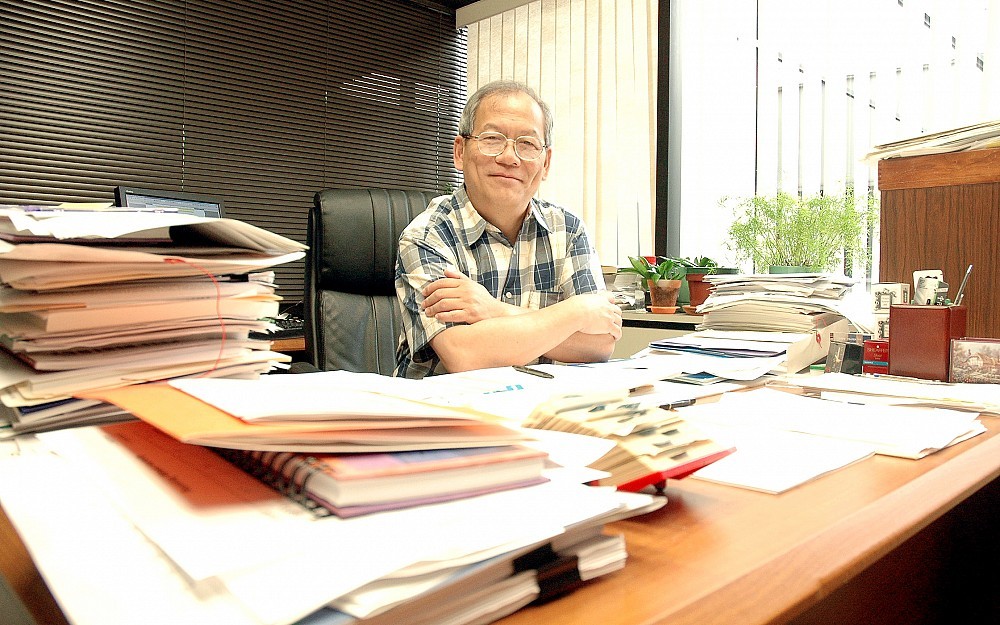
"The grant is a great point of pride for my team and the university. By awarding this grant, the NIH recognizes that our contribution to diabetes and obesity research is strong and that our staff is committed to promoting research for investigators across the country, says the centers director Patrick Tso, PhD, Mary Emery Professor of Pathology and Laboratory Medicine at the UC College of Medicine.
At the center, researchers observe and report the various metabolic and physiological functions of genetically-engineered mice sent to UC from research institutions worldwide.
"We dont generate the genetically modified mouse and we dont claim any credit for the outcomes, Tso says, citing the centers purpose as a way for investigators, especially young investigators with limited research funding, to conduct sophisticated phenotyping investigation in areas such as diabetes, obesity and related metabolic diseases or conditions at a fraction of the cost.
The MMPC program was established by the NIH for said purpose in 2001 to form a consortium of four centers including UC, from within the U.S., both NIH and non-NIH funded. UCs NIH funding was renewed at NIH on March 14, 2016, and of the original four centers, UC and Vanderbilt University are the only two centers to have received continuous NIH funding. The consortium currently consists of five centers.
The NIH grant award cites the UC MMPC as a "highly successful MMPC, which has been thriving under the strong leadership of Dr. Patrick Tso and judged the overall merit of UCs application to be "Outstanding to Excellent.
The College of Medicine is proud to have such an outstanding, talented group of investigators that not only perform their own cutting edge research, but also facilitate investigation and discovery by faculty around the country. We are grateful to Dr. Tso for his exceptional leadership in sustaining this valuable center, says Melanie Cushion, PhD, senior associate dean of research at the College of Medicine.
Other members of the UC center include: Sean Davidson, PhD, professor, Philip Howles, PhD, associate professor, Min Liu, PhD, professor, Laura Woollett, PhD, professor, all in the University of Cincinnati College of Medicines Department of Pathology and Laboratory Medicines and Steven Benoit, PhD, associate professor, James Herman, PhD, professor, Yvonne Ulrich-Lai, PhD, associate professor, Theresa Reyes, associate professor, Stephen Woods, PhD, professor emeritus, all in the colleges Department of Psychiatry of Behavioral Neuroscience.
Related Stories
Cancer Center physician receives $150,000 New Investigator Research Grant to study treatment-resistant leukemia
September 1, 2026
The University of Cincinnati Cancer Center’s Sarah Skuli, MD, PhD, received a two‑year, $150,000 Leukemia Research Foundation New Investigator Grant to study TP53‑mutated leukemia, a treatment‑resistant subtype with very poor outcomes.
Heavy social media use linked to depression
August 31, 2026

U.S. News and World Report, Yahoo! News, MSN, USA Today and other national media highlight a new study by the University of Cincinnati and Northwestern University that found a correlation between heavy social media use and depression in adults.
On-site training in Speech & Hearing Clinic sets UC’s programs apart
August 27, 2026
At the University of Cincinnati’s Speech & Hearing Clinic, Doctor of Audiology and Speech-Language Pathology graduate students gain real-world experience while providing free speech and hearing services to the community.