Heart Attack Treatment Might be in Your Face

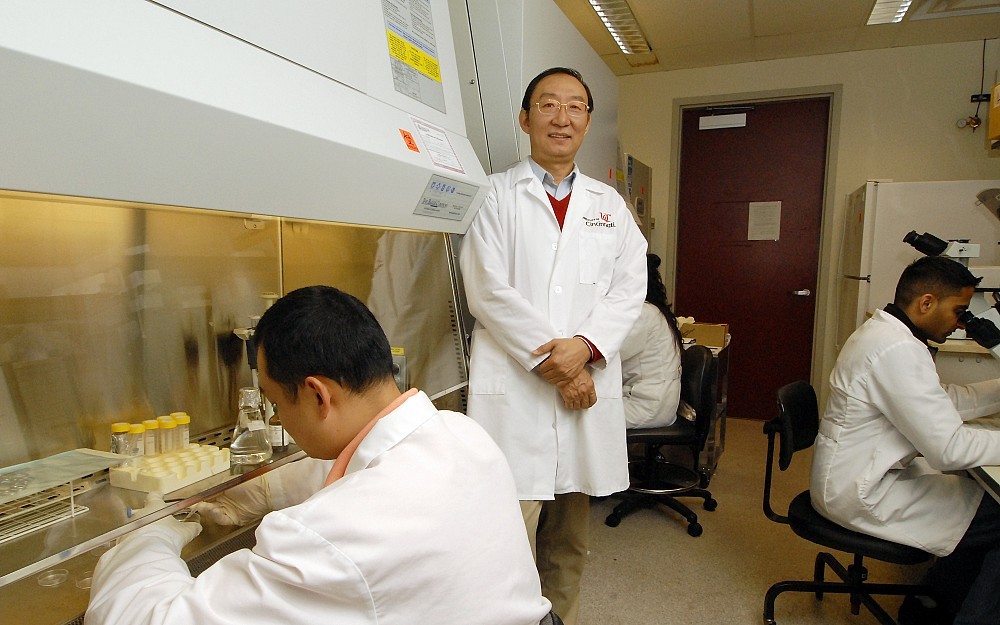
CINCINNATIResearchers at the University of Cincinnati (UC) have received $2.4 million in federal funding to pursue research on a novel cell therapy that would repair heart damage using modified cells taken from the patients own facial muscle.
"One of the major advantages of this technique in the clinical setting will be that we take cells from the patient themselves to lessen the risk of rejection and tumor formation. These are your own natural cells, says principal investigator Yi-Gang Wang, MD, PhD, a professor in the Department of Pathology and Laboratory Medicine and director of Regenerative Medicine Research at UCs College of Medicine.
Our cell therapy techniques, Wang says, have already been successful in small animal models, with the next step being large animal studies.
"Right now there is very limited heart muscle regeneration after a person has a heart attack, he says, adding that the only treatments that do exist are drug therapies, heart bypasses or heart transplants.
However, current treatments do not replace cells lost during heart attack, and come with additional dangers: reduced oxygen consumption from drug therapy, recovery and complications from bypass surgeries and the availability of a donor heart, which includes the risk of rejection.
"The most promising route from treatment of heart failure due to cardiovascular disease is to use cells that can promote the regrowth of healthy tissue, he says.
Over the last decade, Wangs research team has determined that facial muscle cells (masseter cells) develop in close proximity to heart muscle cells (cardiomyocytes) and have similar gene expression. By removing certain skeletal muscle genes and enhancing cardiac genes, masseter cells can be reprogrammed into cells that have an identical genetic make-up to cardiomyocytes, including the ability to spontaneously beat in order to pump blood.
These masseter cells turned cardiomyocytes would then be administered via injection or a patch, Wang says.
"Our small animal studies already show it is feasible, says Wang, "and our techniques are the most efficient at generating cardiomyocytes."
The R01 grant (HL136025) comes from the National Institutes of Health (NIH) Research Project Grant.
Wang cites no conflicts of interest pertaining to the study.
Related Stories
On-site training in Speech & Hearing Clinic sets UC’s programs apart
August 27, 2026
At the University of Cincinnati’s Speech & Hearing Clinic, Doctor of Audiology and Speech-Language Pathology graduate students gain real-world experience while providing free speech and hearing services to the community.
Designing with cancer patients' needs in focus
August 27, 2026
Kristina Shin is designing garments that prioritize the comfort, function and confidence of breast cancer patients, addressing a need often overlooked by traditional fashion.
UC, NKU renew longstanding partnership supporting Army ROTC cadets
August 26, 2026
The University of Cincinnati Army ROTC and Northern Kentucky University (NKU) have renewed a longstanding partnership that supports students preparing to become Army officers and leaders in their communities. The universities formalized the renewed agreement during a signing event Aug. 11 at NKU.