Researcher Receives Leukemia and Lymphoma Society Scholar Award

Jianjun Chen, PhD, associate professor in the Department of Cancer Biology at the UC College of Medicine and member of the UC Cancer Institute, received a $550,000 Leukemia and Lymphoma Society Scholar Award.
The award, which will be distributed to Chen in five installments beginning in July 2017, will help support Chens research looking at the definitive pathological role of TET1 protein and the underlying molecular mechanism in the development of acute myeloid leukemia.
"Acute myeloid leukemia is a type of cancer of the blood and bone marrow with excess immature white blood cells, cells that have not yet become other functioning cells within the body, says Chen. "In various types of tumors, weve found that TET1 plays a cancer-causing role in mixed lineage leukemia-rearranged acute myeloid leukemia and is found in high numbers. Mixed lineage leukemia is a type of leukemia in which a piece of chromosome 11 has broken off and attached itself to another chromosome. Patients (often children) with this type of leukemia have a particularly poor prognosis.
"New data shows that TET1 is also overabundant in other subtypes of acute myeloid leukemia. This award will help us study the role and underlying mechanisms of TET1 in this type of leukemia to determine whether the protein is required for development of the cancer and whether it could be a potential therapeutic target.
Chen says researchers in his lab will use animal models with and without TET1 to determine its role in the formation of the cancer and in leukemia stem cell development, which helps the cancer survive. Additionally, he says they will use xenotransplantationtaking human cancer cells and putting them into animal modelsto study the same, as a proof-of-concept study.
"To identify critical target genes of this protein within this type of cancer, we will also perform genome and RNA sequencing, followed by validation and functional studies, to hopefully clarify the underlying molecular mechanism or mechanisms by which TET1 plays a cancer causing role in acute myeloid leukemia, he says. "With the help of this funding, we hope to better understand the reasons this type of leukemia develops and find more effective, targeted treatments for it, one day improving the lives of patients.

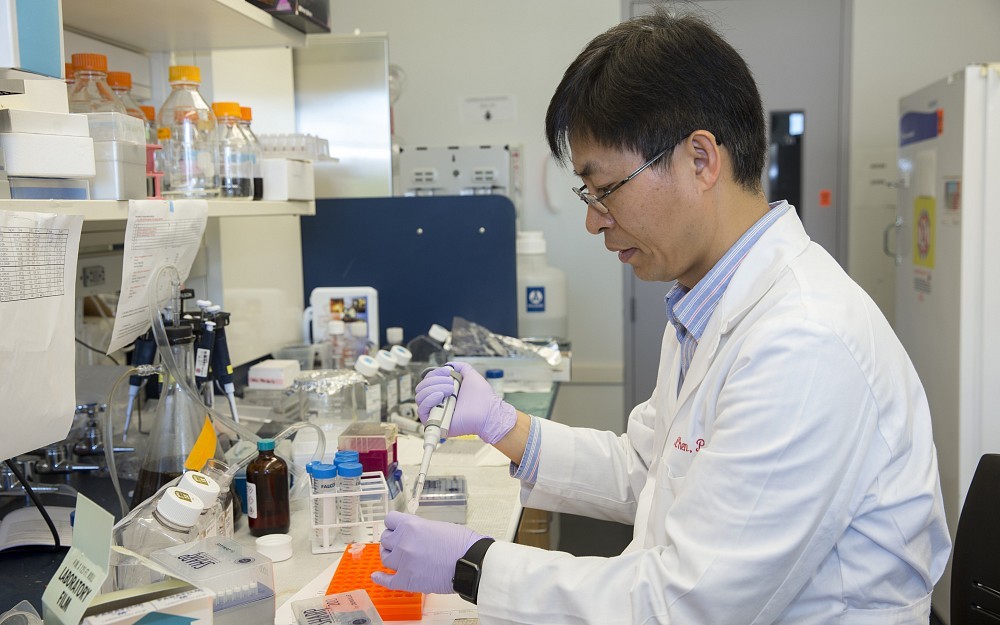
Jianjun Chen, PhD, associate professor in the Department of Cancer Biology at the UC College of Medicine
Related Stories
Cancer Center plays key role in lab research, clinical trials for new pancreatic cancer drug
September 1, 2026

WLWT and WCPO highlighted the contributions of University of Cincinnati Cancer Center researchers that helped lead to the recent FDA approval of daraxonrasib, a new treatment for pancreatic cancer.
Cancer Center physician receives $150,000 New Investigator Research Grant to study treatment-resistant leukemia
September 1, 2026
The University of Cincinnati Cancer Center’s Sarah Skuli, MD, PhD, received a two‑year, $150,000 Leukemia Research Foundation New Investigator Grant to study TP53‑mutated leukemia, a treatment‑resistant subtype with very poor outcomes.
Heavy social media use linked to depression
August 31, 2026

U.S. News and World Report, Yahoo! News, MSN, USA Today and other national media highlight a new study by the University of Cincinnati and Northwestern University that found a correlation between heavy social media use and depression in adults.