Ophthalmology Team Helps Diagnose, Treat Nurse with Slow-Growing Cancer

Nancy Brown, 54, lives a fairly fast-paced life as a wound care nurse, wife, mother, artist, traveler and overall self-proclaimed "people lover.
However, "fast cant be used to describe her ocular melanoma, which was thought to be a benign "freckle, or nevus, on her iris for over 19 years.
"I had a great ophthalmologist who noticed the brown freckle during a routine eye exam and thought it might be nothing but still wanted me to be seen by an eye specialist, she says. "He sent me to UC to be evaluated by Dr. (James) Augsburger. Brown said that Augsburger, MD, an ophthalmologist at the University of Cincinnati Cancer Institute, monitored her yearly, and eventually started doing less surveillance as the years passed and nothing on the iris was altered.
"However, I started noticing some changes; eventually, my pupil turned into almost a diamond-shaped cat eye which is when Dr. Augsburger introduced me to Dr. Corrêa, she says. Zélia Corrêa, MD, PhD, is the Mary Knight Asbury Chair of Ophthalmic Pathology and Ocular Oncology, professor of ophthalmology at the UC College of Medicine and the director of ocular oncology within the UC Cancer Institute.
Corrêa performed an ultrasound which showed that there was now enough thickness in the freckle that would allow for a biopsy. It confirmed that the freckle was not harmless, as was previously thought.
"After I found out it was cancer, I just wanted it goneI didnt think about what would happen to my sight or how it would affect my appearance, she says. "I heard cancer, and I wanted it out of my body. I was never scared, but I just wanted to take the steps to get rid of it.
The biopsy was completed as an outpatient procedure, and the specimen was sent to the pathology lab where it was determined to be a non-aggressive form of ocular melanomaa good sign for Brown. It also had not spread to other parts of her body.
In May 2016, she had surgery to remove the melanoma.
"I was awake for the whole thing, which was weird, she says. "Dr. Corrêa had to cut out the tumor in a wedge and then suture the iris edges together. As part of the procedure, she also had to remove my lens and replace it with an artificial lens (like cataract surgery). Dr. Corrêa was very comforting during the procedure. In fact, at one point, I heard her say to one of the nurses, This is my sweetie. That just meant so much in a moment that was so intense.
After three weeks of a slightly scratchy eye due to the sutures and needing to mostly keep her gaze directed downward for comfort"I read a lot of books, she saysBrown was back to work and feeling good.
"I never had any pain, but my eyes would feel tired at the end of the day, she says. "Dr. Corrêa and really all of my nurses and the rest of the team were all so available to me if I had questions or concerns. I had Dr. Corrêas cell phone number so that I could call or text her. Everyone still remembers me and knows my name. It was a very personal experiencebut the whole team was also very professional and informative.
Corrêa continues to follow Brown as one of her ophthalmologists. "Mrs. Browns outcome was phenomenal because she was diagnosed early. She was monitored periodically by her ophthalmologist, and once the freckle in her iris (colored part of the eye) started to grow, she was immediately sent for treatment. Early diagnosis is always the key for successful treatment and cure of any eye disease, she says.
After her surgery and recovery, Brown took a celebratory trip to the West Coast with her husband, Keith, to visit family.
"We drove from San Diego to Seattle, she says. "At one point, while looking out at the Pacific Ocean, I thought about Dr. Corrêa and the rest of my team. I was able to see the beauty around me because of them. I even wanted to send her a selfie with the ocean in the background captioned This is how good my eyes look in California!
Now, shes back to life as a wound nurse at UC Medical Center, and watercolor painting when she has time, but she cant help but tear up when thinking back to everything shes overcome. "Before my cancer diagnosis, I thought of my life as a ray, with an arrow moving forward forever, but then, it became more like a line segment, with an end point.
"Its changed the way that I deal with my patients, and not that I ever took patient care or health screening lightly, but theres a seriousness there now, she says. "I can see this level of anxiety in my patients and understand it now, and it helps me address it more effectively.
"When I was diagnosed, I didnt think about the cosmetic aspects at all. I just wanted this cancer out of body, and thankfully, I had a team that knew exactly what to do. I was really blessed to have a good eye doctor that advised me in taking the proper action and a good ocular oncology team to remove the tumor and help me recover.
Corrêa adds that Brown was very concerned about her diagnosis, as most patients are, but with a little reassurance she saw herself as being part of a team that was fighting collectively to help her, which then resulted in good communication and even better results.
"Every individual should have a comprehensive eye exam yearly after 40, with pupil dilation and evaluation of the fundus, says Corrêa. "People would be surprised with how many illnesses can be detected during an eye exam, including diabetes, high blood pressure, blood disease and tumors.

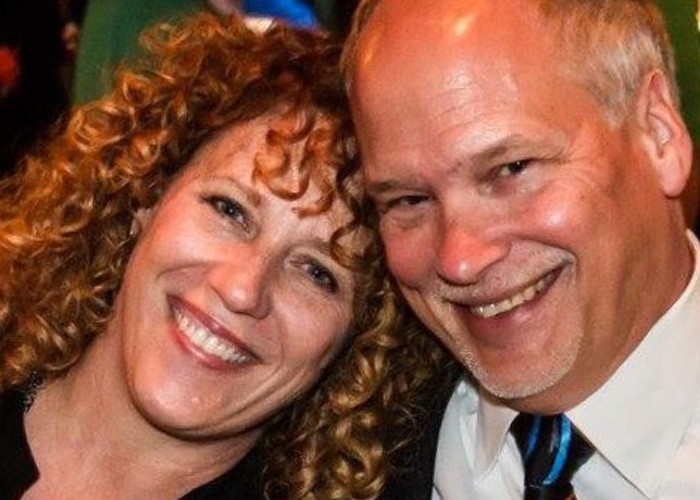
For 19 years, the freckle on Nancy Brown's iris was thought to be benign, until she started noticing changes. Thanks to the UC Ocular Oncology Center within the UC Cancer Institute, her ocular melanoma was diagnosed and removed successfully.

Zélia Corrêa, MD, PhD, is the Mary Knight Asbury Chair of Ophthalmic Pathology and Ocular Oncology, professor of ophthalmology at the UC College of Medicine and the director of ocular oncology within the UC Cancer Institute.
Related Stories
Cancer Center plays key role in lab research, clinical trials for new pancreatic cancer drug
September 1, 2026

WLWT and WCPO highlighted the contributions of University of Cincinnati Cancer Center researchers that helped lead to the recent FDA approval of daraxonrasib, a new treatment for pancreatic cancer.
Cancer Center physician receives $150,000 New Investigator Research Grant to study treatment-resistant leukemia
September 1, 2026
The University of Cincinnati Cancer Center’s Sarah Skuli, MD, PhD, received a two‑year, $150,000 Leukemia Research Foundation New Investigator Grant to study TP53‑mutated leukemia, a treatment‑resistant subtype with very poor outcomes.
Heavy social media use linked to depression
August 31, 2026

U.S. News and World Report, Yahoo! News, MSN, USA Today and other national media highlight a new study by the University of Cincinnati and Northwestern University that found a correlation between heavy social media use and depression in adults.