Trial and Error: Researchers Publish Findings From First UC Phase I Trial

Researchers at the University of Cincinnati College of Medicine recently published a studytheir inaugural study in the Phase I Experimental Therapeutics Program first formed in 2010which did not have favorable outcomes, but that opens the possibility for future studies which could be applicable to patient treatment one day.
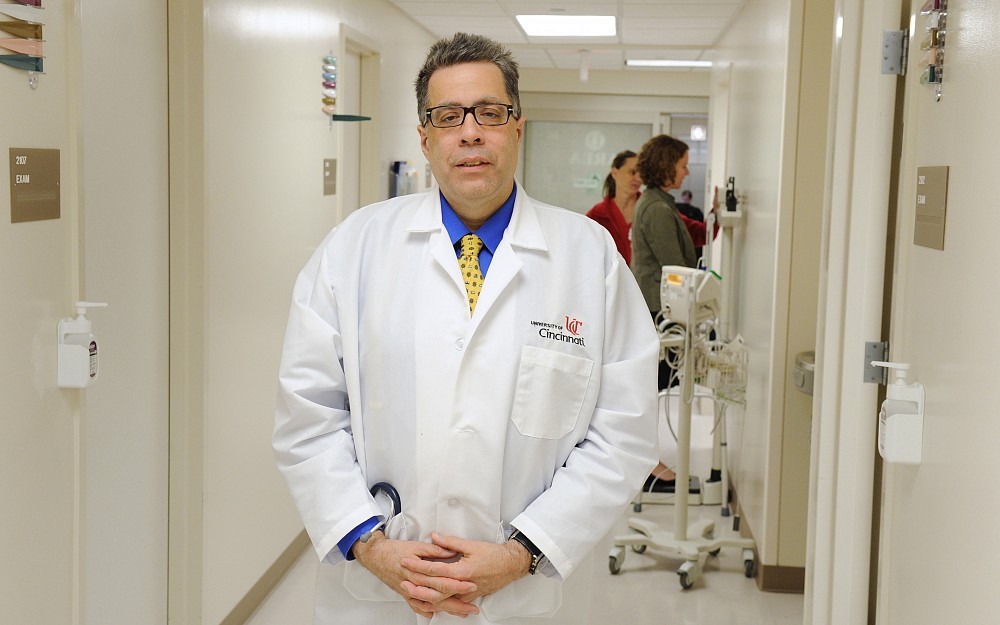
"It was our first investigator-sponsored trial, but it just didnt work out the way we hoped. However, the results of our study do highlight the critical need for consideration of biopharmaceutical properties in designing investigational agents targeting molecular pathways and drug delivery approaches to find therapeutically relevant drug combinations, says John Morris, MD, study co-author and director of the UC Phase I Experimental Therapeutics Program.
The study, published in the journal Targeted Oncology, found that the combination of two targeted therapies which showed promise in preclinical models (human tumor samples and animal models) were not beneficial and caused a number of side effects in patients enrolled in the study.
"The development of molecularly targeted agents, small molecules or antibodies directed against specific cancer-causing targets, has transformed cancer therapy, leading to improved disease control and extended survival, says Morris, co-leader of the UC Cancer Institute's Comprehensive Lung Cancer Program, member within the Cincinnati Cancer Consortium, professor in the division of hematology oncology and UC Health medical oncologist. "However, only a few of these agents have been successful as single agents, likely because many tumors develop alternate signaling pathways or harbor additional genetic alterations and are not driven by a single mutation. Therefore, these tumors require targeting of multiple key signaling regulators, warranting combination therapy.
Morris says a pathway known as PI3K/AKT/mTOR has been identified as a central pathway in cell survival and proliferation in cancer, and its abnormal activation has been associated with poor patient outcomes.
"The mTOR-stopping compound everolimus is FDA approved for the treatment of a number of cancers including kidney, pancreatic and breast, among others; however, achieving clinical responses with only everolimus is challenging, perhaps due to self-preserving processes that take effect at the molecular level, he says. "Preclinical studies in animal and human tumor models have shown that the drug compound BEZ235 effectively inhibits growth of tumors, including glioblastoma, breast, lung, pancreatic, and prostate cancer, so we tested a combination of the two, in escalating doses for efficacy, in a Phase I trial.
The UC Phase I program, the only program of its kind locally, offers cancer treatment options only available in an experimental clinical trial setting. These clinical research trials are the first step in moving tested scientific concepts from the laboratory bench into the clinic and are intended to evaluate safe dosages, method of administration (oral or injection) and frequency of drug administration.
Trials typically include less than 30 people and therapy is administered in a closely-monitored setting where the patient can be observed and followed by the attending physicians and support staff.
BEZ235 was orally administered daily in escalating doses of 200, 400 and 800 mg along with everolimus at 2.5 mg daily in 28-day cycles. Nineteen patients were enrolled in the study, and adverse events and tumor responses were evaluated regularly.
Morris says unfortunately, participants experienced fatigue, diarrhea, nausea, mucositis (painful inflammation of the mouth) or elevated liver enzymes, and tumors didnt shrink.
Once the issues were observed, patients were put on standard therapies.
"Sadly, this trial was not favorable for patients, but in knowing what doesnt work, we can now try other combinations that could be beneficial. In having the Phase I program at UC, we can house trials that could beand many which have proven to bebeneficial for patients, he says. "There will hopefully be many more that will help treat patients living with cancer.
Related Stories
Heavy social media use linked to depression
August 31, 2026

U.S. News and World Report, Yahoo! News, MSN, USA Today and other national media highlight a new study by the University of Cincinnati and Northwestern University that found a correlation between heavy social media use and depression in adults.
On-site training in Speech & Hearing Clinic sets UC’s programs apart
August 27, 2026
At the University of Cincinnati’s Speech & Hearing Clinic, Doctor of Audiology and Speech-Language Pathology graduate students gain real-world experience while providing free speech and hearing services to the community.
Designing with cancer patients' needs in focus
August 27, 2026
Kristina Shin is designing garments that prioritize the comfort, function and confidence of breast cancer patients, addressing a need often overlooked by traditional fashion.