Outpatient Radiation Treatment Helps Patient Receive Therapy in Comfort

As many soon-to-be college campus inhabitants do, Drew Roby was scheduling all of the necessary health appointments, including an eye exam, before heading off to college at Ohio Northern University in 2008.
"I had a normal checkup, and the optometrist noticed that my pupil was misshapen, but he didnt seem concerned, Roby, who is now 27, says.
It wasnt until 2012 when he was helping a friend gain credit for a school project when the subject of his pupil reemerged.
"She was becoming a nurse, and I went to get my blood pressure taken, he says. "Thats when her professor noticed my pupil and said I should it get re-examined.
An ophthalmologist in Findlay, Ohio, said that the spot on Robys iris could just be a freckle or it could be something more serious; he was referred to the UC Cancer Institutes Ocular Oncology Center where the spot was monitored.
However, when the spot began to change, a biopsy was performed in February 2012 which showed some melanoma cells; the decision was made to monitor the spot further to see if it grew.
"Five years to the dayFeb. 10, 2017they did another biopsy and found that the cells were changing, says Roby, adding that the spot had been slowly growing over the years. "This is when they decided to do radiation treatment.
Uveal melanoma, a malignant tumor of the pigmented part of the eye and the second most common type of melanoma, is diagnosed in about 2,500 adults every year in the United States, and metastasis in this type of cancer occurs in about half of all cases.
For years, experts at UC provided plaque radiation treatment, where a disk-shaped shield with small radioactive seeds is placed over the tumor, for these cancers but required inpatient hospital stays while the patient had the implant on his or her eye, disrupting routines and keeping them away from loved ones.
Recently, specialists began offering this type of treatment, also known as brachytherapy, as an outpatient procedure with the same, effective results, which Roby was able to experience.
"We are thought to be the only facility locally offering outpatient plaque treatment, which is possible due to a joint effort by UC experts in ocular oncology and radiation oncology, who revised safety procedures related to the radiation treatment. This allows us to send patients out of the hospital with their implant, says Zélia Corrêa, MD, PhD, the Mary Knight Asbury Chair of Ophthalmic Pathology and Ocular Oncology, professor of ophthalmology at the UC College of Medicine and the director of ocular oncology within the UC Cancer Institute. She is Robys ophthalmologist.
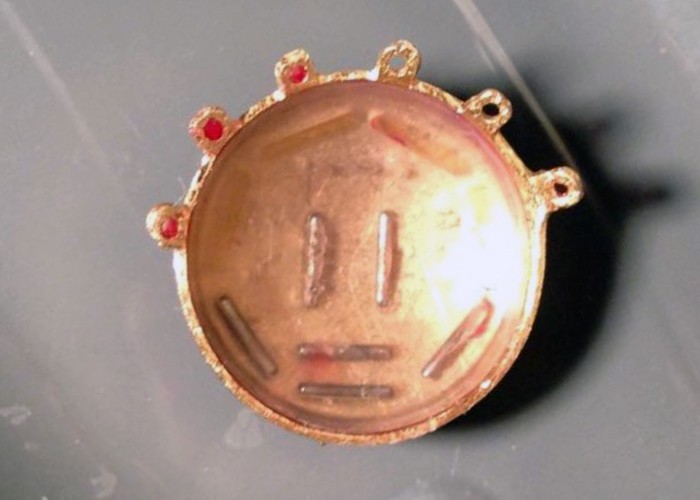
"With plaque therapy, a small disc-shaped shield, known as a plaque, encasing small rice-shaped radioactive seeds is attached to the outside surface of the eye, overlying the tumor, she adds. "The plaque is left in place for a few days and then removed; for the outpatient procedure, patients have a radiation wristband to alert others about the radiation and a lead-coated eye patch which prevents radiation from leaving the eye. Brachytherapy is commonly used to treat ocular melanoma and it is also used by other cancer doctors to treat different tumors including prostate, cervical cancer and head and neck cancerscancers with a single location that havent spread.
Correa says patients are either able to go home after the plaque is placed, or for patients like Roby who live outside of Cincinnati, accommodations are made at the Musekamp Family Hope Lodge. They return at the scheduled date and time to have the implant removed from their eye.
"I live in Dayton, so I was able to stay at the Hope Lodge which was really great, says Roby. "I was there four days. We could make our own food, play games, talk to other patients, and my family and friends were able to visit and to stay with meit was just so much better than staying in a hospital.
Robys surgery to place the plaque was in May, and so far, things are looking good. His vision is intact, and the melanoma on his iris is starting to shrink.
"Im really thankful for my team at UC, he says. "Everyone has been helpful, and Dr. Correa has been fantastic. Shes personable and explains everything really well. Its been a really positive experience.

Drew Roby, having a silly moment with his girlfriend Emily Meyers in May while wearing the eye patch that shielded his eye with the plaque containing radioactive seeds to treat his ocular melanoma. He was able to stay at the Hope Lodge in Cincinnati while the plaque did its work, as opposed to the hospital.

The plaque with radioactive seeds, used to treat ocular melanoma.
Related Stories
UC radiation oncologist speaks with Local 12 news about clinical trial for head and neck cancer treatment
August 10, 2026

Dr. Sara Medek, a UC radiation oncology professor, speaks with Local 12 news about a new clinical trial aimed at reducing radiation in certain areas while still treating cancer effectively but with fewer painful side effects.
Cancer Center director charts future based on collaboration, AI
August 10, 2026

David Gius, MD, PhD, was featured in a Cincinnati Business Courier article and The Cancer Letter’s “The Directors" podcast discussing his priorities and goals as he recently took the helm as director of the University of Cincinnati Cancer Center.
UC graduates cross finish line at commencement
August 7, 2026
The University of Cincinnati recognized 2,125 graduates in two ceremonies at summer commencement Friday on campus at Fifth Third Arena.